A numbing eye drop used during eye examinations
Proparacaine
A numbing eye drop used to numb the surface of the eye for examinations and minor procedures.
What is Proparacaine?
Proparacaine, also known as proxymetacaine, is a local anaesthetic eye drop used to numb the surface of the eye for examinations and minor eye procedures, such as measuring eye pressure or removing a small foreign body. It works quickly and wears off within a short time. The most important point is that it is for single, supervised use by a healthcare professional only: it must never be used repeatedly or taken home, because repeated use damages the surface of the eye. A brief sting when the drop goes in is normal.
Education and reference only. This is a plain-language guide to Proparacaine — it deliberately contains no doses. Doses depend on the person, the brand and the reason for treatment, and belong with your prescriber. Always check the BNF, the product labelling (SmPC) and follow medical advice.
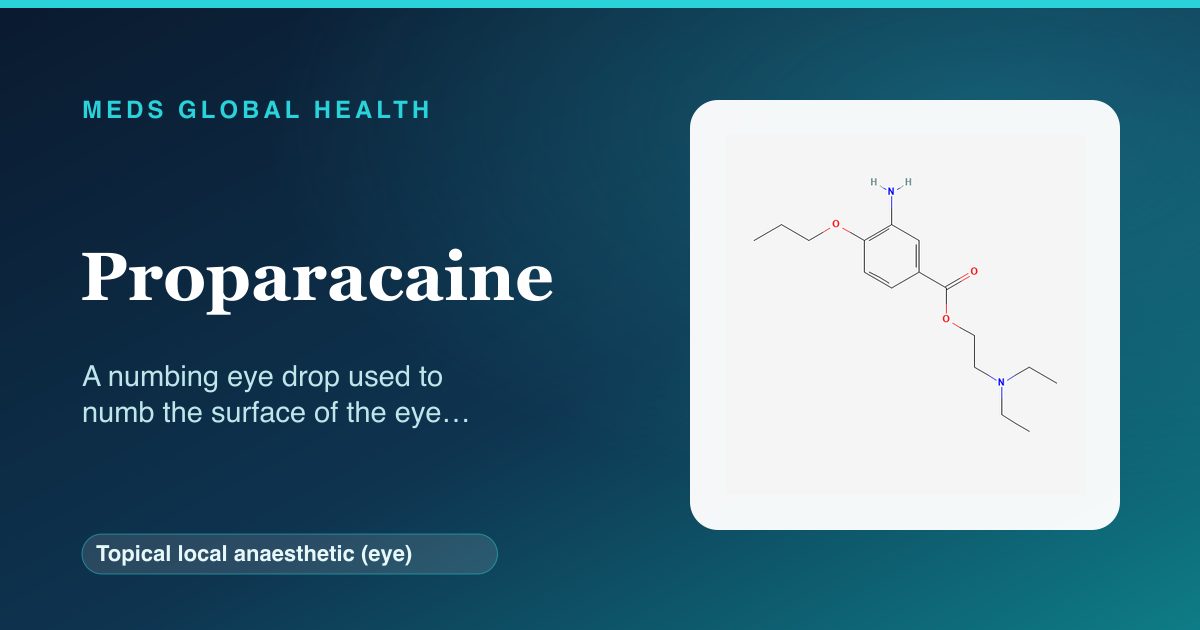
What it is
Proparacaine, also called proxymetacaine, is a local anaesthetic given as an eye drop to numb the surface of the eye. It is used by eye-care professionals during examinations and minor procedures, for example to allow the eye pressure to be measured, to examine the eye comfortably, or to remove a small foreign body from the surface. It is a clinical product used in the clinic or hospital, not something given to patients to use at home. It works on the surface of the eye and its numbing effect is short-lived, which suits the brief procedures it is used for.
How it works
Proparacaine works by temporarily blocking the nerve signals from the surface of the eye, so pain and the urge to blink are reduced while the numbing lasts. This lets an eye-care professional carry out an examination or a minor procedure comfortably and safely. It acts quickly after the drop is put in and wears off within a fairly short time as the medicine is cleared from the eye. Because the numbing removes the eye's natural protective reflexes and slows the surface from healing, it is meant only for brief, supervised clinical use, not for ongoing relief.
Company & origin
A numbing eye drop used in the UK and elsewhere to numb the surface of the eye for examinations and minor procedures; it is also known as proxymetacaine.
Practical use
How to take Proparacaine
General, dose-free guidance — always follow your prescriber's and the leaflet's specific instructions.
- It is given by an eye-care professional as a drop onto the surface of the eye, for a single supervised use.
- Do not use it repeatedly or take it home, as repeated use seriously damages the surface of the eye.
- Expect a brief sting when the drop goes in; this normally settles quickly.
- Do not rub the eye while it is numb, as the protective blink reflex is reduced and the eye can be injured.
- Protect the eye until the numbness wears off, and follow any after-care advice you are given.
Weighing it up
Advantages & disadvantages of Proparacaine
Advantages
- Quickly numbs the surface of the eye for examinations and minor procedures.
- Allows eye pressure to be measured and minor procedures to be done comfortably.
- Has a short-lived effect, which suits brief clinical use.
Disadvantages
- For single supervised clinical use only; repeated use damages the surface of the eye.
- Causes a brief sting when the drop is put in.
- Removes the eye's protective reflexes while it works, so the eye must be protected.
Practical use
Good to know
The single most important thing about proparacaine is that it is for one-off, supervised clinical use only and must never be used repeatedly or taken home. Although it numbs the eye and relieves discomfort quickly, repeated use seriously damages the surface (the cornea), slows healing and can lead to lasting harm and even loss of sight, which is why patients are not given it for ongoing pain relief. A brief sting or burning when the drop goes in is normal and settles quickly. While the eye is numb it has lost its protective blink reflex, so it is important not to rub the eye and to protect it until the numbness wears off. It should only be used by a healthcare professional who can supervise its use.
Who should not take it / use with caution
- It is not for patients to use at home or repeatedly, because repeated use damages the eye.
- People who have had a serious allergic reaction to it or to similar local anaesthetics should not be given it.
- It is used with care in people with certain eye or heart conditions, under professional judgement.
- Its use in pregnancy and breastfeeding is decided by the professional weighing the brief benefit.
Monitoring
- The eye-care professional checks the eye before and during the procedure.
- Watching for any allergic reaction or excessive discomfort.
- Ensuring the drop is used only once and not given for ongoing use.
Side effects
- A brief sting or burning when the drop goes in.
- Temporary redness or watering of the eye.
- Blurred vision while the eye is numb.
- Rarely, allergic reactions or, with misuse and repeated use, serious damage to the surface of the eye.
Key interactions
- There are few well-established routine medicine interactions, but tell the professional about other eye drops you use.
- It is used as part of a procedure and its timing around other eye drops is managed by the professional.
- Tell the professional about any allergy to local anaesthetics.
Available as: Eye drops applied to the surface of the eye by a professional.
Answers
Proparacaine: frequently asked questions
What is proparacaine used for?
It is a numbing eye drop used by eye-care professionals to numb the surface of the eye for examinations and minor procedures, such as measuring eye pressure or removing a small foreign body.
Can I take it home to relieve eye pain?
No. It is for single, supervised clinical use only; repeated use seriously damages the surface of the eye and can harm your sight, so it is never given for ongoing pain relief.
Is proparacaine the same as proxymetacaine?
Yes. Proparacaine is also called proxymetacaine; they are two names for the same numbing eye drop.
Why does the drop sting?
A brief sting or burning when the drop goes in is normal and usually settles quickly as the eye becomes numb.
Why must I not rub my eye afterwards?
While the eye is numb its protective blink reflex is reduced, so rubbing it could cause injury without you feeling it; protect the eye until the numbness wears off.
The wider class
About Topical local anaesthetic (eye)
Proparacaine belongs to the topical local anaesthetic (eye) class. For how the class as a whole works, its shared safety principles and monitoring, see the full guide.
Browse by body system
Authoritative sources
- BNF
- NICE CKS
Building a medicines information resource?
We create evidence-led, dose-free drug and formulary references for teams.