An antiretroviral (HIV/hepatitis B) medicine
Lamivudine
A well-established antiretroviral used in combination treatment for HIV and also for chronic hepatitis B.
What is Lamivudine?
Lamivudine is an antiretroviral medicine (a reverse transcriptase inhibitor) used as part of combination treatment for HIV, and also for chronic hepatitis B. It does not cure either infection but, taken every day as prescribed, helps keep the virus under control. It is well tolerated and usually paired with other antiretrovirals.
Education and reference only. This is a plain-language guide to Lamivudine — it deliberately contains no doses. Doses depend on the person, the brand and the reason for treatment, and belong with your prescriber. Always check the BNF, the product labelling (SmPC) and follow medical advice.
What it is
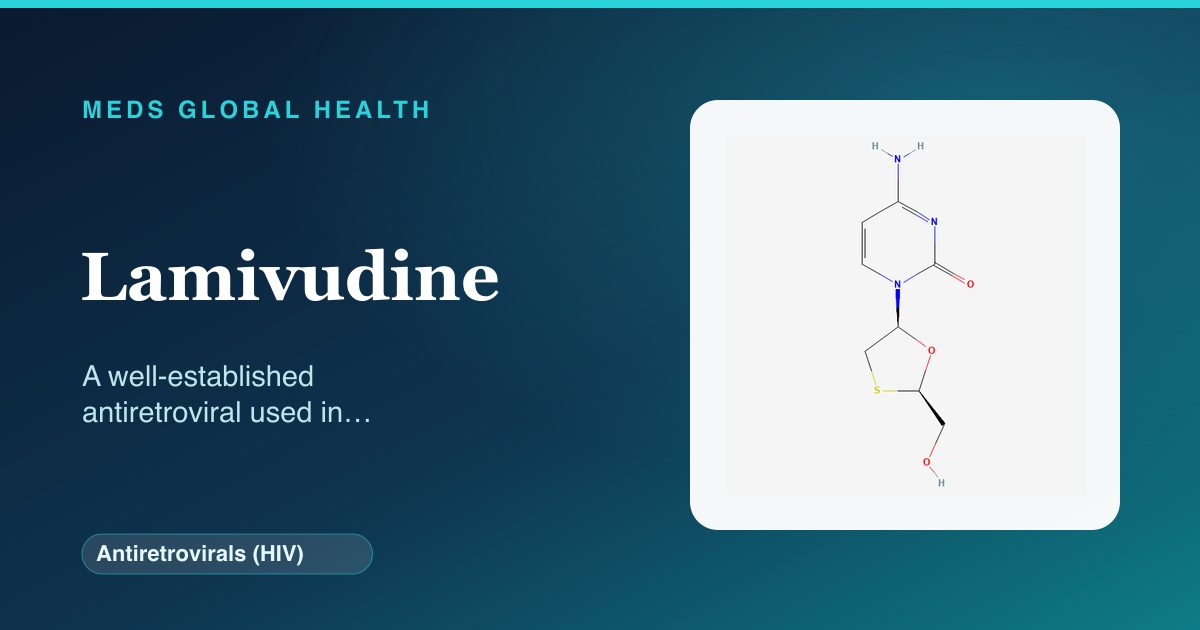
Lamivudine is a nucleoside reverse transcriptase inhibitor used to treat HIV and chronic hepatitis B. In HIV it is a long-standing backbone medicine, used alongside others in combination therapy. It is generally gentle and well tolerated, which has kept it in regular use for many years.
How it works
Lamivudine mimics one of the building blocks that HIV and hepatitis B use to copy their genetic material. When the virus tries to use it, the copying chain is cut short, so the virus cannot multiply. Reducing the amount of virus protects the immune system in HIV and limits liver damage in hepatitis B.
Company & origin
Approved in the 1990s and a long-standing part of HIV and hepatitis B treatment in the UK.
Practical use
How to take Lamivudine
General, dose-free guidance — always follow your prescriber's and the leaflet's specific instructions.
- Take it every day, at around the same time, as part of your regimen.
- It can be taken with or without food.
- Keep taking it even when you feel well.
- Do not skip or stop doses, as this can let the virus become resistant.
- If you miss a dose, take it when you remember unless the next is near, then skip it; never double up.
- If you also have hepatitis B, do not stop without your prescriber's advice.
Weighing it up
Advantages & disadvantages of Lamivudine
Advantages
- Long track record and generally very well tolerated.
- Active against both HIV and hepatitis B.
- Available cheaply as a generic and easy to combine with other medicines.
Disadvantages
- Must be taken every day; missed doses risk resistance.
- Used in combination, not on its own, for HIV.
- Stopping can flare hepatitis B in people who carry that virus.
Practical use
Good to know
Lamivudine must be taken every day, exactly as prescribed, to keep working and to prevent resistance. It is not a cure. If you have hepatitis B, stopping lamivudine suddenly can flare your liver disease, so never stop without medical advice.
Who should not take it / use with caution
- People who are allergic to lamivudine.
- People with significant kidney impairment may need dose adjustment.
- Anyone with hepatitis B should be assessed before starting and before stopping.
Monitoring
- HIV viral load and CD4 count to confirm suppression.
- Kidney function, with adjustment if it is reduced.
- Hepatitis B status and liver tests where relevant.
Side effects
- Headache, nausea and tiredness, usually mild.
- Diarrhoea or stomach discomfort.
- Rarely, effects on the pancreas or liver; report severe stomach pain.
Key interactions
- Few major interactions, but other ingredients of the regimen may interact.
- Some medicines (such as certain antibiotics) can affect its levels.
- Share a full medicines list with your HIV or liver team.
Available as: Available as tablets or an oral solution, often combined with other antiretrovirals.
Answers
Lamivudine: frequently asked questions
Can lamivudine treat hepatitis B?
Yes. It is active against hepatitis B as well as HIV, though stopping it can flare hepatitis B, so it must be managed carefully.
Does lamivudine cure HIV?
No. It keeps the virus suppressed as part of combination therapy but does not remove HIV from the body, so it must be taken continuously.
Is it well tolerated?
Generally yes. Lamivudine is one of the milder antiretrovirals, which is why it has been used for many years as a backbone medicine.
Can I take it with food?
Yes, it can be taken with or without food. Follow the instructions for your specific product or combination tablet.
What if I have both HIV and hepatitis B?
Lamivudine can help with both, but your team will plan your whole regimen carefully and warn you never to stop suddenly because of the hepatitis B flare risk.
The wider class
About Antiretrovirals (HIV)
Lamivudine belongs to the antiretrovirals (hiv) class. For how the class as a whole works, its shared safety principles and monitoring, see the full guide.
Browse by body system
Authoritative sources
- BNF
- NICE CKS
Building a medicines information resource?
We create evidence-led, dose-free drug and formulary references for teams.