A boosted HIV protease inhibitor for resistant HIV
Tipranavir
A boosted HIV protease inhibitor used, as part of combination therapy, for HIV that is resistant to other medicines.
What is Tipranavir?
Tipranavir is a specialist HIV medicine known as a protease inhibitor, used mainly when HIV has become resistant to other protease inhibitors. It is always 'boosted' by another medicine (ritonavir) that keeps its levels up, and it is taken as part of combination therapy alongside other HIV medicines. Its most important risks are serious liver injury and, rarely, bleeding in the brain, so it is used and monitored carefully by a specialist team. It is related to sulfonamide medicines and interacts with many other drugs. It controls HIV but does not cure it.
Education and reference only. This is a plain-language guide to Tipranavir — it deliberately contains no doses. Doses depend on the person, the brand and the reason for treatment, and belong with your prescriber. Always check the BNF, the product labelling (SmPC) and follow medical advice.
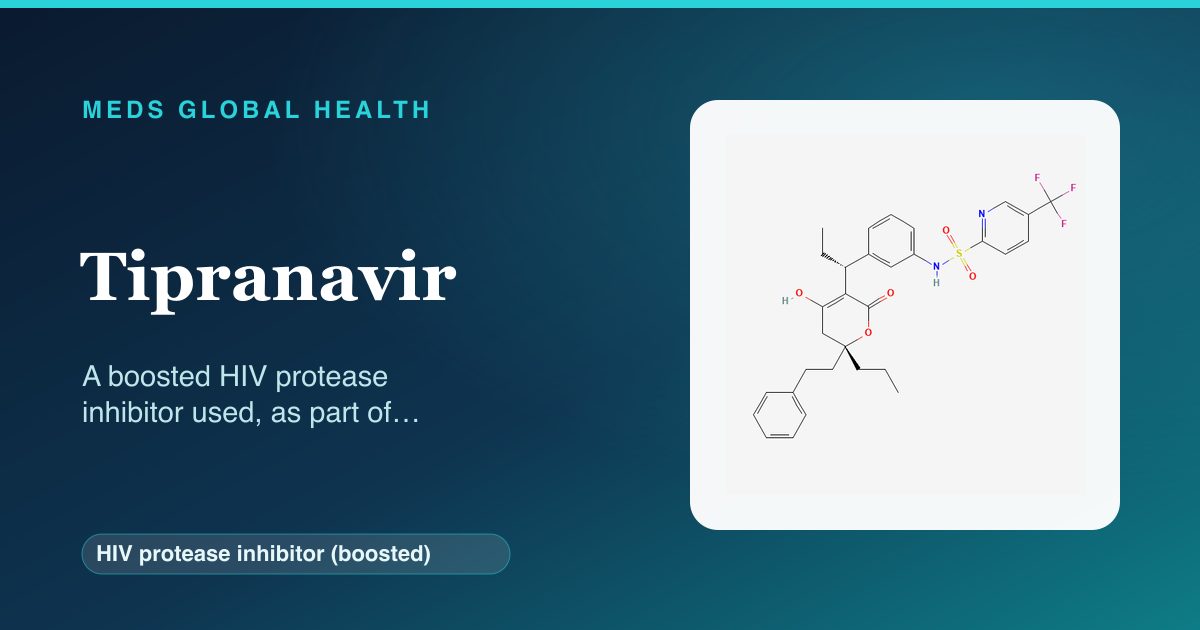
What it is
Tipranavir is an HIV medicine belonging to a group called protease inhibitors. It is used mainly in people whose HIV has developed resistance to other protease inhibitors, so it tends to be reserved for more difficult-to-treat HIV. It is always given 'boosted' with another medicine that raises and steadies its levels in the body, and it is taken as part of combination therapy, meaning it is used together with other HIV medicines rather than on its own. It is taken by mouth and is prescribed and supervised by a specialist HIV team. It controls HIV but does not cure it.
How it works
HIV needs an enzyme called protease to assemble new, infectious copies of the virus. Tipranavir blocks this enzyme, so the virus cannot mature properly and the amount of HIV in the body falls. Because it is used in resistant HIV, it is always combined with a booster medicine that slows its breakdown so enough stays in the body to work, and it is taken alongside other HIV medicines to attack the virus in different ways at once. Keeping the virus suppressed protects the immune system and lowers the chance of passing HIV on.
Company & origin
A specialist HIV medicine used in the UK, usually for HIV that has become resistant to other protease inhibitors, always boosted by another medicine.
Practical use
How to take Tipranavir
General, dose-free guidance — always follow your prescriber's and the leaflet's specific instructions.
- Take it by mouth as prescribed, always together with its booster medicine and your other HIV medicines.
- Take it consistently and do not skip doses, as missed doses can let the virus become resistant.
- Report promptly any signs of liver problems, such as yellowing of the skin or eyes, dark urine, severe tummy pain or feeling very unwell.
- Seek urgent help for sudden severe headache, weakness, confusion or unusual bruising or bleeding.
- Give your team a full, up-to-date list of all your medicines, as tipranavir interacts with many of them.
Weighing it up
Advantages & disadvantages of Tipranavir
Advantages
- An effective option for HIV that has become resistant to other protease inhibitors.
- Works as part of combination therapy to suppress the virus and protect the immune system.
- Taken by mouth rather than by injection.
Disadvantages
- Can cause serious liver injury and, rarely, bleeding in the brain, so careful monitoring is needed.
- Interacts with a very large number of other medicines.
- Must always be taken with a booster medicine and as part of combination therapy.
Practical use
Good to know
The most important things to understand about tipranavir are its serious risks: it can cause significant liver injury, and rarely it has been linked to bleeding inside the brain, so the specialist team monitors liver tests and asks you to report warning signs promptly. It is always taken with its booster medicine, and missing the booster makes it far less effective. It is related to sulfonamide medicines, so tell your team if you have a sulfa allergy. Tipranavir interacts with a very large number of other medicines, so a full and up-to-date medicines list is essential, including anything bought over the counter or herbal. As with all HIV treatment, it works as part of combination therapy and must be taken consistently; stopping or skipping doses can let the virus become resistant.
Who should not take it / use with caution
- People who have had a serious allergic reaction to tipranavir should not take it.
- It is avoided in people with significant liver problems because of the risk of serious liver injury.
- It is used with great care in people with bleeding risks and those taking many other medicines, under specialist supervision.
Monitoring
- Regular liver blood tests, especially in the early months of treatment.
- Checking the amount of HIV in the blood (viral load) and the immune cell count (CD4) to see how well it is working.
- Reviewing blood fats and watching for signs of liver problems or bleeding.
Side effects
- Diarrhoea, nausea or stomach upset.
- Raised blood fats (cholesterol and triglycerides) and changes in liver blood tests.
- Rash, which can be more likely given its sulfonamide relationship.
- Rarely but seriously, severe liver injury or bleeding inside the brain, which need urgent attention.
Key interactions
- It interacts with a very large number of medicines, so a full medicines list is essential.
- It must be taken with its booster medicine, and other boosted HIV medicines may need adjusting.
- It can be affected by, and affect, medicines such as some statins, certain sedatives and many others, so check before adding anything, including herbal products like St John's wort.
Available as: Capsules and an oral solution taken by mouth.
Answers
Tipranavir: frequently asked questions
What is tipranavir used for?
It is an HIV protease inhibitor used, as part of combination therapy, mainly for HIV that has become resistant to other protease inhibitors.
Why must it be taken with a booster?
The booster medicine raises and steadies tipranavir levels in the body so enough stays present to work; without it, the medicine is far less effective.
What are its most serious risks?
The main serious risks are significant liver injury and, rarely, bleeding inside the brain, which is why your team monitors you closely and asks you to report warning signs.
Does it matter if I have a sulfa allergy?
Yes, tipranavir is related to sulfonamide medicines, so tell your specialist team if you have a sulfa allergy before starting it.
Does it cure HIV?
No. Tipranavir controls HIV as part of combination therapy but does not cure it, so it must be taken consistently and continued long term.
The wider class
About HIV protease inhibitor (boosted)
Tipranavir belongs to the hiv protease inhibitor (boosted) class. For how the class as a whole works, its shared safety principles and monitoring, see the full guide.
Browse by body system
Authoritative sources
- BNF
- NICE CKS
Building a medicines information resource?
We create evidence-led, dose-free drug and formulary references for teams.