An NNRTI medicine used as part of HIV treatment
Nevirapine
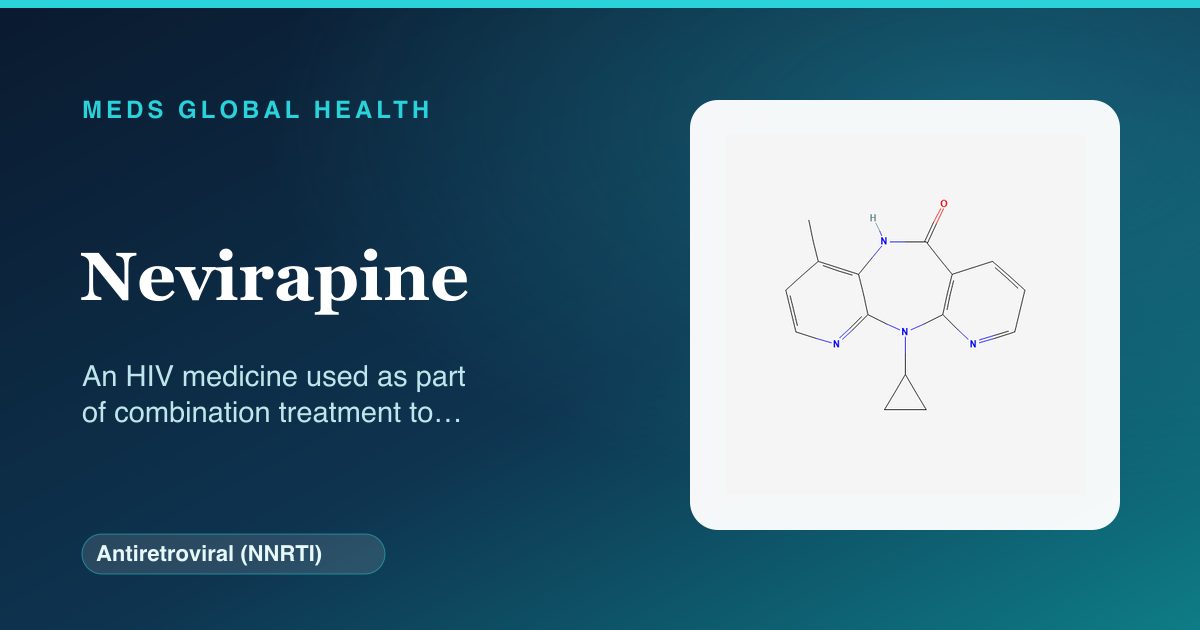
An HIV medicine used as part of combination treatment to keep the virus under control.
What is Nevirapine?
Nevirapine is an HIV medicine of a type called an NNRTI (non-nucleoside reverse transcriptase inhibitor). It is used as part of combination antiretroviral therapy, alongside other HIV medicines, to keep the virus under control. The most important safety points are that it can cause serious, sometimes fatal liver injury and severe skin reactions (such as SJS or DRESS), especially in the first weeks of treatment; the risk is higher when treatment starts at a higher CD4 count. To reduce this risk, it is started at a lower dose and built up gradually (a lead-in). It is taken every day, and any rash, yellowing of the skin or eyes, or feeling unwell early on must be reported urgently.
Education and reference only. This is a plain-language guide to Nevirapine — it deliberately contains no doses. Doses depend on the person, the brand and the reason for treatment, and belong with your prescriber. Always check the BNF, the product labelling (SmPC) and follow medical advice.
What it is
Nevirapine is a medicine used to treat HIV. It belongs to a group called NNRTIs (non-nucleoside reverse transcriptase inhibitors), and it is always used as part of a combination of HIV medicines rather than on its own. The aim of combination antiretroviral therapy is to keep the amount of virus in the body very low so the immune system can recover and stay healthy. Nevirapine is taken by mouth, every day, and is started with a careful gradual dose lead-in to reduce the risk of serious side effects. It is prescribed and supervised by an HIV specialist team.
How it works
HIV needs an enzyme called reverse transcriptase to copy itself and multiply inside the body. Nevirapine blocks this enzyme, so the virus cannot reproduce properly, which helps keep the amount of virus in the blood very low. It is used together with other HIV medicines that work in different ways, because attacking the virus from several angles is far more effective and helps stop it becoming resistant. By keeping the virus suppressed over the long term, combination treatment protects the immune system and overall health.
Company & origin
An HIV medicine used in the UK as part of combination antiretroviral therapy, started with a careful gradual dose lead-in.
Practical use
How to take Nevirapine
General, dose-free guidance — always follow your prescriber's and the leaflet's specific instructions.
- Take it every day exactly as prescribed, as part of your combination of HIV medicines, to keep the virus controlled.
- Follow the gradual dose lead-in your team sets when starting, as this lowers the risk of serious side effects.
- Watch closely in the first weeks for any rash, blistering, mouth sores, fever or feeling unwell, and report these urgently.
- Report yellowing of the skin or eyes, dark urine or severe tiredness straight away, as these can signal liver problems.
- Tell your team about all your other medicines, as nevirapine interacts with several of them.
Weighing it up
Advantages & disadvantages of Nevirapine
Advantages
- An effective part of combination HIV treatment that helps keep the virus suppressed.
- Taken by mouth as part of a long-established treatment approach.
- Helps protect the immune system and overall health when taken consistently.
Disadvantages
- Can cause serious, sometimes fatal liver injury, especially in the first weeks.
- Can cause severe skin reactions such as SJS or DRESS, particularly early in treatment.
- Needs a gradual dose lead-in and careful early monitoring, and interacts with several medicines.
Practical use
Good to know
The most important things to know about nevirapine are its two serious early risks: it can cause severe, sometimes fatal liver injury, and severe skin reactions such as Stevens-Johnson syndrome (SJS) or DRESS. These are most likely in the first weeks of treatment, and the risk is higher when treatment is started at a higher CD4 count, which is why specialists are careful about who they start it in. To reduce the risk, treatment begins at a lower dose for a couple of weeks (a lead-in) before increasing. During this early period it is vital to watch for and urgently report any rash, blistering, mouth sores, fever, yellowing of the skin or eyes, dark urine, severe tiredness or feeling generally unwell. Like all HIV treatment, it must be taken every day exactly as prescribed to keep the virus controlled and prevent resistance, and it interacts with several other medicines.
Who should not take it / use with caution
- People who have had a serious allergic reaction or a previous severe reaction to nevirapine should not take it.
- It is generally avoided as a starting medicine in people with higher CD4 counts, because of the higher risk of serious reactions.
- It is used with caution, or avoided, in people with significant liver problems, under specialist guidance.
Monitoring
- Liver function tests, especially in the first weeks and months of treatment.
- Watching for any rash or skin reaction, particularly early on.
- Regular checks of the amount of virus in the blood and the immune cell (CD4) count.
Side effects
- Skin rash, which can sometimes become a severe reaction such as SJS or DRESS, especially early on.
- Liver problems, which can be serious; signs include yellowing of the skin or eyes and dark urine.
- Nausea, headache or tiredness in some people.
Key interactions
- It interacts with many other medicines, so a full medicines list is essential.
- It can lower the levels of some other medicines, including certain other HIV medicines and some contraceptives.
- Some medicines and herbal products, such as St John's wort, can stop it working properly and must be avoided.
Available as: Tablets and a liquid taken by mouth.
Answers
Nevirapine: frequently asked questions
What is nevirapine used for?
It is an HIV medicine (an NNRTI) used as part of combination antiretroviral therapy, alongside other HIV medicines, to keep the virus under control.
Why is it started at a lower dose?
Starting at a lower dose for a couple of weeks (a lead-in) before increasing helps reduce the risk of serious skin and liver reactions.
What serious reactions should I watch for?
Watch especially in the first weeks for any rash, blistering, mouth sores, fever, yellowing of the skin or eyes, dark urine or severe tiredness, and report these urgently.
Can I take it on its own?
No. It is always used as part of a combination of HIV medicines, which is far more effective and helps prevent the virus becoming resistant.
Does it interact with other medicines?
Yes, it interacts with many medicines, including some contraceptives and herbal products like St John's wort, so always share a full medicines list.
The wider class
About Antiretroviral (NNRTI)
Nevirapine belongs to the antiretroviral (nnrti) class. For how the class as a whole works, its shared safety principles and monitoring, see the full guide.
Browse by body system
Authoritative sources
- BNF
- NICE CKS
Building a medicines information resource?
We create evidence-led, dose-free drug and formulary references for teams.