An older HIV medicine (a protease inhibitor)
Nelfinavir
An older HIV protease inhibitor used in combination therapy, best known for causing diarrhoea and for many drug interactions.
What is Nelfinavir?
Nelfinavir is an older HIV medicine called a protease inhibitor. It was used as part of combination therapy, always with other HIV medicines and never on its own. Its most common side effect is diarrhoea, which can be troublesome. Like other protease inhibitors, it interacts with many other medicines and can raise blood fats and blood sugar. It is taken by mouth, ideally with food. It is now rarely used in the UK, as newer, more convenient and better-tolerated HIV medicines are preferred.
Education and reference only. This is a plain-language guide to Nelfinavir — it deliberately contains no doses. Doses depend on the person, the brand and the reason for treatment, and belong with your prescriber. Always check the BNF, the product labelling (SmPC) and follow medical advice.
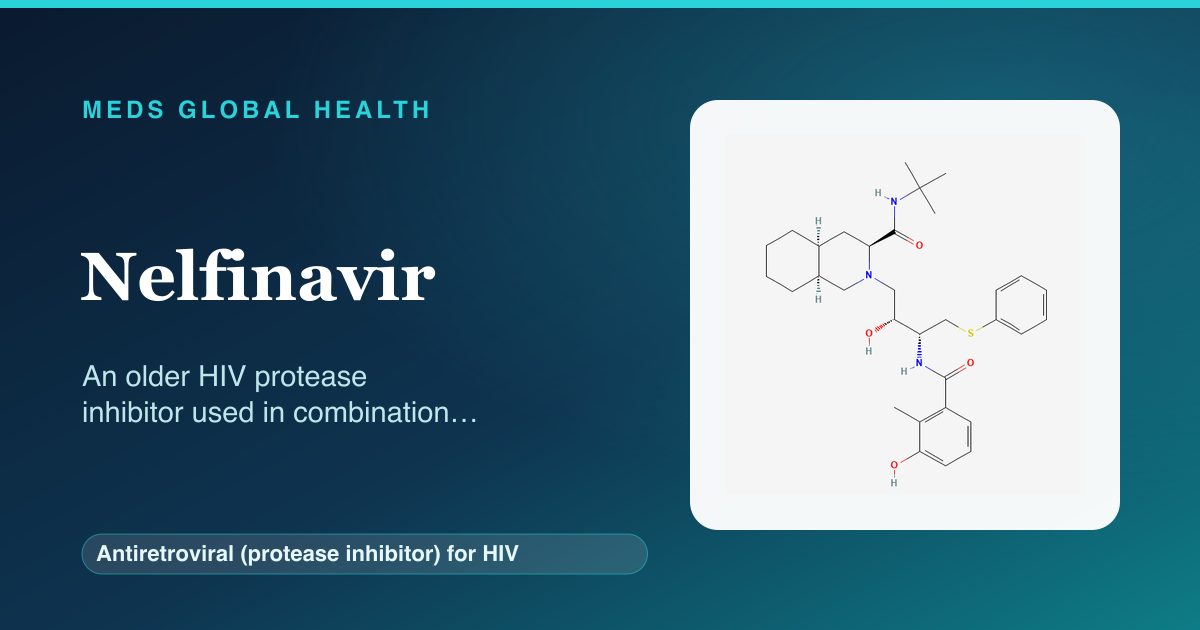
What it is
Nelfinavir is an antiretroviral medicine used to treat HIV. It belongs to a group called protease inhibitors. Like all HIV medicines, it is only ever used as part of combination therapy, alongside other antiretrovirals and never on its own, because a single HIV medicine used alone lets the virus become resistant. It is taken by mouth, and works best taken with food. It is now rarely used in the UK, having largely been replaced by newer protease inhibitors and other HIV medicines that are easier to take and better tolerated.
How it works
HIV uses an enzyme called protease to assemble new, infectious copies of the virus. Nelfinavir blocks this enzyme, so the virus produces only faulty particles that cannot infect new cells, helping keep the amount of virus down. Because HIV can become resistant to any single medicine, nelfinavir works as part of a combination that attacks the virus in different ways at once. Keeping the virus suppressed protects the immune system. Nelfinavir affects gut function, which is why diarrhoea is its most common side effect, and it is broken down by the same body system that handles many other medicines, which is why interactions are common.
Company & origin
An older HIV medicine used in the UK as part of combination therapy; now rarely used, with newer protease inhibitors and other options preferred.
Practical use
How to take Nelfinavir
General, dose-free guidance — always follow your prescriber's and the leaflet's specific instructions.
- Take it by mouth with food, which helps it work and can reduce stomach upset.
- Always take it together with the other HIV medicines in your combination, never on its own.
- Take it consistently and on time, as missing doses can let the virus become resistant.
- Tell your team if diarrhoea is troublesome, as it can often be managed.
- Give your specialist a full list of all your medicines, as nelfinavir interacts with many of them.
Weighing it up
Advantages & disadvantages of Nelfinavir
Advantages
- An effective HIV protease inhibitor in its time, helping suppress the virus as part of combination therapy.
- Taken by mouth with food.
- Was a widely used protease inhibitor in earlier combination HIV treatment.
Disadvantages
- Commonly causes diarrhoea, which can be troublesome.
- Interacts with many other medicines and can raise blood fats and blood sugar.
- Now rarely used, as newer, easier and better-tolerated options are preferred.
Practical use
Good to know
The most common thing to expect with nelfinavir is diarrhoea, which can be troublesome but is often manageable; taking it with food, and sometimes a medicine to settle the bowel, can help, and persistent diarrhoea should be discussed with your team. Like other protease inhibitors, it interacts with a wide range of other medicines, both raising and lowering their levels, so it is important to give a full list of everything you take, including over-the-counter products. It can also raise blood fats and blood sugar and lead to changes in body fat over time. It must always be taken as part of a combination, consistently and on time, to keep the virus under control. Because newer options are easier to use, it is now rarely chosen. HIV care is provided by a specialist team.
Who should not take it / use with caution
- People who have had a serious allergic reaction to nelfinavir should not take it.
- It must not be combined with certain medicines that interact dangerously, which your specialist will check.
- It is used with caution in liver problems, and only under specialist care as part of a combination.
Monitoring
- Regular blood tests including the amount of virus (viral load), immune cells (CD4 count) and liver function.
- Reviewing blood fats and blood sugar over time.
- Reviewing diarrhoea and other side effects, other medicines, and the overall HIV combination.
Side effects
- Diarrhoea, which is the most common side effect.
- Wind, nausea or other stomach upset.
- Changes in blood fats and blood sugar, and changes in body fat over time.
- Rash or tiredness in some people.
Key interactions
- It interacts with many medicines, raising or lowering their levels, so a full medicines list is essential.
- It must not be combined with certain medicines that can cause dangerous effects, which your specialist will check.
- The HIV combination is chosen carefully to avoid harmful overlaps, so tell your team about everything you take.
Available as: Tablets and an oral powder taken by mouth with food.
Answers
Nelfinavir: frequently asked questions
What is nelfinavir used for?
It is an older HIV protease inhibitor used as part of combination therapy to help keep the virus suppressed; it is always used with other HIV medicines, never alone.
Why does it cause diarrhoea?
Diarrhoea is the most common side effect of nelfinavir; taking it with food and sometimes a medicine to settle the bowel can help, so tell your team if it is troublesome.
Should I take it with food?
Yes. Nelfinavir works best taken with food, which can also help reduce stomach upset.
Why does my team need my full medicines list?
Nelfinavir interacts with many other medicines, raising or lowering their levels, so a complete list helps keep your treatment safe.
Can it be taken on its own?
No. Like all HIV medicines it must be part of a combination, because using one HIV medicine alone lets the virus become resistant.
The wider class
About Antiretroviral (protease inhibitor) for HIV
Nelfinavir belongs to the antiretroviral (protease inhibitor) for hiv class. For how the class as a whole works, its shared safety principles and monitoring, see the full guide.
Browse by body system
Authoritative sources
- BNF
- NICE CKS
Building a medicines information resource?
We create evidence-led, dose-free drug and formulary references for teams.