A second-generation antipsychotic
Cariprazine
A second-generation antipsychotic for schizophrenia with a long-lasting effect in the body.
What is Cariprazine?
Cariprazine is a second-generation (atypical) antipsychotic taken by mouth for schizophrenia. It and its active breakdown products stay in the body for a long time, so its effects, and any side effects, can build up gradually and persist for some time after stopping. Restlessness (akathisia) is a common side effect.
Education and reference only. This is a plain-language guide to Cariprazine — it deliberately contains no doses. Doses depend on the person, the brand and the reason for treatment, and belong with your prescriber. Always check the BNF, the product labelling (SmPC) and follow medical advice.
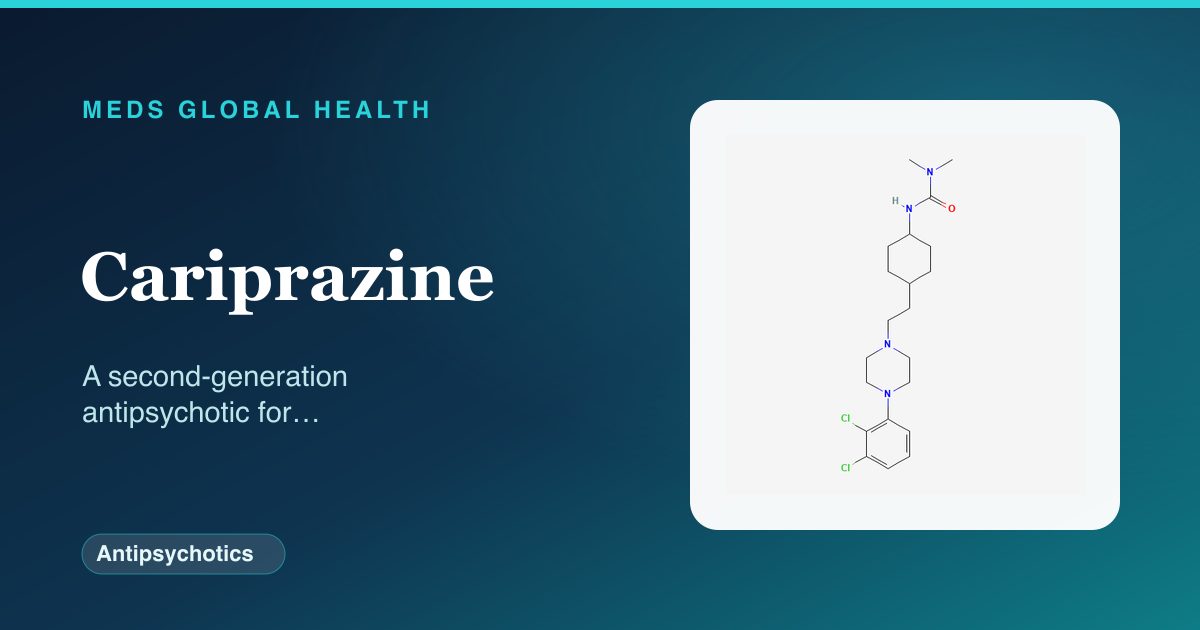
What it is
Cariprazine is a newer, second-generation antipsychotic used to treat schizophrenia. A notable feature is its long half-life: the medicine and its active breakdown products remain in the body for a long time. This means changes in effect happen gradually, and the medicine keeps working for a while even after a dose is missed or it is stopped.
How it works
Cariprazine acts mainly on dopamine and serotonin receptors in the brain, helping to rebalance the signalling thought to be disturbed in schizophrenia. This can reduce symptoms such as hallucinations, delusions and disordered thinking. Because it is broken down into long-lasting active substances, its effect is steady and slow to change.
Company & origin
Originated / developed by: Branded in the UK as Reagila..
Cariprazine is a second-generation (atypical) antipsychotic with a long-acting effect in the body.
What it treats
Conditions Cariprazine is used for
Practical use
How to take Cariprazine
General, dose-free guidance — always follow your prescriber's and the leaflet's specific instructions.
- Take it by mouth once a day, at about the same time each day, with or without food.
- Because it acts slowly, give it time to work and do not expect rapid changes when the dose is altered.
- If you miss a dose, take it when you remember unless it is nearly time for the next; do not double up.
- Do not stop it suddenly; remember its effect lingers for some time after the last dose.
- Tell your team if you feel restless or unable to keep still, as this is a recognised side effect.
Weighing it up
Advantages & disadvantages of Cariprazine
Advantages
- Effective for symptoms of schizophrenia, including reduced motivation and social withdrawal.
- Taken once daily, which is convenient.
- The long-lasting effect means a missed single dose is less likely to cause a sudden drop in cover.
Disadvantages
- Because it stays in the body a long time, side effects can take a while to settle after stopping.
- Commonly causes restlessness (akathisia), which can be distressing.
- Can cause weight gain and changes in blood sugar and cholesterol (metabolic effects).
Practical use
Good to know
Cariprazine has a long half-life, so effects and side effects build up slowly and persist after stopping; do not expect quick changes when the dose alters. Restlessness (akathisia) is common, particularly early on. Do not stop it suddenly, and tell your team about any restlessness, agitation or movement problems. Seek urgent help (999 or A&E) if you develop a high temperature with severe muscle stiffness, confusion and a fast heartbeat — this can signal a rare but serious reaction called neuroleptic malignant syndrome.
Who should not take it / use with caution
- People with a known allergy to cariprazine.
- Used with caution in heart disease, diabetes, epilepsy and in older people, particularly those with dementia.
- Care is needed in pregnancy and breastfeeding; discuss this with your team.
Monitoring
- Regular review of symptoms and side effects, especially restlessness.
- Weight, blood sugar and cholesterol (metabolic monitoring).
- Blood pressure and, where appropriate, an ECG.
Side effects
- Restlessness and an inability to keep still (akathisia).
- Movement effects such as tremor and stiffness.
- Difficulty sleeping or, in some people, drowsiness.
- Weight gain and changes in blood sugar and cholesterol (metabolic effects).
- Nausea and constipation.
- Rarely, effects on heart rhythm.
Key interactions
- Certain medicines that affect how the liver processes drugs can change cariprazine levels; tell your team about all your medicines.
- Alcohol and other sedating medicines can add to drowsiness.
- Medicines that affect heart rhythm may add to that risk.
- Check with a pharmacist before taking new over-the-counter medicines.
Available as: Capsules.
Answers
Cariprazine: frequently asked questions
Why do the effects of cariprazine last so long?
Cariprazine is broken down into active substances that stay in the body for a long time. This means it keeps working steadily, but it also means side effects can take a while to settle after stopping.
I feel restless and can't sit still. Is that the medicine?
Restlessness, known as akathisia, is a common side effect of cariprazine, especially early in treatment. Tell your team, as it can often be helped by adjusting treatment.
What happens if I miss a dose?
Take it when you remember, unless it is nearly time for the next dose, in which case skip it. Because the medicine lasts a long time, a single missed dose is less likely to cause an immediate problem, but try to take it regularly.
What is neuroleptic malignant syndrome?
It is a rare but serious reaction to antipsychotics. Warning signs include high temperature, severe muscle stiffness, confusion, a fast or irregular heartbeat and sweating. This is a medical emergency: seek urgent help (call 999 or go to A&E) straight away.
Can I stop cariprazine if I feel well?
Do not stop suddenly. Even after stopping, the medicine lingers in your body for some time. Any change should be planned with your team to avoid a relapse.
The wider class
About Antipsychotics
Cariprazine belongs to the antipsychotics class. For how the class as a whole works, its shared safety principles and monitoring, see the full guide.
Browse by body system
Authoritative sources
- BNF: Cariprazine.
- NICE CKS: Antipsychotics.
Building a medicines information resource?
We create evidence-led, dose-free drug and formulary references for teams.