An atypical antipsychotic
Quetiapine
An atypical antipsychotic used in schizophrenia and bipolar disorder; can cause sedation, weight gain and metabolic effects.
What is Quetiapine?
Quetiapine is an atypical (second-generation) antipsychotic used to treat schizophrenia and the different phases of bipolar disorder, including manic highs and depressive lows. It is sometimes also used as an add-on treatment in depression.
Education and reference only. This is a plain-language guide to Quetiapine — it deliberately contains no doses. Doses depend on the person, the brand and the reason for treatment, and belong with your prescriber. Always check the BNF, the product labelling (SmPC) and follow medical advice.
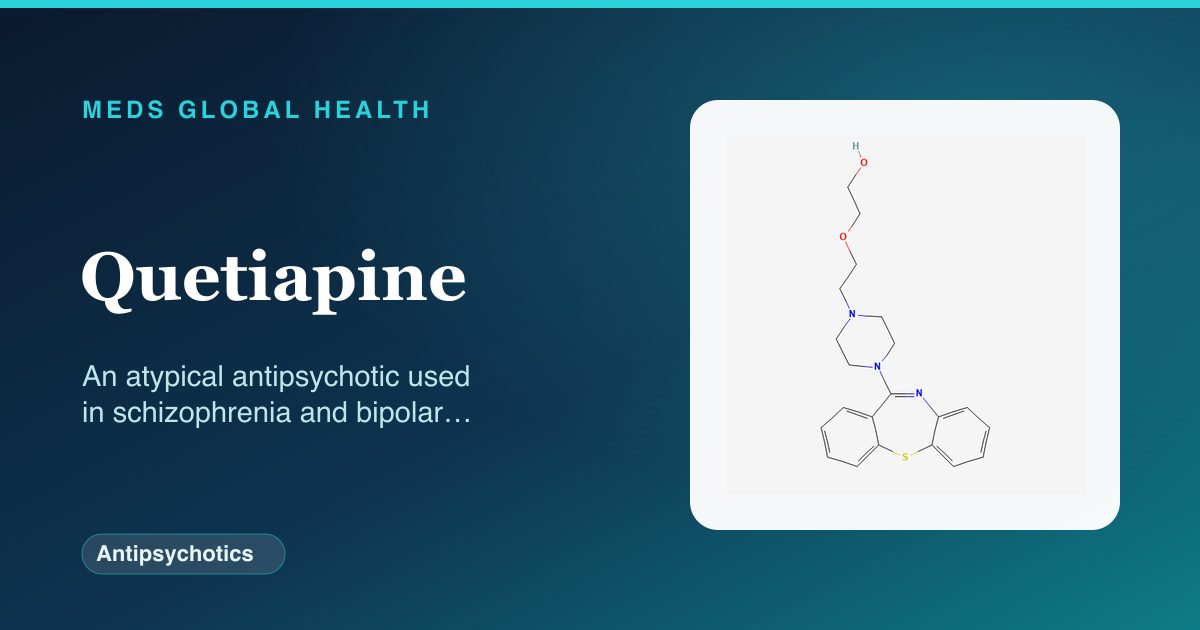
What it is
Quetiapine is an atypical (second-generation) antipsychotic. It is used to treat schizophrenia and the different phases of bipolar disorder — both the highs (mania) and the lows (depression) — and as a mood stabiliser for the longer term. At lower levels it is quite sedating, which is sometimes used to help with agitation or sleep within these conditions. It comes in two forms: an immediate-release version usually taken more than once a day, and a modified-release version (Seroquel XR) taken once daily; these are not directly interchangeable.
How it works
Quetiapine acts on several chemical-messenger systems in the brain, chiefly by blocking certain dopamine and serotonin receptors. In schizophrenia and mania, overactivity of dopamine signalling is linked to symptoms such as hallucinations, delusions and racing, elevated mood; by dialling this down, quetiapine reduces these symptoms. Its effects on serotonin and other receptors contribute to its mood-stabilising and antidepressant actions, while its blocking of histamine receptors explains why it is sedating and can affect appetite.
Company & origin
Originated / developed by: Imperial Chemical Industries / Zeneca (now AstraZeneca).
Quetiapine (development code ICI 204,636) was developed by Imperial Chemical Industries, whose pharmaceutical business became Zeneca and later AstraZeneca. The atypical antipsychotic was approved by the FDA in 1997 and marketed as Seroquel.
What it treats
Conditions Quetiapine is used for
Practical use
How to take Quetiapine
General, dose-free guidance — always follow your prescriber's and the leaflet's specific instructions.
- Take it as prescribed, often at night, as it commonly causes drowsiness.
- Do not drive or operate machinery until you know how it affects you.
- Do not stop taking it suddenly, as this can cause withdrawal effects; any change should be gradual and supervised.
- Get up slowly from sitting or lying, as it can cause dizziness or light-headedness.
- Attend reviews for weight, blood sugar and cholesterol, and report a fast or irregular heartbeat.
Weighing it up
Advantages & disadvantages of Quetiapine
Advantages
- Helps control the symptoms of schizophrenia and both phases of bipolar disorder.
- Less likely than older antipsychotics to cause movement-related side effects.
- Its calming effect can help with sleep and agitation.
- Available in forms that allow once-daily or split dosing.
Disadvantages
- Commonly causes drowsiness, especially when starting.
- Can cause weight gain and raise blood sugar and cholesterol over time.
- May cause dizziness on standing and a dry mouth.
- Must not be stopped suddenly because of withdrawal effects.
- Requires monitoring of weight, blood sugar, cholesterol and heart rhythm.
Practical use
Good to know
It is usually built up gradually when starting and tapered rather than stopped suddenly. Sedation is common, especially early on and at lower levels, so it is often taken in the evening. Over time it can cause weight gain and metabolic changes (such as rises in blood sugar and cholesterol), so weight, blood pressure and blood tests are monitored. It can cause a drop in blood pressure on standing, particularly at first, and can affect the heart's electrical rhythm (the QT interval). The immediate-release and modified-release forms differ in how they are taken and are not swapped without guidance. Antipsychotics are used with particular caution in older people with dementia, where they carry added risks.
Who should not take it / use with caution
- Used with caution in people with heart disease, a tendency to abnormal heart rhythms, or certain combinations of QT-affecting medicines.
- Used with particular caution in older people with dementia, in whom antipsychotics carry an increased risk of stroke and death.
- Care in diabetes or where there is significant cardiovascular or metabolic risk, in epilepsy, and in significant liver impairment.
Monitoring
- Weight, blood pressure, blood sugar and cholesterol
- Mental-state and symptom response
- Heart rhythm (QT) where relevant
Side effects
- Drowsiness and sedation (often early on), dizziness, and a dry mouth.
- Weight gain and metabolic changes — rises in blood sugar and cholesterol — over time.
- A drop in blood pressure on standing (faintness when getting up), and uncommonly effects on heart rhythm (QT) or movement; a high fever with stiffness and confusion is a rare emergency.
Key interactions
- Other sedating medicines and alcohol add to drowsiness.
- Medicines that affect the heart's QT interval are combined with care, as the effects can add up.
- Certain medicines change quetiapine's levels in the body (some raise it, some lower it), so doses may need adjusting — tell your pharmacist about everything you take.
Available as: Immediate-release tablets and modified-release tablets (Seroquel XR); the two forms are not directly interchangeable.
Answers
Quetiapine: frequently asked questions
Why does quetiapine make me so sleepy?
Quetiapine blocks histamine receptors in the brain, which makes it sedating — especially when you first start it and at lower levels. This is why it is often taken in the evening. Drowsiness usually eases as your body adjusts, but tell your prescriber if it is troublesome.
Will quetiapine cause weight gain?
It can. Quetiapine is one of the antipsychotics more likely to cause weight gain and changes in blood sugar and cholesterol over time. Your healthcare team will monitor your weight, blood pressure and blood tests, and can offer support with diet and activity to help manage this.
What is the difference between Seroquel and Seroquel XR?
Both contain quetiapine, but Seroquel is the immediate-release form (usually taken more than once a day) and Seroquel XR is the modified-release form (taken once daily). They release the drug differently and are not directly interchangeable, so any switch is made by your prescriber.
Can I stop quetiapine if I feel better?
Don't stop it suddenly or on your own. Stopping abruptly can cause withdrawal effects and a return of symptoms. If you and your prescriber decide to stop, it is usually reduced gradually. Always discuss any changes with your healthcare team first.
What is the difference between quetiapine and Seroquel?
They are the same medicine — quetiapine is the generic (active-ingredient) name and Seroquel is a brand name. Generic quetiapine contains the identical active ingredient.
The wider class
About Antipsychotics
Quetiapine belongs to the antipsychotics class. For how the class as a whole works, its shared safety principles and monitoring, see the full guide.
Browse by body system
Authoritative sources
- BNF: Quetiapine.
- NICE CG178: Psychosis and schizophrenia in adults.
- NICE CKS: Quetiapine.
Building a medicines information resource?
We create evidence-led, dose-free drug and formulary references for teams.