Antipsychotics
Paliperidone
A second-generation antipsychotic for schizophrenia, available as daily tablets or as a long-acting depot injection given at intervals.
What is Paliperidone?
Paliperidone is a second-generation (atypical) antipsychotic used to treat schizophrenia. It comes as daily tablets or as a long-acting 'depot' injection given by a nurse at regular intervals, which can help when taking a daily tablet is difficult. It can cause raised prolactin, weight and blood-sugar changes and movement side effects, and should not be stopped suddenly.
Education and reference only. This is a plain-language guide to Paliperidone — it deliberately contains no doses. Doses depend on the person, the brand and the reason for treatment, and belong with your prescriber. Always check the BNF, the product labelling (SmPC) and follow medical advice.
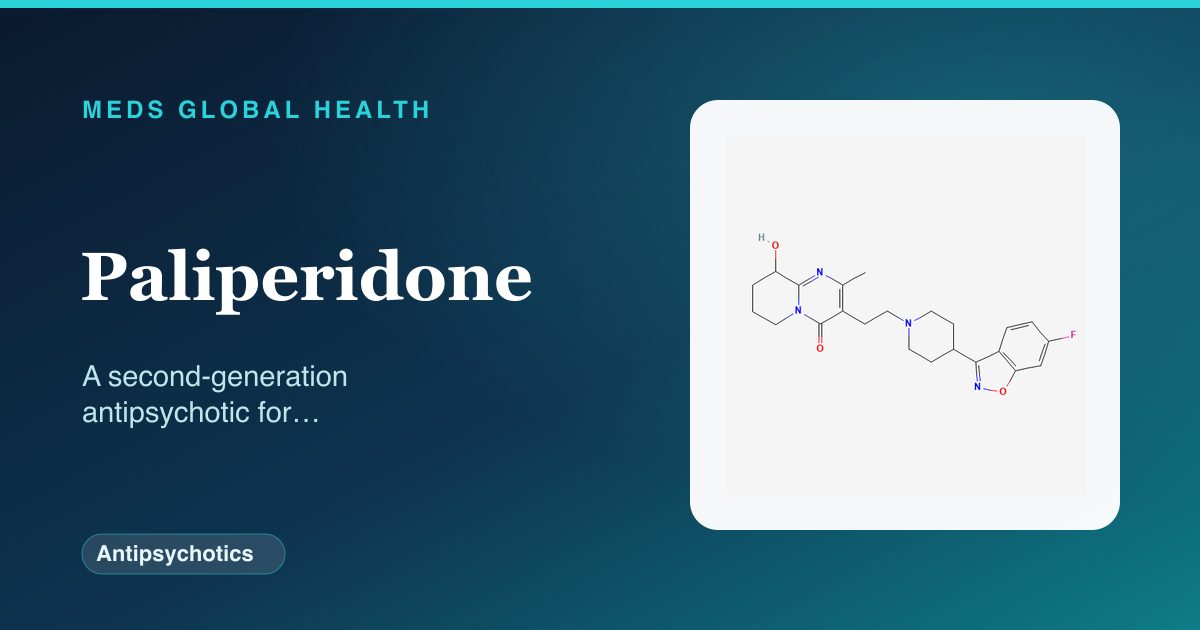
What it is
Paliperidone is a second-generation, or 'atypical', antipsychotic used in the UK to treat schizophrenia. It can help reduce symptoms such as hallucinations, false beliefs and disorganised thinking. It is available both as a once-daily, slow-release tablet and as a long-acting injection (a depot) given by a healthcare professional at regular intervals, which some people prefer because it removes the need to remember a daily tablet.
How it works
Paliperidone mainly blocks dopamine receptors in the brain, reducing the over-active dopamine signalling linked to symptoms such as hallucinations and delusions. It also acts on serotonin receptors, which is typical of second-generation antipsychotics. The tablet releases slowly through the day, while the depot injection releases the medicine gradually over weeks.
Company & origin
Originated / developed by: Janssen.
Paliperidone was developed by Janssen (part of Johnson & Johnson) and first approved in the United States in 2006. It is the main active product of the older antipsychotic risperidone.
What it treats
Conditions Paliperidone is used for
Practical use
How to take Paliperidone
General, dose-free guidance — always follow your prescriber's and the leaflet's specific instructions.
- If taking tablets, swallow them whole and do not crush or chew them.
- Take tablets at about the same time each day; some are taken in the morning.
- If using the depot, attend your scheduled appointments so injections are given on time.
- Keep taking it even when you feel well, as it works by preventing symptoms returning.
- Do not stop suddenly; any change should be planned with your team.
- Report unusual movements, restlessness, or breast or period changes to your prescriber.
Weighing it up
Advantages & disadvantages of Paliperidone
Advantages
- Effective for the symptoms of schizophrenia.
- Available as a long-acting depot injection, removing the need for a daily tablet.
- Slow-release tablet gives a steady level through the day.
- Well-established second-generation antipsychotic.
Disadvantages
- Commonly raises prolactin, which can affect periods and sexual function.
- Can cause weight gain and changes in blood sugar and cholesterol.
- Can cause movement-related effects such as stiffness or restlessness.
- Should not be stopped suddenly, as symptoms can return.
- Requires regular monitoring and, for the depot, regular appointments.
Practical use
Good to know
Paliperidone can be taken as a daily slow-release tablet (swallowed whole, not crushed or chewed) or given as a long-acting depot injection by a nurse, with the injection an option when a steady level without daily dosing is helpful. It can take some weeks to see the full benefit, and it should not be stopped suddenly. It commonly raises prolactin (which can affect periods, sexual function and, sometimes, breast changes) and needs monitoring of weight, blood sugar and cholesterol; movement-related effects can also occur.
Who should not take it / use with caution
- People with a known allergy to paliperidone or risperidone.
- Use with caution in people with heart conditions, Parkinson's disease or dementia, and in older people.
- Use with caution in people with diabetes or significant kidney problems.
- Use with caution in pregnancy and breastfeeding, after discussion with the specialist team.
Monitoring
- Weight, blood sugar and cholesterol checks.
- Prolactin-related symptoms, and prolactin levels if needed.
- Watching for movement-related side effects and heart health as advised.
Side effects
- Movement-related effects such as stiffness, tremor or restlessness.
- Weight gain and changes in blood sugar and cholesterol.
- Raised prolactin, which can cause period changes, sexual difficulties or breast changes.
- Drowsiness or dizziness.
- Injection-site reactions with the depot form.
Key interactions
- Other medicines that cause drowsiness, including alcohol.
- Medicines that affect heart rhythm.
- Some medicines for Parkinson's disease, whose effect may be reduced.
- Tell your prescriber and pharmacist about all your medicines.
Available as: Slow-release tablets, and long-acting depot injections given by a healthcare professional.
Answers
Paliperidone: frequently asked questions
What is the depot form of paliperidone?
The depot is a long-acting injection given by a nurse at regular intervals. It releases the medicine slowly over weeks, so you do not need to take a daily tablet, which some people find easier and more reliable.
Does paliperidone affect periods or sexual function?
It can. Paliperidone often raises a hormone called prolactin, which may cause changes to periods, sexual difficulties or breast changes. Tell your prescriber if you notice these, as adjustments may help.
Can I crush the paliperidone tablet?
No. The tablet is a slow-release type that must be swallowed whole; crushing or chewing it releases the medicine too quickly. If you have trouble swallowing, tell your team.
Can I stop paliperidone when I feel better?
You should not stop it suddenly, as symptoms can return. It works by keeping symptoms away, so any change should be planned with your specialist team.
What is the difference between Invega and Xeplion?
Both contain paliperidone. Invega is a brand of the slow-release tablet, while Xeplion is a brand of the long-acting depot injection; the active ingredient is the same.
The wider class
About Antipsychotics
Paliperidone belongs to the antipsychotics class. For how the class as a whole works, its shared safety principles and monitoring, see the full guide.
Browse by body system
Authoritative sources
- BNF: Paliperidone.
- NICE CKS: Paliperidone.
- electronic Medicines Compendium (SmPC): Invega / Xeplion (paliperidone).
Building a medicines information resource?
We create evidence-led, dose-free drug and formulary references for teams.