A first-generation antipsychotic
Haloperidol
A long-established first-generation antipsychotic used for schizophrenia, agitation and other conditions; it can cause movement disorders and affect heart rhythm.
What is Haloperidol?
Haloperidol is a first-generation ('typical') antipsychotic used for schizophrenia and other psychoses, severe agitation, and certain other conditions. It is effective but more likely than newer antipsychotics to cause movement side effects, and it can affect heart rhythm, so it is used with monitoring. It is taken regularly and should not be stopped suddenly.
Education and reference only. This is a plain-language guide to Haloperidol — it deliberately contains no doses. Doses depend on the person, the brand and the reason for treatment, and belong with your prescriber. Always check the BNF, the product labelling (SmPC) and follow medical advice.
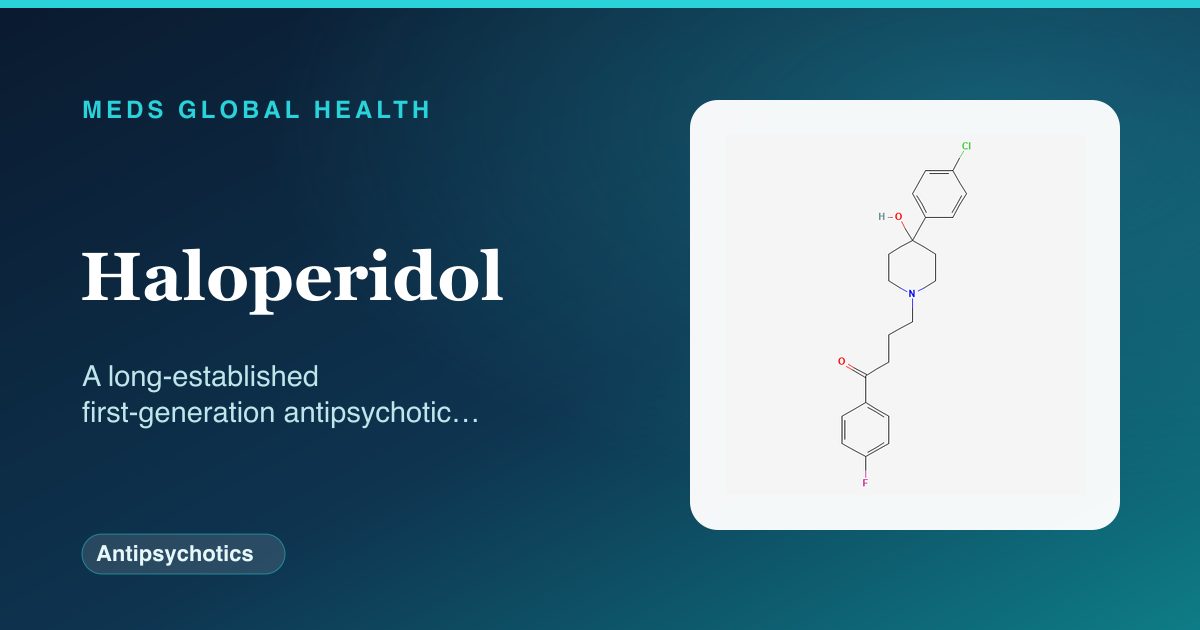
What it is
Haloperidol is a long-established first-generation ('typical') antipsychotic used in the UK for schizophrenia and other forms of psychosis, for severe agitation and aggression, and in some other situations such as certain movement and tic disorders and persistent hiccups. It is available as tablets, an oral solution and as injections used in specific settings. It is effective and well understood, but compared with newer antipsychotics it is more likely to cause movement-related side effects, so it is used carefully and reviewed regularly.
How it works
Haloperidol works mainly by strongly blocking dopamine receptors in the brain, calming the over-active dopamine signalling thought to drive psychotic symptoms such as hallucinations and delusions. This strong dopamine blockade is effective but also affects the brain pathways that control movement, which is why it can cause stiffness, tremor and other movement disorders. Its effect on the heart's electrical system explains the need to watch heart rhythm.
Company & origin
Originated / developed by: Developed by Janssen Pharmaceutica..
Haloperidol was discovered by Paul Janssen in Belgium in the late 1950s and has been widely used worldwide ever since.
What it treats
Conditions Haloperidol is used for
Practical use
How to take Haloperidol
General, dose-free guidance — always follow your prescriber's and the leaflet's specific instructions.
- Take it regularly as prescribed to keep symptoms stable — it is not a medicine to take only when you feel unwell.
- Report any new stiffness, tremor, restlessness, abnormal movements or muscle spasms promptly, as these extrapyramidal effects can often be managed.
- Attend monitoring appointments, including any heart tracing (ECG) and blood tests your team arranges.
- Do not stop it suddenly — speak to your team, who will reduce it gradually if it is being changed or stopped.
- Seek urgent help for a very high temperature with marked stiffness, confusion or a racing heart, which can rarely signal a serious reaction.
- Tell your prescriber about all your other medicines, as some add to its effect on heart rhythm.
Weighing it up
Advantages & disadvantages of Haloperidol
Advantages
- Effective and long-established for psychosis and severe agitation.
- Available in several forms, including options useful in acute settings.
- Well understood, with decades of clinical experience behind it.
Disadvantages
- More likely than newer antipsychotics to cause movement (extrapyramidal) side effects.
- Can affect heart rhythm (QT prolongation), needing monitoring.
- Can cause sedation and, like all antipsychotics, raises stroke and death risk in older people with dementia.
- Must be taken regularly and not stopped suddenly.
Practical use
Good to know
It is taken regularly to keep symptoms settled, not just when you feel unwell, and stopping it suddenly can allow symptoms to return or cause withdrawal effects, so any change is made gradually. It can cause movement disorders known as extrapyramidal effects — such as stiffness, tremor, restlessness or, with long-term use, abnormal movements — which should be reported promptly. It can affect the heart's rhythm (the QT interval), so the heart tracing and blood salts may be checked, particularly with higher exposure or alongside other medicines that have the same effect. As with all antipsychotics, it is used with particular caution in older people with dementia because of an increased risk of stroke and death.
Who should not take it / use with caution
- People with significant heart rhythm problems or a prolonged QT interval, where it can worsen rhythm disturbances.
- People with Parkinson's disease or related conditions, where dopamine blockade can worsen symptoms, and those who have had a serious reaction to antipsychotics.
- Used with particular caution in older people with dementia (raised stroke and death risk), and in epilepsy, significant heart, liver or kidney disease, and in pregnancy and breastfeeding.
Monitoring
- Watching for movement (extrapyramidal) side effects at each review.
- Heart tracing (ECG) and blood salts where appropriate, especially with higher exposure or interacting medicines.
- Weight, blood sugar and lipids over time, and a gradual plan if it is being stopped.
Side effects
- Movement disorders (extrapyramidal effects): stiffness, tremor, restlessness, muscle spasms and, with long-term use, abnormal involuntary movements.
- Drowsiness, dizziness and low blood pressure on standing.
- Effects on heart rhythm (QT prolongation) and, occasionally, raised prolactin causing hormonal effects.
- Rare but serious: neuroleptic malignant syndrome (high fever, marked stiffness, confusion) needing urgent help.
Key interactions
- Other medicines that prolong the QT interval (some antibiotics, antidepressants and other antipsychotics) — added risk of heart rhythm problems.
- Sedatives and alcohol add to drowsiness; medicines for Parkinson's may be opposed by haloperidol.
- Some medicines that affect liver enzymes can alter its levels; tell your pharmacist about all your medicines.
Available as: Available as tablets, an oral solution and injections used in specific settings.
Answers
Haloperidol: frequently asked questions
Why does haloperidol cause stiffness or shaking?
It strongly blocks dopamine, which also affects the brain's movement-control pathways. These extrapyramidal effects should be reported, as they can often be managed by your team.
Does haloperidol affect the heart?
It can affect the heart's rhythm (the QT interval), so your team may arrange a heart tracing and blood tests, especially with higher exposure or other interacting medicines.
Can I stop haloperidol suddenly?
No. Stopping suddenly can allow symptoms to return or cause withdrawal effects. Any change is made gradually with your team.
Is haloperidol safe for older people with dementia?
It is used with particular caution, because antipsychotics raise the risk of stroke and death in this group. It is reserved for when clearly needed and reviewed closely.
Do I need to take it every day?
Yes. It is taken regularly to keep symptoms settled rather than only when you feel unwell.
The wider class
About Antipsychotics
Haloperidol belongs to the antipsychotics class. For how the class as a whole works, its shared safety principles and monitoring, see the full guide.
Browse by body system
Authoritative sources
- BNF
- NICE CKS
Building a medicines information resource?
We create evidence-led, dose-free drug and formulary references for teams.