An antipsychotic used mainly for short-term agitation, especially in older people
Promazine
An older antipsychotic used mainly for short-term agitation and restlessness, especially in older people.
What is Promazine?
Promazine is an older antipsychotic medicine used mainly for the short-term relief of agitation and restlessness, particularly in elderly people. It has a calming, sedating effect. The most common effects are drowsiness and a drop in blood pressure, which can cause dizziness and increase the risk of falls, especially in older people. It can also cause movement side effects and affect the heart's rhythm, and it has antimuscarinic effects such as dry mouth and constipation. It is taken by mouth and used carefully, usually for short periods.
Education and reference only. This is a plain-language guide to Promazine — it deliberately contains no doses. Doses depend on the person, the brand and the reason for treatment, and belong with your prescriber. Always check the BNF, the product labelling (SmPC) and follow medical advice.
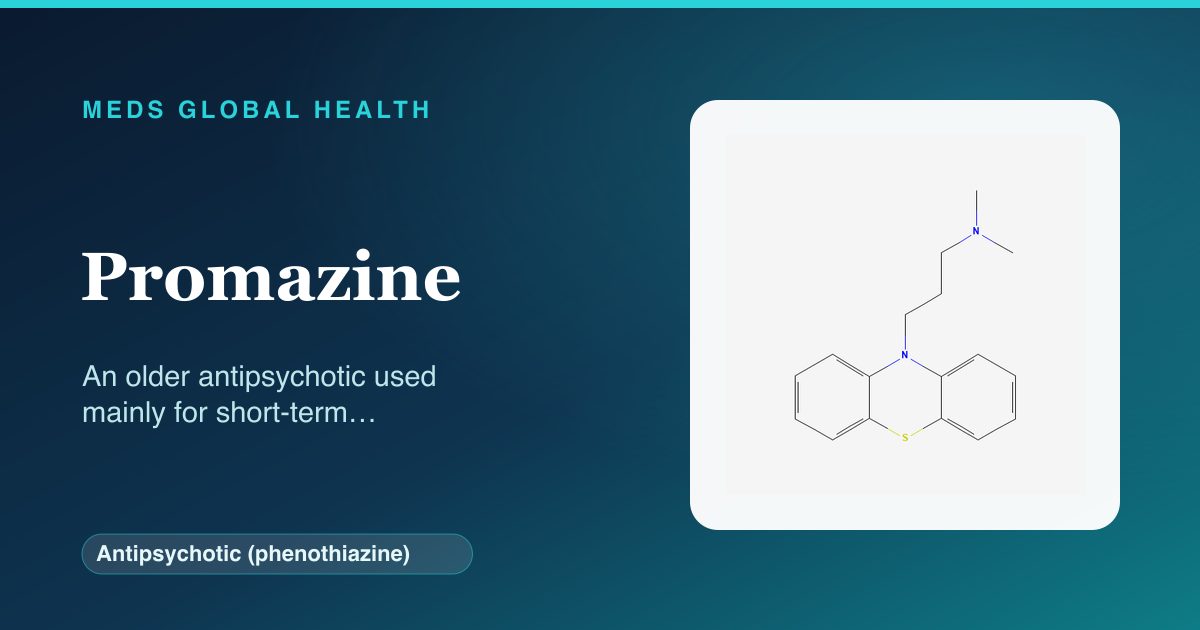
What it is
Promazine is an antipsychotic of the phenothiazine type. In practice it is used mainly for its calming effect, to give short-term relief of agitation and restlessness, particularly in older people. It is less used for treating the full range of psychotic illness than some other antipsychotics. It is taken by mouth, as a tablet or liquid. Because older people are more sensitive to its effects, especially drowsiness, low blood pressure and falls, it is used carefully, at the lowest helpful dose and usually for as short a time as possible.
How it works
Promazine works by blocking several chemical messengers in the brain and body, including dopamine, which gives it its antipsychotic and calming actions, and others that produce its sedating effect. This calming, sedating action is why it is mainly used for short-term agitation and restlessness. Blocking these messengers, however, also explains its side effects: a drop in blood pressure on standing, antimuscarinic effects such as dry mouth and constipation, and, by affecting dopamine, movement side effects. Because it is sedating, it can make people drowsy and less steady, which matters most in older people.
Company & origin
An older phenothiazine antipsychotic used in the UK mainly for short-term relief of agitation and restlessness, particularly in the elderly.
Practical use
How to take Promazine
General, dose-free guidance — always follow your prescriber's and the leaflet's specific instructions.
- Take it by mouth as prescribed, usually for a short period and at the lowest helpful dose.
- Stand up slowly, as it can lower your blood pressure and cause dizziness, raising the risk of falls.
- Avoid alcohol, which adds to the drowsiness it can cause.
- Take care with driving or using machinery until you know how it affects you.
- Tell your prescriber about other medicines, especially sedating ones or those affecting the heart rhythm.
Weighing it up
Advantages & disadvantages of Promazine
Advantages
- Can give short-term relief of agitation and restlessness through its calming effect.
- Taken by mouth as a tablet or liquid.
- A long-established medicine with extensive clinical experience.
Disadvantages
- Sedating and can lower blood pressure, causing drowsiness, dizziness and a higher risk of falls.
- Has antimuscarinic effects such as dry mouth, blurred vision and constipation.
- Can cause movement side effects and affect the heart's rhythm.
Practical use
Good to know
With promazine, the main thing to keep in mind is that it is sedating and lowers blood pressure, so drowsiness, dizziness on standing and an increased risk of falls are the most important everyday concerns, especially in older people. Standing up slowly can help. It also has antimuscarinic effects, such as dry mouth, blurred vision and constipation, and can cause movement side effects such as stiffness or tremor. Like other medicines of this type, it can affect the heart's rhythm. It is usually meant for short-term use, and in older people with dementia, antipsychotics in general carry extra risks and are used only when truly needed. Do not drink alcohol with it, as this adds to drowsiness, and take care with driving until you know how it affects you.
Who should not take it / use with caution
- People who have had a serious allergic reaction to promazine or related phenothiazines should not take it.
- It is used with great caution in the elderly, especially those with dementia, because of risks including falls.
- It is used with care in people with heart disease, low blood pressure, Parkinson's disease or certain other conditions.
Monitoring
- Reviewing how well agitation is controlled and whether the medicine is still needed.
- Watching for drowsiness, low blood pressure, falls and movement side effects, especially in older people.
- Reviewing the heart's rhythm where appropriate, particularly with other heart-rhythm medicines.
Side effects
- Drowsiness, and dizziness or light-headedness from a drop in blood pressure.
- Antimuscarinic effects such as dry mouth, blurred vision and constipation.
- Movement effects such as stiffness, tremor or restlessness.
- Rarely but seriously, dangerous heart-rhythm changes or a severe reaction with high fever and muscle stiffness, which need urgent medical attention.
Key interactions
- It adds to the drowsiness caused by alcohol, strong painkillers and other sedating medicines.
- It can interact with medicines that affect the heart's rhythm, so tell your prescriber what you take.
- It can add to the effects of other antimuscarinic medicines, increasing dry mouth and constipation.
Available as: Tablets and a liquid taken by mouth.
Answers
Promazine: frequently asked questions
What is promazine used for?
It is an older antipsychotic used mainly for the short-term relief of agitation and restlessness, particularly in older people, through its calming effect.
Why might it make me dizzy?
It can lower your blood pressure, especially on standing, which causes dizziness and raises the risk of falls; standing up slowly can help.
Can I drink alcohol with it?
No. Alcohol adds to the drowsiness promazine can cause, so it is best avoided while taking it.
Why is it used carefully in older people?
Older people are more sensitive to its drowsiness and blood-pressure effects and to falls, and antipsychotics carry extra risks in dementia, so it is used carefully and short-term.
Does it have other common side effects?
Yes, it can cause dry mouth, blurred vision and constipation, and sometimes movement effects such as stiffness or tremor.
The wider class
About Antipsychotic (phenothiazine)
Promazine belongs to the antipsychotic (phenothiazine) class. For how the class as a whole works, its shared safety principles and monitoring, see the full guide.
Browse by body system
Authoritative sources
- BNF
- NICE CKS
Building a medicines information resource?
We create evidence-led, dose-free drug and formulary references for teams.