A butyrophenone anti-sickness medicine
Droperidol
A butyrophenone medicine used mainly to prevent and treat nausea and vomiting, especially after surgery or with opioids.
What is Droperidol?
Droperidol is a butyrophenone medicine that, although related to antipsychotics, is used in the UK mainly to prevent and treat nausea and vomiting, particularly after surgery or linked to strong painkillers (opioids). It works on the part of the brain that triggers sickness. It is usually given by injection in hospital or a clinical setting. An important caution is that it can affect the heart's rhythm (QT prolongation), so the heart may be checked and it is avoided in people with certain rhythm problems. It can also cause drowsiness and lower blood pressure.
Education and reference only. This is a plain-language guide to Droperidol — it deliberately contains no doses. Doses depend on the person, the brand and the reason for treatment, and belong with your prescriber. Always check the BNF, the product labelling (SmPC) and follow medical advice.
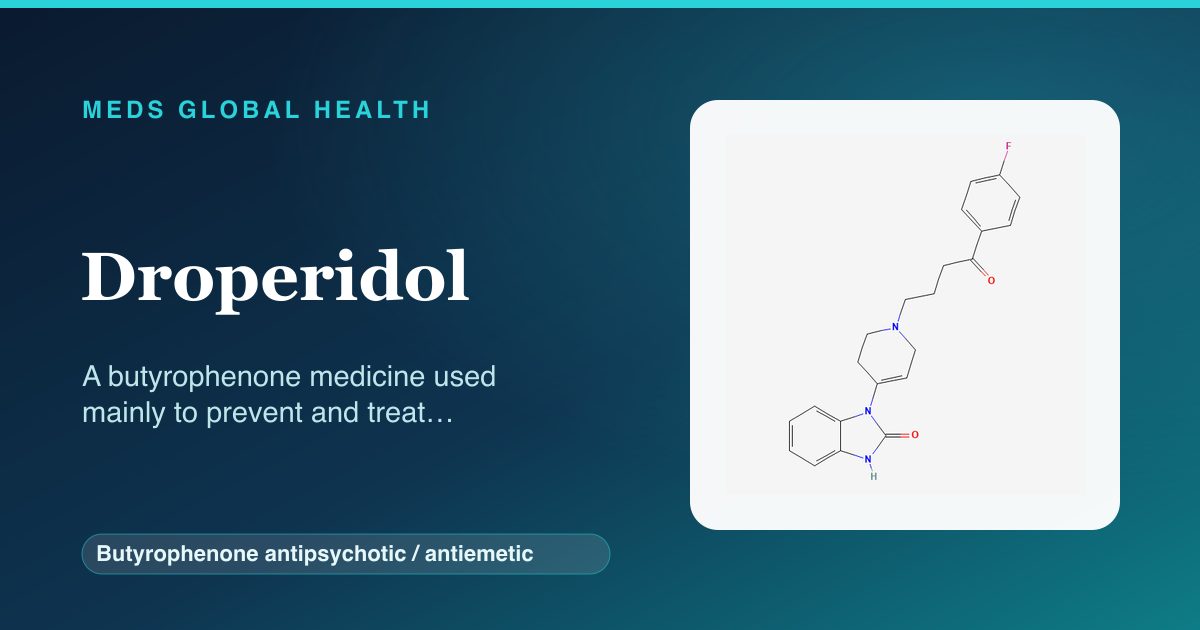
What it is
Droperidol is a butyrophenone, a class related to some older antipsychotics, but in modern UK practice it is used mainly as an anti-sickness medicine. It is most often given to prevent and treat nausea and vomiting after an operation or caused by opioid painkillers, and it is sometimes used to help calm severe agitation. It is usually given as an injection by healthcare staff rather than taken at home.
How it works
Droperidol blocks dopamine signals in the part of the brain that triggers nausea and vomiting, which helps prevent and settle sickness. The same dopamine-blocking action is behind its calming effect when it is used for agitation. Because dopamine blockers can affect the heart's electrical timing, droperidol can prolong part of the heartbeat (the QT interval), which is why heart rhythm is considered before and sometimes during use.
Company & origin
A butyrophenone medicine used in the UK mainly to prevent and treat nausea and vomiting, and sometimes for agitation.
Practical use
How to take Droperidol
General, dose-free guidance — always follow your prescriber's and the leaflet's specific instructions.
- It is usually given as an injection by healthcare staff, often around the time of surgery or with strong painkillers.
- Tell your team about any heart-rhythm problems and all the medicines you take before it is given.
- Expect to have your heart rate, rhythm and blood pressure monitored, as it can affect these.
- Let staff know if you feel faint, dizzy, very drowsy or notice your heart racing or fluttering.
- Mention any restlessness, muscle stiffness or unusual movements, which should be reported.
- As it is given in a clinical setting, follow the instructions of the staff caring for you.
Weighing it up
Advantages & disadvantages of Droperidol
Advantages
- Effective at preventing and treating nausea and vomiting, especially after surgery or with opioids.
- Acts quickly when given by injection in a clinical setting.
- Can also help calm severe agitation when needed.
Disadvantages
- Can affect the heart's rhythm (QT prolongation), so heart checks may be needed.
- Can cause drowsiness and a drop in blood pressure.
- May occasionally cause restlessness, muscle stiffness or unusual movements.
Practical use
Good to know
The most important safety point with droperidol is its effect on heart rhythm: it can prolong the QT interval, so it is avoided in people with certain rhythm problems, very low potassium or magnesium, or who take other medicines that affect the heart's rhythm, and an ECG may be done. It is usually given by injection in a monitored setting, so blood pressure and heart rate can be watched, as it can cause drowsiness and a drop in blood pressure. Like other dopamine-blocking medicines, it can occasionally cause restlessness or muscle stiffness and movements. Because it is given by clinical staff for short-term situations such as after surgery or with opioids, much of the safety checking is handled for you, but it is still important that your team knows your heart history and all the medicines you take.
Who should not take it / use with caution
- It is avoided in people with certain heart-rhythm problems or a long QT interval.
- It is not used where blood potassium or magnesium is low until that is corrected.
- It is used with great caution alongside other medicines that affect the heart's rhythm.
Monitoring
- Heart rhythm, often with an ECG, before and sometimes during treatment.
- Blood pressure, heart rate and level of drowsiness while it is working.
- Blood potassium and magnesium, and watching for restlessness or muscle effects.
Side effects
- Drowsiness, dizziness and a drop in blood pressure are common.
- Restlessness, muscle stiffness or unusual movements in some people.
- Rarely, serious heart-rhythm disturbances linked to QT prolongation.
Key interactions
- Other medicines that prolong the QT interval (some antibiotics, antipsychotics and anti-sickness medicines) add to the heart-rhythm risk.
- Sedatives, strong painkillers and alcohol can add to drowsiness and the drop in blood pressure.
- Water tablets and other medicines that lower potassium or magnesium can increase the rhythm risk.
Available as: An injection given by healthcare staff, usually in hospital or a clinical setting.
Answers
Droperidol: frequently asked questions
Is droperidol an antipsychotic or an anti-sickness medicine?
It belongs to a class related to older antipsychotics, but in the UK it is used mainly as an anti-sickness medicine, especially after surgery or with opioids.
Why does my heart need checking?
Droperidol can affect the heart's electrical timing (the QT interval), so your heart rhythm may be checked and it is avoided in people with certain rhythm problems.
How is it given?
It is usually given as an injection by healthcare staff in a monitored setting, rather than taken as a tablet at home.
What should I tell staff before it is given?
Tell them about any heart-rhythm problems and all the medicines you take, as some can add to the effect on the heart's rhythm.
Will it make me sleepy?
It can cause drowsiness and lower your blood pressure, so you will usually be monitored, and you should tell staff if you feel faint or very sleepy.
The wider class
About Butyrophenone antipsychotic / antiemetic
Droperidol belongs to the butyrophenone antipsychotic / antiemetic class. For how the class as a whole works, its shared safety principles and monitoring, see the full guide.
Browse by body system
Authoritative sources
- BNF
- NICE CKS
Building a medicines information resource?
We create evidence-led, dose-free drug and formulary references for teams.