A second-generation (atypical) antipsychotic
Ziprasidone
A second-generation antipsychotic used for schizophrenia and bipolar disorder, taken with food and with attention to heart rhythm.
What is Ziprasidone?
Ziprasidone is a second-generation (atypical) antipsychotic used to treat schizophrenia and bipolar disorder. It helps settle symptoms such as hallucinations, disordered thinking and mood disturbance by acting on chemical messengers in the brain. Two practical points stand out: it must be taken with food, because food greatly improves how well it is absorbed, and it can affect the heart's electrical rhythm (the QT interval), so heart health and other medicines are reviewed. It can also cause sedation and some metabolic effects, so these are monitored.
Education and reference only. This is a plain-language guide to Ziprasidone — it deliberately contains no doses. Doses depend on the person, the brand and the reason for treatment, and belong with your prescriber. Always check the BNF, the product labelling (SmPC) and follow medical advice.
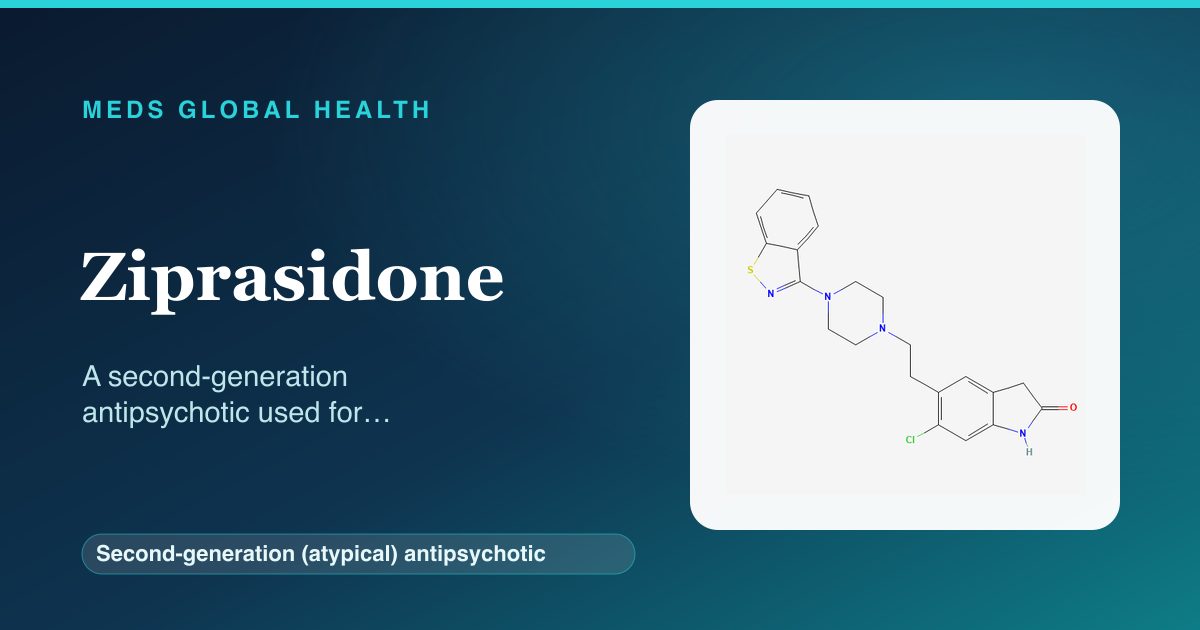
What it is
Ziprasidone is an antipsychotic medicine of the newer, second-generation (atypical) type. It is used to treat schizophrenia, a long-term mental-health condition, and bipolar disorder, where mood swings between highs and lows. It works on chemical messengers in the brain to reduce symptoms such as hallucinations, delusions, disordered thinking and disturbed mood. It is usually taken by mouth, with food, and is prescribed and monitored by mental-health specialists or under their guidance. As with other antipsychotics, it is part of a wider plan that may include other support and treatment.
How it works
Ziprasidone acts on several chemical messenger systems in the brain, particularly dopamine and serotonin. In conditions such as schizophrenia, the balance of these messengers is disturbed, and by adjusting their activity ziprasidone helps reduce symptoms like hallucinations and disordered thinking and helps steady mood in bipolar disorder. A key practical feature is that the body absorbs it far better when it is taken with food, so taking it with a proper meal is important for it to work reliably. Like other antipsychotics, it can also affect the heart's electrical rhythm, which is why heart health is considered.
Company & origin
A second-generation antipsychotic used for schizophrenia and bipolar disorder; taken with food, with attention to the heart's rhythm.
What it treats
Conditions Ziprasidone is used for
Practical use
How to take Ziprasidone
General, dose-free guidance — always follow your prescriber's and the leaflet's specific instructions.
- Always take it with food, as it is absorbed much better with a proper meal.
- Take it regularly as prescribed, at about the same times each day.
- Tell your prescriber about any heart problems, fainting or palpitations before and during treatment.
- Be careful with driving or operating machinery until you know how drowsy it makes you.
- Do not stop it suddenly; speak to your prescriber if you want to change or stop it.
Weighing it up
Advantages & disadvantages of Ziprasidone
Advantages
- Effective for schizophrenia and bipolar disorder, reducing symptoms and steadying mood.
- A second-generation antipsychotic option that may suit people who do not get on with others.
- Tends to have less effect on weight than some other antipsychotics for many people.
Disadvantages
- Must be taken with food, or it may not be absorbed and work properly.
- Can affect the heart's rhythm (the QT interval), so heart health and other medicines are reviewed.
- Can cause sedation and some metabolic effects, which need monitoring.
Practical use
Good to know
Two things are especially important with ziprasidone. First, always take it with food: it is absorbed much better with a meal, and taking it on an empty stomach can mean it does not work properly. Second, it can affect the heart's electrical rhythm (lengthening the QT interval), so your prescriber will ask about heart problems, fainting and family history, and will review other medicines that have the same effect; tell them about any palpitations, fainting or dizziness. Sedation and drowsiness are common, particularly at first, so take care with driving until you know how it affects you. As with other second-generation antipsychotics, it can have metabolic effects, such as changes in weight, blood sugar or cholesterol, so these are checked over time. Do not stop it suddenly without advice.
Who should not take it / use with caution
- People who have had a serious allergic reaction to ziprasidone should not take it.
- It is generally avoided in people with certain heart-rhythm problems, a long QT interval, or recent heart attack or heart failure.
- It is used with caution alongside other medicines that affect the heart's QT interval, and in pregnancy on specialist advice.
Monitoring
- Reviewing heart health, with heart tracing (ECG) checks where appropriate.
- Monitoring weight, blood sugar and cholesterol over time.
- Reviewing symptoms, side effects and overall response to treatment.
Side effects
- Drowsiness or sedation, especially when starting.
- Dizziness, restlessness or movement-related effects.
- Changes in the heart's rhythm (the QT interval), and sometimes metabolic changes such as in weight or blood sugar.
- Rarely but seriously, fainting, an abnormal heartbeat or a severe reaction, which need urgent attention.
Key interactions
- Other medicines that affect the heart's QT interval should be reviewed, as effects can add up.
- Alcohol and other sedating medicines can increase drowsiness.
- Tell your prescriber about all your medicines, including over-the-counter and herbal ones.
Available as: Capsules taken by mouth with food, and a form for injection in some settings.
Answers
Ziprasidone: frequently asked questions
What is ziprasidone used for?
It is a second-generation antipsychotic used to treat schizophrenia and bipolar disorder, helping reduce symptoms and steady mood.
Why must I take it with food?
Ziprasidone is absorbed much better when taken with a proper meal, so taking it on an empty stomach can mean it does not work properly.
Does it affect the heart?
It can affect the heart's electrical rhythm (the QT interval), so your prescriber checks heart health and reviews other medicines that do the same.
Will it make me drowsy?
Sedation and drowsiness are common, especially at first, so take care with driving or machinery until you know how it affects you.
Can I stop it if I feel better?
Do not stop it suddenly; speak to your prescriber first, as stopping antipsychotics abruptly can cause problems and symptoms may return.
The wider class
About Second-generation (atypical) antipsychotic
Ziprasidone belongs to the second-generation (atypical) antipsychotic class. For how the class as a whole works, its shared safety principles and monitoring, see the full guide.
Browse by body system
Authoritative sources
- BNF
- NICE CKS
Building a medicines information resource?
We create evidence-led, dose-free drug and formulary references for teams.