A first-generation antipsychotic
Molindone
An older first-generation antipsychotic used to treat schizophrenia, mainly available in the United States.
What is Molindone?
Molindone is an older, first-generation antipsychotic used to treat schizophrenia. It is taken by mouth and works by dampening down the brain chemical dopamine. Like other medicines of its type, it can cause movement-related side effects, such as restlessness, stiffness and tremor, as well as drowsiness. There is a class warning that antipsychotics raise the risk of death when used to treat behavioural symptoms of dementia in older people, so they are not for that purpose. Molindone is largely a United States product and is rarely, if ever, used in the UK.
Education and reference only. This is a plain-language guide to Molindone — it deliberately contains no doses. Doses depend on the person, the brand and the reason for treatment, and belong with your prescriber. Always check the BNF, the product labelling (SmPC) and follow medical advice.
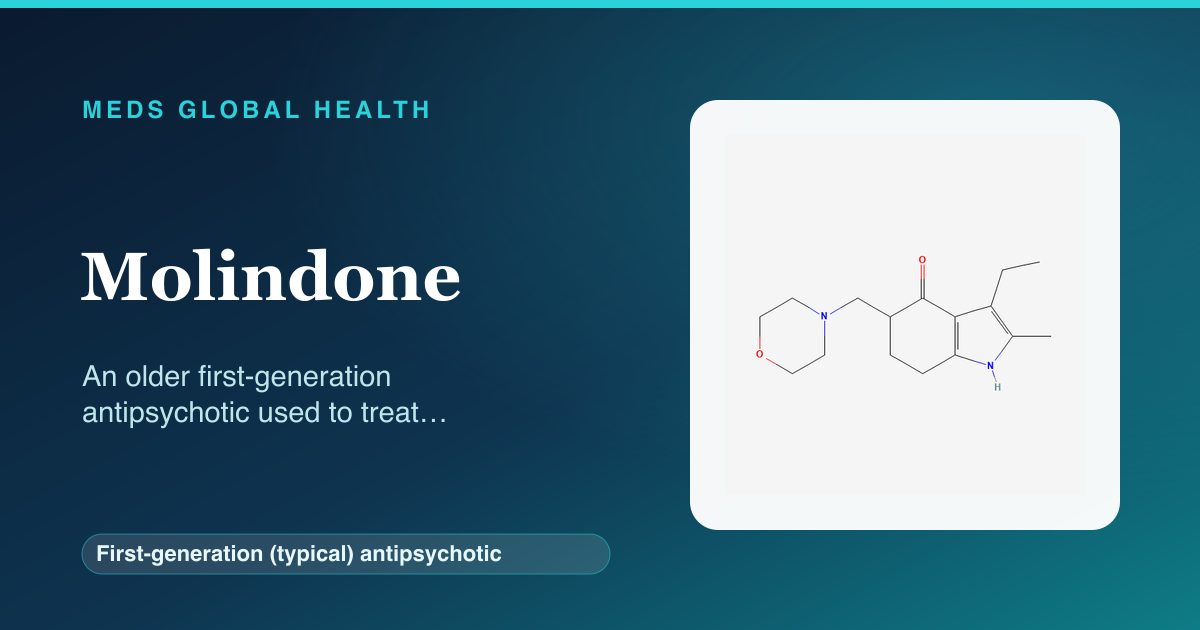
What it is
Molindone is an older antipsychotic medicine, of the type often called first-generation or typical, used to treat schizophrenia, a serious mental-health condition that can affect thinking, perception and behaviour. It is taken by mouth and helps reduce symptoms such as hearing voices, false beliefs and disordered thinking. It is largely a product of the United States and is rarely, if ever, seen in the UK, where other antipsychotics are used instead. It is prescribed and supervised by a specialist mental-health team.
How it works
Molindone works mainly by blocking the action of dopamine, a chemical messenger in the brain. In schizophrenia, overactivity of dopamine in certain brain pathways is thought to contribute to symptoms such as hallucinations and delusions, so reducing its effect helps calm these. However, dopamine is also involved in controlling movement, which is why blocking it can cause movement-related side effects such as stiffness, tremor and restlessness, a feature shared by other first-generation antipsychotics.
Company & origin
An older first-generation antipsychotic for schizophrenia, used mainly in the United States and rarely seen in the UK.
What it treats
Conditions Molindone is used for
Practical use
How to take Molindone
General, dose-free guidance — always follow your prescriber's and the leaflet's specific instructions.
- Take it by mouth exactly as prescribed, at about the same time each day.
- See how it affects you before driving or using machinery, as it can cause drowsiness.
- Do not stop it suddenly; any changes should be made gradually with your specialist team.
- Report any new restlessness, stiffness, tremor or unusual involuntary movements promptly.
- Tell your prescriber about all your other medicines, as some can add to its effects.
Weighing it up
Advantages & disadvantages of Molindone
Advantages
- Can reduce the symptoms of schizophrenia, such as hallucinations and disordered thinking.
- Taken by mouth as a regular treatment.
- A long-established antipsychotic with decades of use behind it.
Disadvantages
- Commonly causes movement-related side effects such as restlessness, stiffness and tremor.
- Can cause drowsiness, affecting driving and concentration.
- An older medicine largely confined to the United States and rarely used in the UK.
Practical use
Good to know
Like other first-generation antipsychotics, molindone is particularly associated with movement-related effects — restlessness, stiffness, tremor and slowed movement — and, rarely, with longer-term involuntary movements; any new movement problems should be reported. It can also cause drowsiness, so it is sensible to see how it affects you before driving. An important class warning applies to all antipsychotics: they increase the risk of death and stroke when used to manage behavioural and psychological symptoms of dementia in older people, so they are not used for that purpose. Antipsychotics are not stopped suddenly, as this can cause symptoms to return; any changes are made gradually with the specialist team. It is largely a United States medicine and is rarely encountered in the UK.
Who should not take it / use with caution
- People who have had a serious allergic reaction to molindone should not take it.
- It is not used to manage behavioural symptoms of dementia in older people, as antipsychotics raise the risk of death and stroke in this group.
- It is used with caution in people who are very drowsy or who have certain other conditions, under specialist guidance.
Monitoring
- Reviewing how well symptoms are controlled and how the medicine is tolerated.
- Watching for movement-related side effects and any longer-term involuntary movements.
- Checking general physical health, including weight, over time.
Side effects
- Movement-related effects such as restlessness, stiffness, tremor and slowed movement.
- Drowsiness, dizziness or a dry mouth.
- Weight or appetite changes in some people.
- Rarely, longer-term involuntary movements, or a serious reaction with high fever and muscle stiffness that needs urgent medical attention.
Key interactions
- It adds to the drowsiness caused by alcohol, sedatives and some painkillers.
- Other medicines that affect dopamine or the heart's rhythm should be reviewed with your prescriber.
- Tell your team about all your medicines, including ones bought without a prescription.
Available as: Tablets taken by mouth.
Answers
Molindone: frequently asked questions
What is molindone used for?
It is an older first-generation antipsychotic used to treat schizophrenia by reducing symptoms such as hallucinations and disordered thinking.
Why does it cause movement problems?
It blocks dopamine, which is also involved in controlling movement, so it can cause restlessness, stiffness and tremor, as other first-generation antipsychotics can.
Can it be used for dementia symptoms?
No. Antipsychotics raise the risk of death and stroke when used for behavioural symptoms of dementia in older people, so molindone is not used for that purpose.
Is it available in the UK?
Molindone is largely a United States product and is rarely, if ever, used in the UK, where other antipsychotics are prescribed instead.
Can I stop it suddenly?
No. Stopping an antipsychotic suddenly can cause symptoms to return, so any changes should be made gradually with your specialist team.
The wider class
About First-generation (typical) antipsychotic
Molindone belongs to the first-generation (typical) antipsychotic class. For how the class as a whole works, its shared safety principles and monitoring, see the full guide.
Browse by body system
Authoritative sources
- BNF
- NICE CKS
Building a medicines information resource?
We create evidence-led, dose-free drug and formulary references for teams.