A first-generation antipsychotic (also called tiotixene)
Thiothixene
A first-generation antipsychotic used to treat schizophrenia, more commonly seen as a United States product.
What is Thiothixene?
Thiothixene is a first-generation (typical) antipsychotic used to treat schizophrenia. It is taken by mouth. Like other typical antipsychotics, it commonly causes movement-related side effects (extrapyramidal effects) such as stiffness, restlessness and tremor, as well as drowsiness. It can affect the heart's rhythm (the QT interval) and raise a hormone called prolactin. As with all antipsychotics, it carries a warning about an increased risk of death when used for behavioural symptoms of dementia in older people. It is largely a United States product rather than a routine UK medicine.
Education and reference only. This is a plain-language guide to Thiothixene — it deliberately contains no doses. Doses depend on the person, the brand and the reason for treatment, and belong with your prescriber. Always check the BNF, the product labelling (SmPC) and follow medical advice.
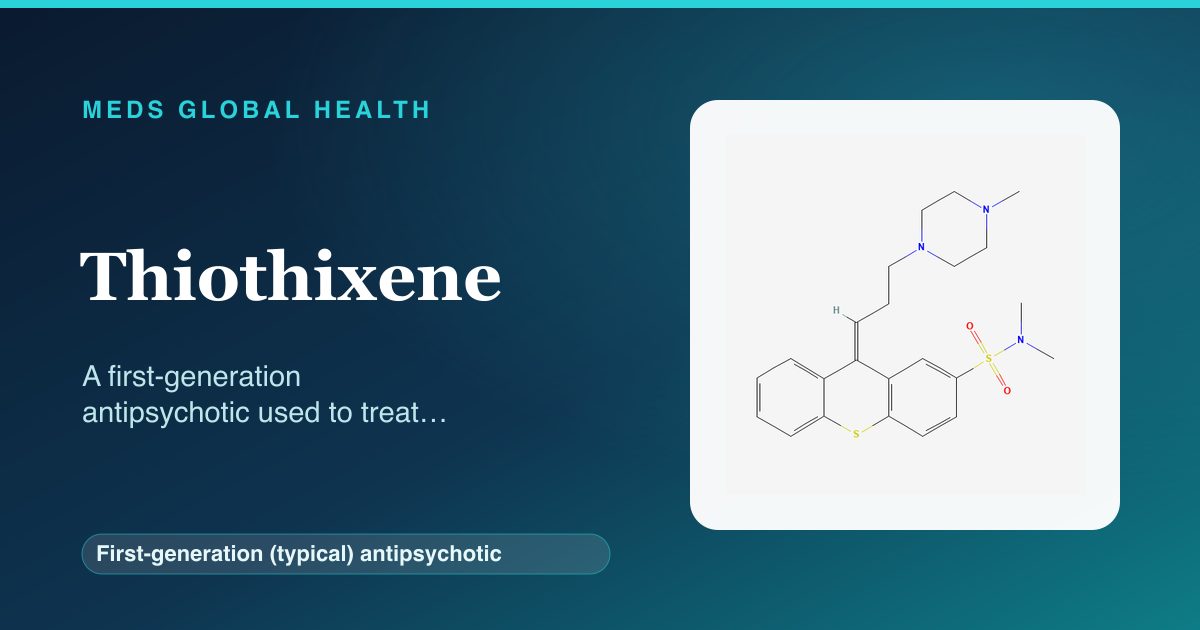
What it is
Thiothixene, sometimes spelled tiotixene, is one of the older, first-generation antipsychotic medicines, used to treat schizophrenia, a serious mental-health condition that can affect thoughts, perceptions and behaviour. It is taken by mouth. It is more familiar as a United States product and is not a routinely used antipsychotic in the UK, where other medicines are usually chosen, but it works in a similar way to other typical antipsychotics. It is prescribed and supervised by mental-health specialists who balance its benefits against its movement and other side effects.
How it works
Thiothixene works mainly by blocking dopamine, a chemical messenger in the brain. In schizophrenia, overactivity of dopamine signalling in certain brain pathways is linked to symptoms such as hearing voices and holding fixed false beliefs, and reducing this signalling helps ease them. However, blocking dopamine in other brain pathways is what causes the movement-related side effects and the rise in the hormone prolactin. Like other typical antipsychotics, it tends to cause more of these movement effects than the newer medicines.
Company & origin
A first-generation antipsychotic used to treat schizophrenia; largely a United States product rather than a routine UK medicine.
What it treats
Conditions Thiothixene is used for
Practical use
How to take Thiothixene
General, dose-free guidance — always follow your prescriber's and the leaflet's specific instructions.
- Take it by mouth as prescribed by your mental-health team, at the times they advise.
- Do not stop it suddenly; talk to your team first, as stopping abruptly can cause problems.
- Report any unusual movements, stiffness, restlessness or tremor, as these are common with this type of medicine.
- Seek emergency help for high fever with severe stiffness, sweating and confusion, which can signal a rare serious reaction.
- Tell your prescriber about heart-rhythm problems and any other medicines you take.
Weighing it up
Advantages & disadvantages of Thiothixene
Advantages
- An effective option for treating schizophrenia.
- Taken by mouth.
- A long-established medicine with extensive experience behind its use.
Disadvantages
- Commonly causes movement-related (extrapyramidal) side effects such as stiffness, restlessness and tremor.
- Causes drowsiness, can affect the heart's rhythm (QT) and can raise prolactin.
- Carries the antipsychotic class warning of increased death risk if used for dementia-related psychosis in older people.
Practical use
Good to know
The most prominent issues with thiothixene are movement-related side effects, called extrapyramidal effects, which include muscle stiffness, restlessness (an urge to keep moving), tremor and slowed movement; with long-term use there is also a risk of tardive dyskinesia, which is involuntary movements that can be lasting. Drowsiness is common, especially early on. It can affect the heart's electrical rhythm (the QT interval) and can raise prolactin, which may cause breast tenderness or changes in periods. As with all antipsychotics, there is an important class warning that using them to treat behavioural and psychological symptoms of dementia in older people is linked to an increased risk of death, so this is generally avoided. Rarely, a serious reaction called neuroleptic malignant syndrome, with high fever, severe stiffness and confusion, can occur and needs emergency care. Treatment should not be stopped suddenly without advice.
Who should not take it / use with caution
- People who have had a serious allergic reaction to thiothixene should not take it.
- It is generally avoided in older people with dementia for behavioural symptoms, because of an increased risk of death.
- It is used with caution in people with heart-rhythm problems or a long QT interval.
- It is used with caution in people with Parkinson's disease, certain blood disorders or severe drowsiness from other causes.
Monitoring
- Watching for movement-related side effects, including signs of tardive dyskinesia over time.
- Reviewing the heart's rhythm where appropriate and checking for symptoms of raised prolactin.
- Reviewing mental-health symptoms and overall response to treatment.
Side effects
- Movement-related effects such as stiffness, restlessness, tremor and slowed movement.
- Drowsiness, dizziness, dry mouth or constipation.
- Raised prolactin causing breast tenderness or changes in periods, and effects on the heart's rhythm.
- Rarely but seriously, tardive dyskinesia (lasting involuntary movements) or neuroleptic malignant syndrome, which needs emergency care.
Key interactions
- Other medicines that cause drowsiness, including alcohol, add to its sedating effect.
- Medicines that affect the heart's QT interval should be reviewed when taking it.
- Some Parkinson's medicines and other drugs acting on dopamine can interact, so tell your prescriber everything you take.
Available as: Capsules or tablets taken by mouth.
Answers
Thiothixene: frequently asked questions
What is thiothixene used for?
It is a first-generation antipsychotic used to treat schizophrenia, though it is largely a United States product rather than a routine UK medicine.
Why might it cause stiffness or restlessness?
It blocks dopamine in the brain, which helps symptoms but also causes movement-related (extrapyramidal) side effects such as stiffness, restlessness and tremor; report these to your team.
Does it affect the heart?
It can affect the heart's electrical rhythm (the QT interval), so it is used with caution in people with heart-rhythm problems and your prescriber will review other medicines that do the same.
Is it safe for an older relative with dementia?
Like all antipsychotics, it carries a warning of an increased risk of death when used for behavioural symptoms of dementia in older people, so this use is generally avoided.
Can I stop it if I feel better?
Do not stop it suddenly; talk to your mental-health team first, as stopping abruptly can cause problems and symptoms can return.
The wider class
About First-generation (typical) antipsychotic
Thiothixene belongs to the first-generation (typical) antipsychotic class. For how the class as a whole works, its shared safety principles and monitoring, see the full guide.
Browse by body system
Authoritative sources
- BNF
- NICE CKS
Building a medicines information resource?
We create evidence-led, dose-free drug and formulary references for teams.