A retinoid chemotherapy for cutaneous T-cell lymphoma
Bexarotene
A retinoid medicine used to treat skin (cutaneous) T-cell lymphoma.
What is Bexarotene?
Bexarotene is a retinoid (a vitamin-A-related medicine) used to treat cutaneous T-cell lymphoma, a cancer affecting the skin, usually when other treatments have not worked. Its dominant risks are serious harm to an unborn baby, so strict pregnancy prevention is essential; very high levels of fats in the blood (which can cause inflammation of the pancreas); an underactive thyroid; and low blood counts. It can also make the skin very sensitive to sunlight. It is a specialist medicine taken by mouth with close monitoring of blood fats, thyroid and blood counts.
Education and reference only. This is a plain-language guide to Bexarotene — it deliberately contains no doses. Doses depend on the person, the brand and the reason for treatment, and belong with your prescriber. Always check the BNF, the product labelling (SmPC) and follow medical advice.
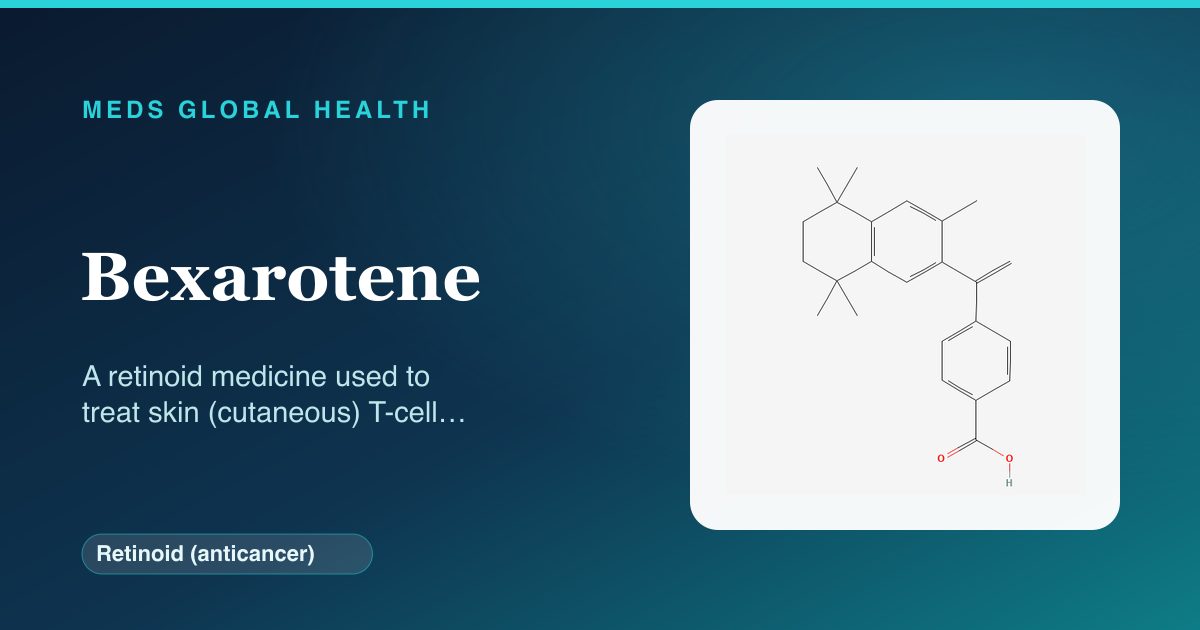
What it is
Bexarotene is a retinoid, a type of medicine related to vitamin A, used to treat cutaneous T-cell lymphoma, a cancer that affects the skin. It is generally used when other treatments have not controlled the condition. It is taken by mouth as capsules and is a specialist medicine prescribed and supervised by cancer specialists, with regular blood tests because of its effects on blood fats, the thyroid and blood counts. Because retinoids can seriously harm an unborn baby, it comes with strict rules about preventing pregnancy.
How it works
Bexarotene acts on receptors inside cells (retinoid receptors) that influence how cells grow, mature and die. By switching on these signals, it encourages the abnormal lymphoma cells in the skin to behave differently and reduces the disease activity. The same receptors influence many processes in the body, which is why bexarotene also affects things like blood fats, the thyroid gland and blood-cell production, and why these need to be watched closely while it is taken.
Company & origin
A retinoid anticancer medicine used in the UK to treat skin (cutaneous) T-cell lymphoma, usually when other treatments have not worked.
Practical use
How to take Bexarotene
General, dose-free guidance — always follow your prescriber's and the leaflet's specific instructions.
- Take the capsules by mouth with food, exactly as your cancer specialist prescribes.
- If you could become pregnant, follow the strict pregnancy-prevention programme and use reliable contraception as directed; it must never be used in pregnancy.
- Attend regular blood tests to check blood fats, thyroid and blood counts, and take any added medicines (such as for blood fats or thyroid) as prescribed.
- Protect your skin from the sun, as bexarotene makes the skin much more sensitive to sunlight.
- Report severe tummy pain, persistent tiredness, unusual bruising or bleeding, or signs of infection straight away.
Weighing it up
Advantages & disadvantages of Bexarotene
Advantages
- An effective treatment option for cutaneous T-cell lymphoma, including when other treatments have not worked.
- Taken by mouth as capsules rather than by injection.
- Works in a targeted way through retinoid receptors that influence how the lymphoma cells behave.
Disadvantages
- Can cause severe birth defects, so strict pregnancy prevention is essential and it must never be used in pregnancy.
- Very commonly raises blood fats, which can become very high and cause inflammation of the pancreas.
- Frequently causes an underactive thyroid, can lower blood counts, and makes the skin very sensitive to sunlight.
Practical use
Good to know
Bexarotene has several dominant, serious effects that shape how it is used. As a retinoid it can cause severe birth defects, so a strict pregnancy-prevention programme is essential for anyone who could become pregnant, with reliable contraception before, during and for a period after treatment, and it must never be used in pregnancy. It very commonly raises the levels of fats in the blood (triglycerides and cholesterol), sometimes to very high levels that can cause inflammation of the pancreas, so blood fats are checked regularly and often treated. It frequently causes an underactive thyroid, so thyroid tests are monitored and thyroid hormone replacement is often needed. It can lower blood counts, particularly white cells, and it makes the skin much more sensitive to sunlight, so sun protection matters. It is taken by mouth with food, under close specialist monitoring.
Who should not take it / use with caution
- It must not be used in pregnancy because it can cause severe birth defects, and a strict pregnancy-prevention programme is required for those who could become pregnant.
- People who have had a serious allergic reaction to bexarotene or other retinoids should not take it.
- It is used with great caution in people with very high blood fats, pancreatitis, liver problems or certain other conditions.
Monitoring
- Regular blood tests for fats (triglycerides and cholesterol) and pregnancy testing where relevant.
- Regular thyroid function tests, as an underactive thyroid is common and often needs treatment.
- Regular blood counts and liver function tests, and review of the skin and response to treatment.
Side effects
- Very high levels of fats in the blood (triglycerides and cholesterol), which can cause inflammation of the pancreas.
- An underactive thyroid, causing tiredness and other symptoms, often needing thyroid hormone replacement.
- A drop in blood counts, particularly white cells, raising the risk of infection.
- Headache, skin dryness or rash, and increased sensitivity of the skin to sunlight.
Key interactions
- Do not take extra vitamin A or vitamin-A supplements with it, as the effects add together and can cause harm.
- Some medicines change bexarotene levels, and certain medicines that affect blood fats should be chosen carefully, so give a full medicines list.
- It may affect how some other medicines work, including some used for blood fats, so the team manages this.
Available as: Capsules taken by mouth.
Answers
Bexarotene: frequently asked questions
What is bexarotene used for?
It is a retinoid medicine used to treat cutaneous T-cell lymphoma, a cancer affecting the skin, usually when other treatments have not worked.
Why is pregnancy prevention so strict?
Like other retinoids, bexarotene can cause severe birth defects, so it must never be used in pregnancy and reliable contraception is required before, during and for a time after treatment.
Why are my blood fats checked?
Bexarotene very commonly raises triglycerides and cholesterol, sometimes to very high levels that can cause inflammation of the pancreas, so blood fats are monitored and often treated.
Why might my thyroid become underactive?
It frequently lowers thyroid activity, causing tiredness and other symptoms, so thyroid tests are monitored and thyroid hormone replacement is often needed.
Do I need to avoid the sun?
Yes; bexarotene makes the skin much more sensitive to sunlight, so protect your skin and limit sun exposure during treatment.
The wider class
About Retinoid (anticancer)
Bexarotene belongs to the retinoid (anticancer) class. For how the class as a whole works, its shared safety principles and monitoring, see the full guide.
Browse by body system
Authoritative sources
- BNF
- NICE CKS
Building a medicines information resource?
We create evidence-led, dose-free drug and formulary references for teams.