An oral chemotherapy tablet
Capecitabine
An oral chemotherapy tablet, given under cancer-team supervision, that the body turns into fluorouracil to treat several cancers.
What is Capecitabine?
Capecitabine is a chemotherapy tablet taken by mouth, prescribed and supervised by a hospital cancer team, that the body converts into another chemotherapy medicine called fluorouracil. It is used for bowel, breast and stomach cancers, often alongside other treatments. The most talked-about side effect is hand-foot syndrome, where the palms and soles become sore, red and may peel; diarrhoea and mouth soreness are also common. Like all chemotherapy it can lower your blood counts, so a fever or feeling suddenly unwell must be reported to your team straight away as an emergency. Some people lack an enzyme called DPD and are tested for this first, because they are at risk of severe side effects. It is taken with or after food.
Education and reference only. This is a plain-language guide to Capecitabine — it deliberately contains no doses. Doses depend on the person, the brand and the reason for treatment, and belong with your prescriber. Always check the BNF, the product labelling (SmPC) and follow medical advice.
What it is
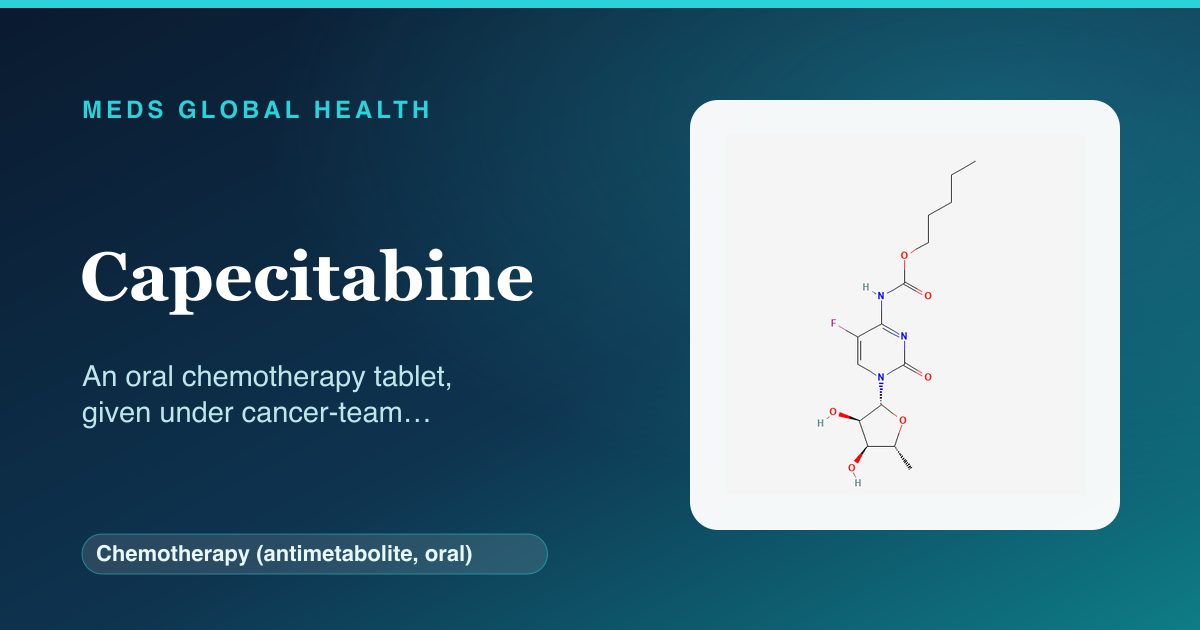
Capecitabine is a cytotoxic (cell-killing) chemotherapy medicine taken as tablets, used to treat cancers of the bowel, breast and stomach, sometimes on its own and sometimes combined with other chemotherapy or radiotherapy. It is unusual among chemotherapy medicines because it is taken at home as a tablet rather than given by drip, though it is always started, planned and monitored by a hospital oncology team. In the body it is changed step by step into fluorouracil (5-FU), which is most active inside cancer cells. Treatment is given in cycles, with rest periods built in to let the body recover.
How it works
Capecitabine is a 'prodrug', meaning it is taken in an inactive form and converted inside the body into the active chemotherapy fluorouracil, with the final step happening more in tumour tissue. Fluorouracil interferes with the way cancer cells build and copy their DNA, so they cannot keep dividing and many of them die. Because fast-growing healthy cells — such as those in the gut lining, mouth, skin of the hands and feet, and bone marrow — are affected too, this explains many of the side effects. An enzyme called DPD normally breaks the medicine down; people who have very little of this enzyme clear it too slowly and can suffer severe toxicity, which is why they are tested beforehand.
Company & origin
Originated / developed by: Generic (originally Roche).
An oral chemotherapy medicine used in the UK, under specialist cancer care, for bowel, breast and stomach cancers.
Practical use
How to take Capecitabine
General, dose-free guidance — always follow your prescriber's and the leaflet's specific instructions.
- Take the tablets by mouth with water within about half an hour of finishing a meal, swallowing them whole.
- Follow your cycle exactly — usually a set number of days taking the tablets followed by a rest period — and do not change it yourself.
- If you are sick or miss a dose, do not double up; contact your cancer team for advice on what to do.
- Report diarrhoea, mouth soreness or sore, red palms and soles early, as your team can help and may adjust the dose.
- Contact your cancer team's emergency line straight away if you develop a fever, shivering or feel suddenly unwell.
Weighing it up
Advantages & disadvantages of Capecitabine
Advantages
- Can be taken at home as a tablet rather than needing repeated hospital drips, which many people find easier.
- An effective, well-established treatment for several common cancers, including bowel, breast and stomach.
- Causes less hair loss than many other chemotherapy medicines, though side effects still need close attention.
Disadvantages
- Commonly causes hand-foot syndrome, with sore, red, peeling palms and soles, and can cause troublesome diarrhoea.
- Like all chemotherapy, it lowers blood counts and raises the risk of serious infection.
- People with DPD enzyme deficiency are at risk of severe toxicity, so testing and careful supervision are needed.
Practical use
Good to know
The most distinctive side effect is hand-foot syndrome: the palms and soles become red, tender, tingly, dry or peeling, and your team may suggest moisturising and protecting your hands and feet and will adjust treatment if it becomes troublesome. Diarrhoea can be significant and should be reported early, as it can lead to dehydration. As with all chemotherapy, capecitabine can lower your white cells, red cells and platelets, so a temperature, shivering, sore throat or simply feeling very unwell is a medical emergency (possible neutropenic sepsis) and you should ring your cancer team's emergency line at once rather than waiting. Before starting, many people are tested for DPD enzyme deficiency, because those who lack it can have severe, even life-threatening, side effects. Take the tablets with or shortly after food and exactly as the schedule tells you, because the on-and-off pattern matters. Pregnancy must be avoided during treatment and effective contraception is advised, and fertility can be affected, so it is worth discussing this before you start. Live vaccines should be avoided. It is normal to feel anxious starting chemotherapy — your team would much rather you contacted them with a worry than waited.
Who should not take it / use with caution
- People with a complete DPD enzyme deficiency should not take it, as toxicity can be severe or life-threatening.
- It is avoided in pregnancy and breastfeeding, as it can harm a developing baby.
- It is used with great caution, or avoided, in severe kidney or liver problems and is decided by the cancer team for each person.
Monitoring
- Regular blood tests to check blood counts and kidney and liver function between and during cycles.
- DPD enzyme status is usually checked before treatment to identify those at risk of severe toxicity.
- Reviewing side effects such as hand-foot syndrome and diarrhoea at each visit, with dose adjustments as needed.
Side effects
- Hand-foot syndrome (sore, red, tingling or peeling palms and soles), diarrhoea, mouth soreness, nausea and tiredness are common.
- Low blood counts can cause infections, bruising, bleeding and anaemia — a fever or feeling very unwell needs urgent care.
- Rarely, serious heart, gut or skin reactions, or severe toxicity in people with DPD deficiency.
Key interactions
- It can increase the effect of warfarin, raising bleeding risk, so blood-clotting (INR) is monitored closely.
- It should not be combined with brivudine (an antiviral) and similar medicines, which dangerously increase its toxicity.
- Live vaccines are avoided during treatment, and your team will review all your other medicines before starting.
Available as: Tablets taken by mouth, prescribed and supervised by a hospital cancer team.
Answers
Capecitabine: frequently asked questions
Why does capecitabine make my hands and feet sore?
It can cause hand-foot syndrome, where the palms and soles become red, tender and peeling; moisturising and protecting them helps, and your team may adjust the dose if it is troublesome.
What should I do if I get a temperature?
Treat it as an emergency. A fever or feeling suddenly unwell can mean a serious infection (neutropenic sepsis), so ring your cancer team's emergency line straight away rather than waiting.
Why was I tested before starting treatment?
Many people are tested for DPD enzyme deficiency, because those who lack this enzyme cannot break the medicine down properly and are at risk of severe side effects.
Should I take the tablets with food?
Yes, take them with or shortly after food, usually within about half an hour of a meal, and follow your cycle schedule exactly.
Can I take it if I might become pregnant?
No. It can harm a developing baby, so pregnancy must be avoided and effective contraception used; discuss fertility and family plans with your team before starting.
The wider class
About Chemotherapy (antimetabolite, oral)
Capecitabine belongs to the chemotherapy (antimetabolite, oral) class. For how the class as a whole works, its shared safety principles and monitoring, see the full guide.
Browse by body system
Authoritative sources
- BNF
- NICE CKS
Building a medicines information resource?
We create evidence-led, dose-free drug and formulary references for teams.