A chemotherapy tablet for advanced prostate cancer
Estramustine
A chemotherapy medicine used to treat advanced prostate cancer.
What is Estramustine?
Estramustine is a chemotherapy medicine used to treat advanced prostate cancer. It combines an oestrogen with a nitrogen-mustard chemotherapy part in a single molecule, working in more than one way against the cancer cells. The most important issue is that, because it contains an oestrogen, it raises the risk of blood clots (deep vein thrombosis and clots in the lungs) and other heart and circulation problems. It also commonly causes fluid retention and breast tenderness or enlargement. It must be taken away from milk and calcium-containing foods or supplements, which stop it being absorbed. It is a specialist medicine.
Education and reference only. This is a plain-language guide to Estramustine — it deliberately contains no doses. Doses depend on the person, the brand and the reason for treatment, and belong with your prescriber. Always check the BNF, the product labelling (SmPC) and follow medical advice.
What it is
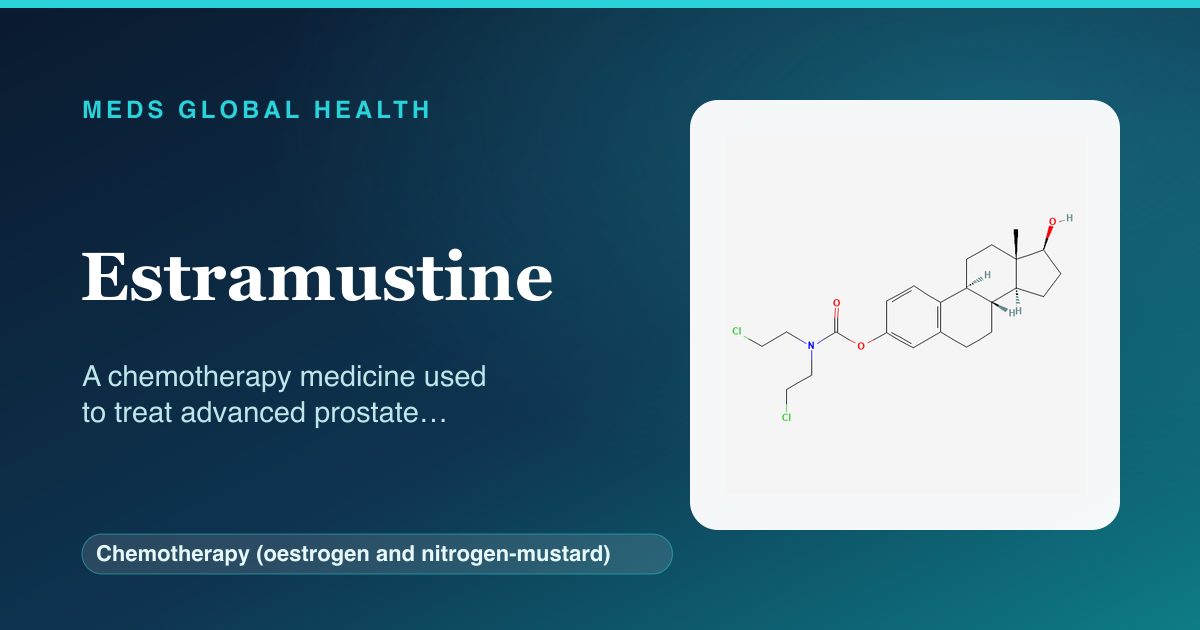
Estramustine is a chemotherapy medicine used for advanced prostate cancer. It is unusual in that one molecule joins together an oestrogen (a hormone) and a nitrogen-mustard chemotherapy agent, so it acts in more than one way against prostate cancer cells. It is taken by mouth as capsules under the care of a specialist cancer team. Because it contains an oestrogen, it carries hormone-related risks, particularly to the blood and circulation, alongside the usual considerations of chemotherapy.
How it works
Estramustine works against prostate cancer in a couple of ways. The oestrogen part lowers the male hormone testosterone, which many prostate cancers depend on to grow, while the medicine also interferes directly with the internal scaffolding that cancer cells need to divide. Together these actions slow the growth of the cancer. The oestrogen part, however, also explains an important risk: oestrogens make the blood more likely to clot and can strain the heart and circulation, which is why blood clots and cardiovascular problems are a key concern with this medicine.
Company & origin
A specialist chemotherapy medicine used in the UK for advanced prostate cancer, combining an oestrogen with a nitrogen-mustard chemotherapy part in one molecule.
Practical use
How to take Estramustine
General, dose-free guidance — always follow your prescriber's and the leaflet's specific instructions.
- Take it by mouth exactly as your cancer team directs, swallowing the capsules whole with water.
- Take it away from milk, dairy products and calcium or mineral supplements, as these stop it being absorbed.
- Tell your team straight away about leg swelling or pain, chest pain or breathlessness, which can be signs of a blood clot.
- Keep all appointments for blood tests, as your blood counts and liver need monitoring.
- Report breast tenderness, swelling or fluid retention, which are common with this medicine.
Weighing it up
Advantages & disadvantages of Estramustine
Advantages
- Can slow the growth of advanced prostate cancer by acting in more than one way against the cancer cells.
- Taken by mouth as capsules rather than by injection.
- A long-established option used by specialist cancer teams.
Disadvantages
- Raises the risk of blood clots and other heart and circulation problems because it contains an oestrogen.
- Commonly causes fluid retention and breast tenderness or enlargement.
- Must be kept apart from milk and calcium, which takes planning, and needs specialist monitoring.
Practical use
Good to know
The most important thing to understand about estramustine is that, because it contains an oestrogen, it raises the risk of blood clots in the legs and lungs and of other heart and circulation problems; the cancer team weighs this carefully, especially in people who already have heart problems or a history of clots, and any leg swelling, chest pain or breathlessness should be reported urgently. It also commonly causes fluid retention and breast tenderness or enlargement because of its hormone effect. A practical but crucial point is that it must be taken away from milk, dairy products and calcium or other mineral supplements, because calcium binds to it in the gut and stops it being absorbed properly. As with other chemotherapy, it is given and monitored by a specialist team who check blood counts and liver function and watch for side effects.
Who should not take it / use with caution
- People who have had a serious allergic reaction to estramustine should not take it.
- It is generally avoided in people with active blood clots or a high risk of clotting, and in serious heart disease.
- It is used with caution, or avoided, in people with serious liver disease.
- It is a treatment for prostate cancer and is not for use in women or children.
Monitoring
- Regular blood tests to check blood counts and liver function.
- Watching for signs of blood clots, fluid retention and heart or circulation problems.
- Reviewing how well the prostate cancer is responding to treatment.
Side effects
- Blood clots in the legs or lungs and other heart or circulation problems, which need urgent attention.
- Fluid retention and breast tenderness or enlargement, related to its oestrogen effect.
- Nausea, stomach upset and reduced appetite.
- Lowered blood counts and changes in liver blood tests, which monitoring is designed to catch.
Key interactions
- Milk, dairy and calcium or mineral supplements bind to it in the gut and reduce how well it is absorbed, so keep them apart.
- It can add to the risk of clots or fluid retention with some other medicines, so tell your team everything you take.
- Other medicines that affect the liver or blood counts may need extra care alongside it.
Available as: Capsules taken by mouth.
Answers
Estramustine: frequently asked questions
What is estramustine used for?
It is a chemotherapy medicine used to treat advanced prostate cancer, combining an oestrogen with a nitrogen-mustard chemotherapy part in one molecule.
Why does it raise the risk of blood clots?
It contains an oestrogen, and oestrogens make the blood more likely to clot, so blood clots in the legs and lungs and other circulation problems are an important risk to watch for.
Why must I avoid milk and calcium when taking it?
Calcium in milk, dairy and supplements binds to estramustine in the gut and stops it being absorbed properly, so it must be taken away from these.
Will it affect my breasts?
Breast tenderness or enlargement is a common effect because of the oestrogen part of the medicine; tell your team if this troubles you.
What signs should I report urgently?
Report leg swelling or pain, chest pain or breathlessness straight away, as these can be signs of a blood clot, which is a serious risk with this medicine.
The wider class
About Chemotherapy (oestrogen and nitrogen-mustard)
Estramustine belongs to the chemotherapy (oestrogen and nitrogen-mustard) class. For how the class as a whole works, its shared safety principles and monitoring, see the full guide.
Browse by body system
Authoritative sources
- BNF
- NICE CKS
Building a medicines information resource?
We create evidence-led, dose-free drug and formulary references for teams.