A chemotherapy used for several types of cancer
Etoposide
A chemotherapy used for several cancers, given into a vein or by mouth, usually as part of a combination.
What is Etoposide?
Etoposide is a chemotherapy used to treat a number of cancers, including small-cell lung cancer, testicular cancer and some blood cancers, usually as part of a combination of treatments. It works by damaging the DNA of cancer cells so they cannot divide. It is given as an injection into a vein or, sometimes, as capsules. The main risks are a drop in blood cells (raising the risk of infection, bleeding and anaemia), allergic or blood-pressure reactions during the injection, and a small long-term risk of a second blood cancer. It is given under specialist cancer care.
Education and reference only. This is a plain-language guide to Etoposide — it deliberately contains no doses. Doses depend on the person, the brand and the reason for treatment, and belong with your prescriber. Always check the BNF, the product labelling (SmPC) and follow medical advice.
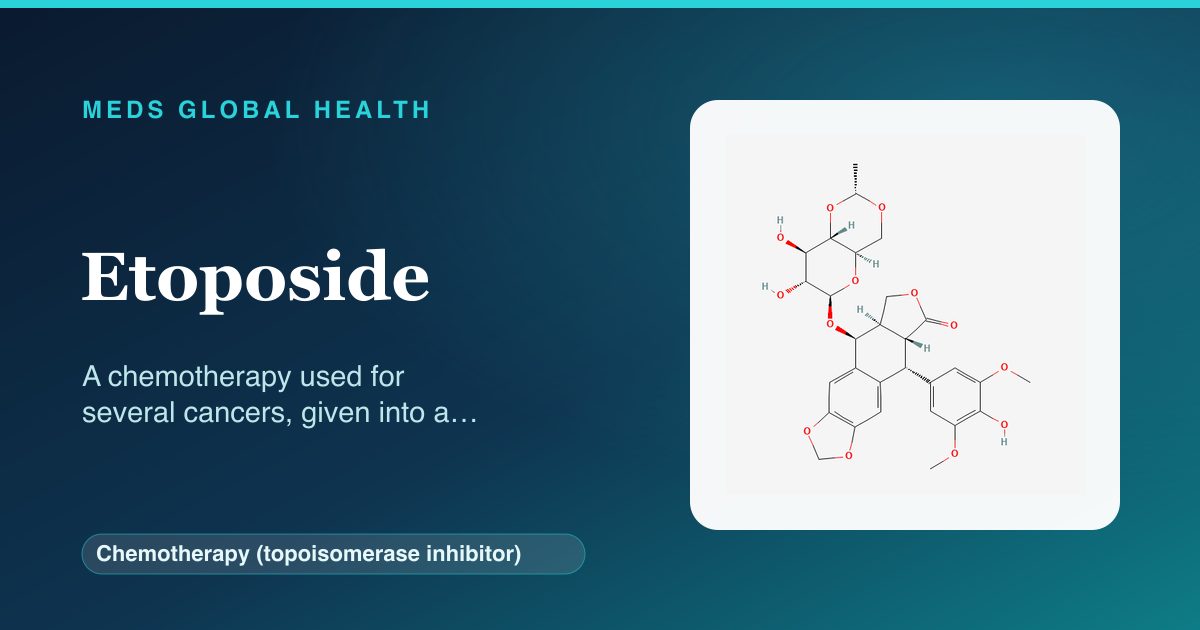
What it is
Etoposide is a chemotherapy medicine that works against fast-dividing cancer cells. It is a well-established treatment used for several cancers, including small-cell lung cancer, testicular cancer, lymphomas and some leukaemias, and it is usually combined with other chemotherapy medicines. It can be given as a slow injection into a vein or, in some situations, as capsules taken by mouth. Because it is a powerful treatment with significant effects on the blood, it is given in cycles and carefully monitored by a specialist cancer team.
How it works
To divide, cancer cells must copy their DNA, a process that relies on an enzyme called topoisomerase to untangle the DNA strands. Etoposide blocks this enzyme so the DNA breaks cannot be repaired, which stops the cancer cells dividing and leads them to die. Because the medicine also affects healthy fast-dividing cells, particularly the bone marrow that makes blood cells, it lowers blood counts. Giving it in cycles, with rest periods, allows healthy tissues time to recover between treatments.
Company & origin
A long-established chemotherapy used in the UK for several cancers, including lung, testicular and blood cancers, often in combination.
Practical use
How to take Etoposide
General, dose-free guidance — always follow your prescriber's and the leaflet's specific instructions.
- It is given as a slow injection into a vein, or sometimes as capsules, by your cancer team in cycles.
- If given into a vein, it is given slowly and you are watched for reactions such as a drop in blood pressure.
- Contact your team urgently if you have a high temperature, feel unwell, or notice unusual bruising or bleeding.
- Attend all blood tests before each treatment so your blood counts can be checked.
- Take any capsules exactly as prescribed and tell your team about all your other medicines.
Weighing it up
Advantages & disadvantages of Etoposide
Advantages
- An effective, long-established treatment for several cancers, often as part of a combination.
- Can be given into a vein or, in some cases, as capsules.
- Given in cycles that allow healthy tissues time to recover.
Disadvantages
- Lowers blood cells, raising the risk of infection, bleeding and anaemia.
- Can cause a drop in blood pressure or allergic reactions during the injection.
- Carries a small long-term risk of a second blood cancer and commonly causes hair loss and nausea.
Practical use
Good to know
The dominant safety issue with etoposide is its effect on the bone marrow: it lowers the white cells that fight infection, the platelets that help blood clot, and the red cells, so infection, easy bruising or bleeding, and tiredness from anaemia are all important to watch for. A high temperature or feeling unwell should be treated as an emergency. When given into a vein it can cause reactions during the infusion, including a sudden drop in blood pressure or allergic-type reactions, which is why it is given slowly and watched closely. A further long-term consideration is a small increased risk of developing a second blood cancer (leukaemia) years later, which your team will have weighed against the benefit of treating your current cancer. Hair loss, nausea and mouth soreness are also common.
Who should not take it / use with caution
- People who have had a serious allergic reaction to etoposide should not have it.
- It is generally avoided in pregnancy and while breastfeeding because of harm to the baby.
- It is used with caution and adjusted dosing in people with significant liver or kidney problems, under specialist judgement.
Monitoring
- Blood tests before each treatment to check blood counts have recovered.
- Watching for infection, bruising, bleeding and signs of anaemia.
- Watching closely for reactions during the injection, such as low blood pressure.
Side effects
- A drop in blood cells, raising the risk of infection, bleeding and anaemia.
- A drop in blood pressure or allergic-type reactions during the injection.
- Hair loss, nausea, mouth soreness and, rarely over the long term, a second blood cancer.
Key interactions
- Other medicines that affect the bone marrow can add to its effect on blood counts.
- Some medicines, including the blood thinner warfarin, may need closer monitoring alongside it.
- Tell your team about all medicines and supplements, as some can change how it works.
Available as: A solution given as an injection into a vein, and capsules taken by mouth.
Answers
Etoposide: frequently asked questions
What is etoposide used for?
It is a chemotherapy used for several cancers, including small-cell lung cancer, testicular cancer and some blood cancers, usually as part of a combination of treatments.
Why does it affect my blood counts?
It affects the bone marrow that makes blood cells, lowering the cells that fight infection, help clotting and carry oxygen, which is why regular blood tests are needed.
Why is the injection given slowly?
Given quickly into a vein it can cause a sudden drop in blood pressure or allergic reactions, so it is given slowly and you are watched closely.
Is there a long-term risk?
There is a small increased risk of developing a second blood cancer years later, which your team will have weighed against the benefit of treating your current cancer.
When should I call my team urgently?
Contact them urgently if you have a high temperature, feel unwell, or notice unusual bruising or bleeding, as these can be signs of low blood counts.
The wider class
About Chemotherapy (topoisomerase inhibitor)
Etoposide belongs to the chemotherapy (topoisomerase inhibitor) class. For how the class as a whole works, its shared safety principles and monitoring, see the full guide.
Browse by body system
Authoritative sources
- BNF
- NICE CKS
Building a medicines information resource?
We create evidence-led, dose-free drug and formulary references for teams.