An anthracycline chemotherapy
Daunorubicin
An anthracycline chemotherapy used mainly to treat acute leukaemias.
What is Daunorubicin?
Daunorubicin is a chemotherapy medicine from the anthracycline group, used mainly to treat acute leukaemias (cancers of the blood). It is given into a vein under specialist cancer care. Its most important risk is cumulative damage to the heart muscle (cardiotoxicity), so the total amount given over a lifetime is limited and the heart is checked. It also lowers blood cells (bone-marrow suppression), can cause severe tissue damage if it leaks from the vein (it is a vesicant), and harmlessly turns the urine red for a day or two. It is always given by a specialist team.
Education and reference only. This is a plain-language guide to Daunorubicin — it deliberately contains no doses. Doses depend on the person, the brand and the reason for treatment, and belong with your prescriber. Always check the BNF, the product labelling (SmPC) and follow medical advice.
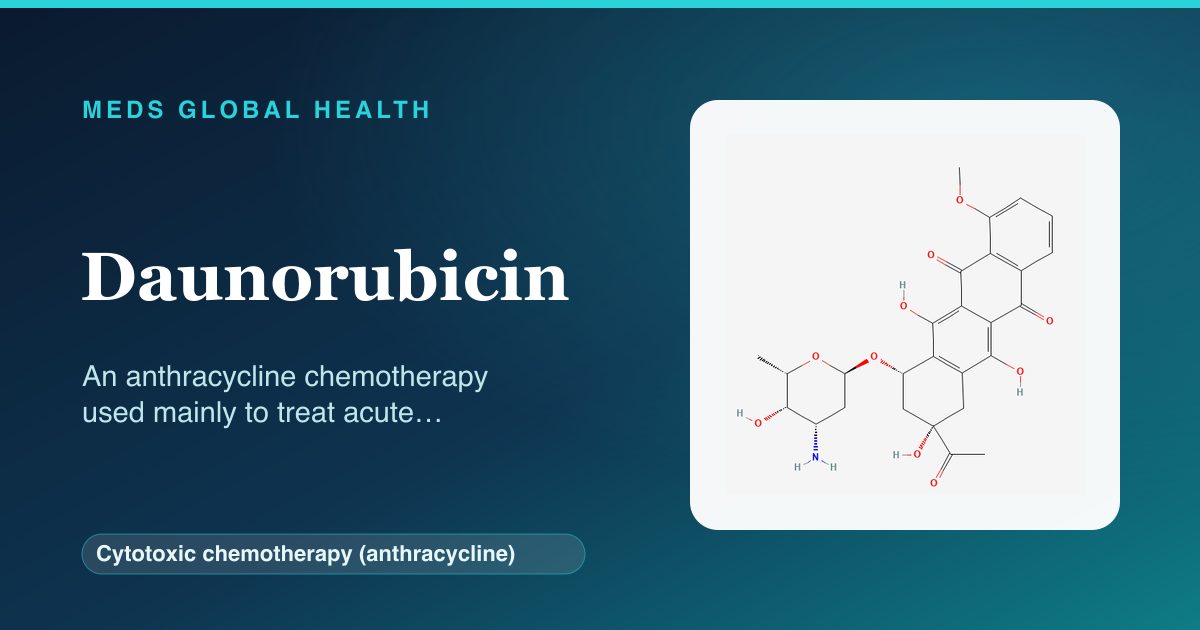
What it is
Daunorubicin is a chemotherapy medicine belonging to a group called anthracyclines. It is used mainly to treat acute leukaemias, which are fast-growing cancers of the blood and bone marrow, usually as part of a combination of treatments. It is given into a vein under the care of a specialist cancer or haematology team. Anthracyclines are powerful and effective chemotherapy medicines, but they need careful management because of their effects on the heart and the bone marrow.
How it works
Daunorubicin works by damaging the DNA inside cancer cells and interfering with the enzymes they need to copy themselves, so the cells cannot grow and divide and instead die. Because it targets fast-dividing cells, it also affects some healthy cells that divide quickly, particularly those in the bone marrow, which is why it lowers blood cells. A key feature of anthracyclines is that, over time, they can harm the heart muscle, and this damage builds up with the total amount received, which is why the lifetime dose is limited and the heart is monitored.
Company & origin
A specialist chemotherapy medicine used in the UK mainly to treat acute leukaemias.
Practical use
How to take Daunorubicin
General, dose-free guidance — always follow your prescriber's and the leaflet's specific instructions.
- It is given into a vein by a specialist cancer or haematology team as part of a planned course.
- Report any pain, swelling, redness or burning at the drip site straight away, as it can damage tissue if it leaks.
- Contact your team urgently if you develop a fever or feel unwell, as this can signal a serious infection.
- Do not be alarmed if your urine turns red or orange for a day or two; this is harmless.
- Attend all heart checks and blood tests so the heart and blood counts can be monitored.
Weighing it up
Advantages & disadvantages of Daunorubicin
Advantages
- An effective and important chemotherapy for treating acute leukaemias.
- Often used as part of combination treatment that can bring leukaemia under control.
- Given by experienced specialist teams who monitor its risks closely.
Disadvantages
- Can cause cumulative damage to the heart muscle, so the lifetime amount is limited.
- Lowers blood cells, raising the risk of infection, anaemia and bleeding.
- Causes severe tissue damage if it leaks out of the vein during the infusion.
Practical use
Good to know
The standout safety issue with daunorubicin is its effect on the heart. Anthracyclines can damage the heart muscle, and because this risk builds up with the total amount received over time, the team keeps a careful record of how much has been given across a person's life and checks the heart's pumping function before and during treatment. The second major risk is bone-marrow suppression: blood counts fall, raising the risk of infection, anaemia and bleeding, so counts are monitored and any fever must be treated as an emergency. It is also a vesicant, causing severe tissue damage if it leaks out of the vein, so the drip site is watched closely. A harmless but surprising effect is that it can turn the urine red or orange for a day or two after treatment, which is nothing to worry about. Nausea, mouth soreness and hair loss are also common.
Who should not take it / use with caution
- People who have had a serious allergic reaction to daunorubicin should not receive it.
- It is used with great caution, or avoided, in people with significant heart problems or who have already received a high lifetime dose of anthracyclines.
- It is generally avoided in pregnancy and breastfeeding because of the risk to the baby.
- It is used with care in people with very low blood counts or severe infections, as judged by the specialist team.
Monitoring
- Checks of the heart's pumping function before and during treatment, with a record of the total lifetime amount given.
- Regular blood tests to check blood counts before and during treatment.
- Watching the drip site closely during the infusion for any sign of leakage.
Side effects
- A drop in blood cells, raising the risk of infection, tiredness from anaemia, and bruising or bleeding.
- Nausea and vomiting, soreness of the mouth, and hair loss.
- A harmless red or orange colour to the urine for a day or two after treatment.
- Damage to the heart muscle over time, and severe tissue damage if the medicine leaks out of the vein.
Key interactions
- Other medicines that can affect the heart add to the risk of heart damage.
- Other medicines that lower blood cells or affect the immune system add to its effects.
- Tell your team about all your medicines and vaccines, as live vaccines are generally avoided during treatment.
Available as: A solution or powder made up into a solution given into a vein.
Answers
Daunorubicin: frequently asked questions
What is daunorubicin used for?
It is an anthracycline chemotherapy used mainly to treat acute leukaemias, which are fast-growing cancers of the blood, usually as part of combination treatment.
Why is my heart checked during treatment?
Anthracyclines like daunorubicin can damage the heart muscle, and because this risk builds up with the total amount received, the team limits the lifetime dose and checks the heart.
Why has my urine turned red?
Daunorubicin can turn the urine red or orange for a day or two after treatment; this is harmless and not a sign of bleeding.
Why do my blood counts need checking?
It lowers the blood cells that fight infection, carry oxygen and help clotting, so blood tests monitor this and any fever must be treated as an emergency.
Why is the drip site watched so closely?
Daunorubicin is a vesicant, meaning it can cause severe tissue damage if it leaks out of the vein, so any pain or swelling at the site must be reported straight away.
The wider class
About Cytotoxic chemotherapy (anthracycline)
Daunorubicin belongs to the cytotoxic chemotherapy (anthracycline) class. For how the class as a whole works, its shared safety principles and monitoring, see the full guide.
Browse by body system
Authoritative sources
- BNF
- NICE CKS
Building a medicines information resource?
We create evidence-led, dose-free drug and formulary references for teams.