A platinum chemotherapy medicine
Carboplatin
A platinum-based chemotherapy infusion, given under specialist care, often gentler than cisplatin but more likely to lower blood counts.
What is Carboplatin?
Carboplatin is a platinum-based chemotherapy medicine given by drip (infusion) in hospital under cancer-team care, used for many cancers including ovarian, lung and others. It is closely related to cisplatin but is generally gentler on the kidneys, nerves and hearing, which is why it is often chosen instead. Its main trade-off is that it tends to lower the blood counts more, especially platelets, so blood tests are watched closely and a fever or feeling suddenly unwell must be reported urgently. It can also cause allergic reactions, particularly when given over several courses, so the team watches for this during infusions.
Education and reference only. This is a plain-language guide to Carboplatin — it deliberately contains no doses. Doses depend on the person, the brand and the reason for treatment, and belong with your prescriber. Always check the BNF, the product labelling (SmPC) and follow medical advice.
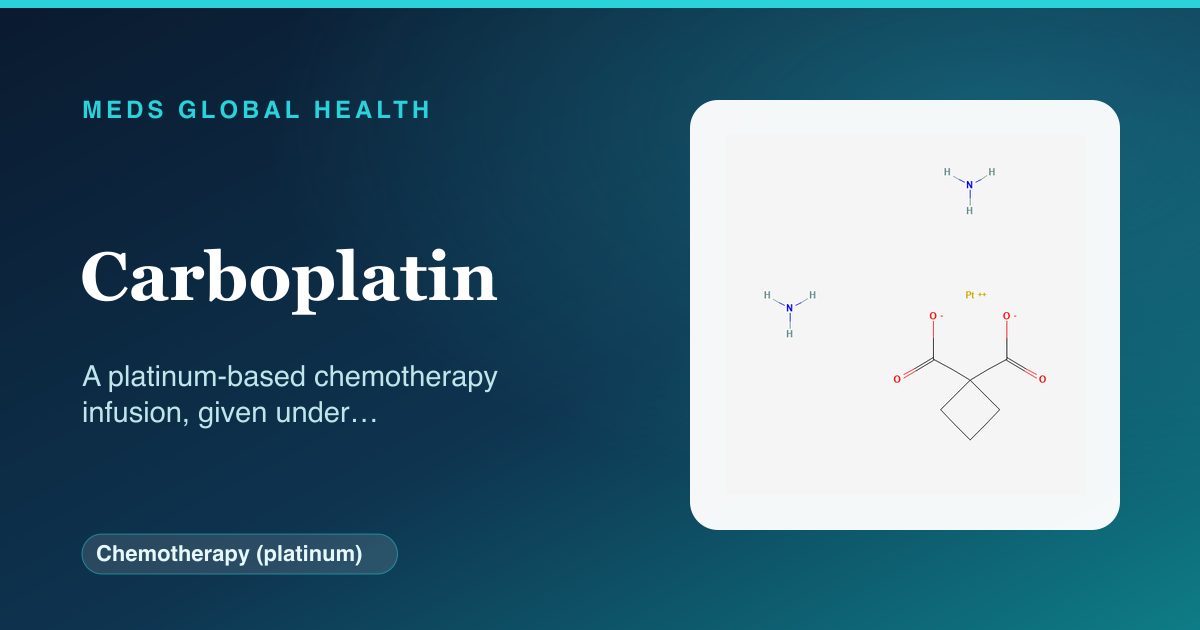
What it is
Carboplatin is a cytotoxic chemotherapy medicine containing platinum, closely related to cisplatin but designed to be gentler in some respects. It is given by drip in hospital for many cancers, especially ovarian and lung cancers, often combined with other chemotherapy. It is always prescribed and supervised by an oncology team, and the dose is usually worked out from kidney function to give the right exposure for each person. Treatment is given in cycles with recovery periods. It is often preferred over cisplatin when the gentler profile on kidneys, nerves and hearing is an advantage.
How it works
Carboplatin, like cisplatin, binds to the DNA in cancer cells and creates links that stop the DNA being copied and repaired, so the cells cannot keep dividing and many die. It is handled by the body a little differently from cisplatin, which makes it less harsh on the kidneys, hearing and nerves, but more likely to suppress the bone marrow — so its main side effect is lowering of the blood counts, particularly the platelets that help blood to clot. Because the kidneys clear it, the dose is tailored to kidney function.
Company & origin
A widely used platinum chemotherapy medicine used in the UK, under specialist care, for many cancers, often chosen as a gentler platinum than cisplatin.
Practical use
How to take Carboplatin
General, dose-free guidance — always follow your prescriber's and the leaflet's specific instructions.
- It is given by drip in hospital by your cancer team, on a planned schedule of cycles with recovery periods.
- Attend for your blood tests before each cycle, as the counts (especially platelets) are watched closely.
- Report unusual bruising, bleeding, or a fever, and take any anti-sickness medicines as prescribed.
- Tell the staff straight away during the infusion if you feel itching, flushing, breathlessness or suddenly unwell.
- Contact your team's emergency line straight away if you develop a fever, shivering or feel suddenly unwell at home.
Weighing it up
Advantages & disadvantages of Carboplatin
Advantages
- Generally gentler than cisplatin on the kidneys, hearing and nerves, and usually causes less severe sickness.
- An effective, widely used platinum treatment for many cancers, including ovarian and lung cancers.
- The dose can be tailored to kidney function to give the right exposure for each person.
Disadvantages
- Lowers the blood counts more than cisplatin, especially platelets, raising the risk of bruising, bleeding and infection.
- Can cause allergic reactions, particularly after several courses of treatment.
- Like all chemotherapy, it causes nausea, tiredness and a raised infection risk.
Practical use
Good to know
Carboplatin is often described as a gentler platinum than cisplatin: it is usually kinder to the kidneys, the hearing and the nerves, and tends to cause less severe sickness, which is why it is frequently chosen. The trade-off is that it lowers the blood counts more, especially the platelets, so you may bruise or bleed more easily and your blood is checked carefully before each cycle; report unusual bruising, bleeding or a fever. As with all chemotherapy, a temperature or feeling suddenly unwell is a medical emergency (possible neutropenic sepsis) — ring your team's emergency line at once. Allergic reactions can develop, particularly after several courses, so the team watches you during the infusion; tell them straight away if you feel itching, flushing, breathlessness or unwell during treatment. Nausea, tiredness and hair thinning can occur, with anti-sickness medicines given. Pregnancy must be avoided and contraception used, fertility can be affected, and live vaccines avoided. It is normal to feel anxious; your team is there to support you and answer questions.
Who should not take it / use with caution
- It is avoided in people who have had a serious allergic reaction to carboplatin or other platinum medicines.
- It is avoided in pregnancy and breastfeeding because it can harm a developing baby.
- It is used with caution, with dose adjustment, in people with significant kidney problems or very low blood counts.
Monitoring
- Regular blood tests to check blood counts, especially platelets, before and during each cycle.
- Checking kidney function, which is also used to help work out the dose.
- Watching for allergic reactions during infusions, particularly over repeated courses.
Side effects
- Low blood counts (especially low platelets), nausea, tiredness and hair thinning are common.
- Low blood counts raise the risk of infection, bruising, bleeding and anaemia — a fever or feeling very unwell needs urgent care.
- Allergic reactions can occur, particularly with repeated courses; less commonly, kidney, hearing or nerve effects.
Key interactions
- Other medicines that lower blood counts or affect the kidneys may add to the risk, so your team reviews these.
- Live vaccines are avoided during treatment, as the weakened immune system cannot handle them safely.
- It can interact with other chemotherapy and certain medicines, so all your medicines are reviewed before treatment.
Available as: Infusion given in hospital; prescribed and supervised by a specialist.
Answers
Carboplatin: frequently asked questions
How is carboplatin different from cisplatin?
They are both platinum chemotherapy medicines, but carboplatin is generally gentler on the kidneys, hearing and nerves and causes less severe sickness, while it tends to lower the blood counts, especially platelets, more than cisplatin.
Why are my platelets checked so often?
Carboplatin lowers the blood counts, especially the platelets that help blood to clot, so your blood is checked before each cycle and you should report unusual bruising or bleeding.
Can I have an allergic reaction to it?
Yes, allergic reactions can develop, particularly after several courses, so the team watches you during the infusion; tell them at once if you feel itching, flushing, breathlessness or unwell.
What should I do if I get a fever?
Treat it as an emergency. A fever or feeling suddenly unwell can mean a serious infection (neutropenic sepsis), so ring your team's emergency line straight away.
Why is the dose worked out from my kidney function?
Carboplatin is cleared by the kidneys, so the dose is tailored to your kidney function to give the right amount of medicine for you.
The wider class
About Chemotherapy (platinum)
Carboplatin belongs to the chemotherapy (platinum) class. For how the class as a whole works, its shared safety principles and monitoring, see the full guide.
Browse by body system
Authoritative sources
- BNF
- NICE CKS
Building a medicines information resource?
We create evidence-led, dose-free drug and formulary references for teams.