A nitrogen-mustard alkylating agent (skin gel and intravenous use)
Mechlorethamine
A nitrogen-mustard chemotherapy used as a skin gel for cutaneous T-cell lymphoma and, in some regimens, given into a vein.
What is Mechlorethamine?
Mechlorethamine is a chemotherapy medicine of the nitrogen-mustard type. It is used as a gel applied to the skin to treat a kind of skin lymphoma called cutaneous T-cell lymphoma, and it is also given into a vein as part of some chemotherapy regimens. As a skin gel, its main problem is skin reactions such as redness, irritation and inflammation. Given into a vein, it can lower blood counts and is a strong irritant that causes severe tissue damage if it leaks out of the vein. It is a specialist medicine needing careful handling and supervision.
Education and reference only. This is a plain-language guide to Mechlorethamine — it deliberately contains no doses. Doses depend on the person, the brand and the reason for treatment, and belong with your prescriber. Always check the BNF, the product labelling (SmPC) and follow medical advice.
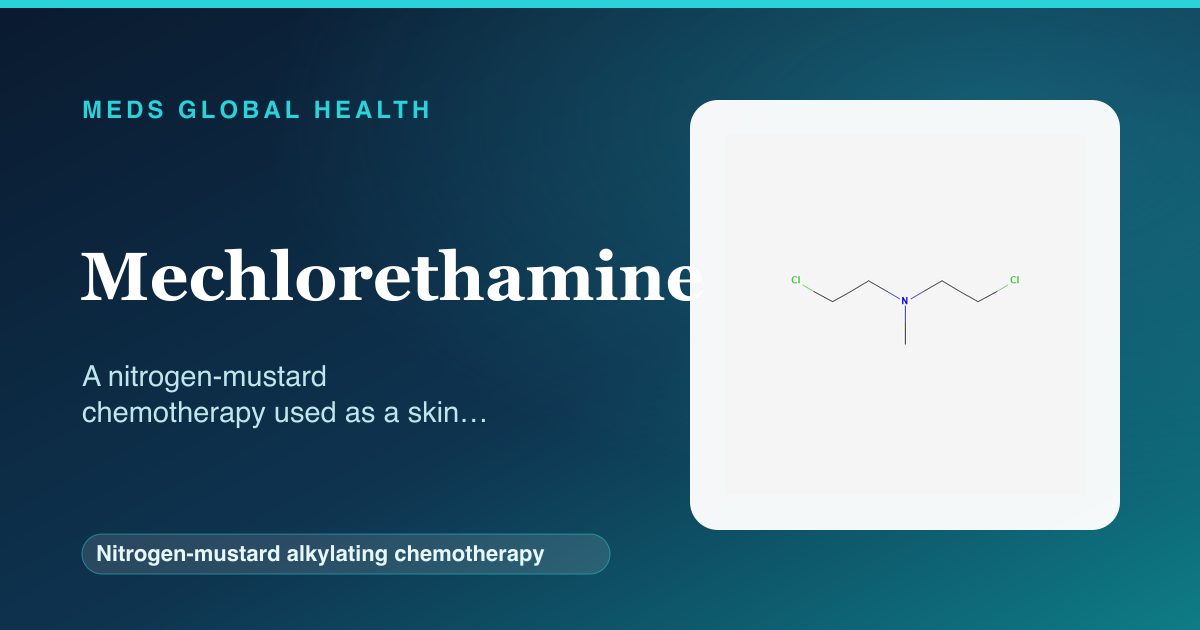
What it is
Mechlorethamine is one of the oldest chemotherapy medicines, a nitrogen mustard that belongs to a group called alkylating agents. Today it has two main uses. As a gel applied directly to the skin, it treats cutaneous T-cell lymphoma, a cancer affecting the skin. Given into a vein, it forms part of certain combination chemotherapy regimens. It is a powerful, specialist medicine that must be handled carefully, including by the person applying the gel, because of its effects on skin and tissue. It is prescribed and supervised by a specialist cancer team.
How it works
Mechlorethamine is an alkylating agent, meaning it damages the DNA inside cells so they can no longer divide and survive. Cancer cells, which divide rapidly, are especially affected, which is how it helps control the lymphoma. When used as a skin gel for skin lymphoma, it acts mainly on the affected skin. When given into a vein for wider disease, it travels through the body and also affects healthy fast-dividing cells, particularly in the bone marrow, which is why lowered blood counts are a key risk with the intravenous form. Its strong chemical action is also what makes it so damaging to skin and tissue.
Company & origin
A specialist chemotherapy medicine used in the UK as a skin gel for a type of skin lymphoma, and into a vein in some treatment regimens.
Practical use
How to take Mechlorethamine
General, dose-free guidance — always follow your prescriber's and the leaflet's specific instructions.
- If using the gel, apply it only to the affected skin as directed, avoiding the eyes, mouth and other sensitive areas.
- Wear gloves to apply the gel, let it dry, and wash your hands carefully afterwards, as advised by your team.
- Report any severe skin redness, blistering or inflammation where the gel is applied.
- If it is given into a vein, it is administered by trained staff, who watch closely for any leakage that could damage tissue.
- Attend blood tests as arranged, particularly with the intravenous form, which can lower blood counts.
Weighing it up
Advantages & disadvantages of Mechlorethamine
Advantages
- The skin gel allows targeted treatment of cutaneous T-cell lymphoma applied directly to the affected skin.
- An established chemotherapy that forms part of some treatment regimens.
- Offers a treatment option for a difficult skin cancer.
Disadvantages
- The skin gel commonly causes skin reactions such as redness, irritation and inflammation.
- Given into a vein, it can lower blood counts and causes severe tissue damage if it leaks out (a vesicant).
- It is a powerful chemotherapy needing careful handling and specialist supervision.
Practical use
Good to know
How mechlorethamine is used depends a lot on the form. As a skin gel, the most common problem is skin reactions where it is applied, such as redness, itching, irritation and inflammation, and it must be applied carefully to the affected areas only, avoiding the eyes, mouth and other sensitive areas; the person applying it should wear gloves and wash their hands afterwards. Given into a vein, its main risks are a fall in blood counts, which raises the risk of infection, bleeding and anaemia, and the fact that it is a strong vesicant, meaning it causes severe tissue damage if it leaks out of the vein, so it is given very carefully by trained staff. Because it is a powerful chemotherapy, it must not be used in pregnancy, and careful handling is needed throughout.
Who should not take it / use with caution
- People who have had a serious allergic reaction to mechlorethamine should not use it.
- It is not used in pregnancy, as it can harm an unborn baby; effective contraception is important.
- The gel must not be used near the eyes, mouth or other sensitive areas, and the intravenous form needs very careful administration.
Monitoring
- With the gel, checking the treated skin for reactions and adjusting treatment if needed.
- With the intravenous form, regular blood tests to check blood counts.
- Reviewing how the lymphoma responds to treatment over time.
Side effects
- With the gel: redness, itching, irritation, inflammation or darkening of the treated skin.
- With the intravenous form: a fall in blood counts, raising the risk of infection, bleeding and anaemia.
- With the intravenous form: nausea and vomiting, and severe tissue damage if it leaks out of the vein.
Key interactions
- The intravenous form adds to the effects of other treatments that lower blood counts, such as other chemotherapy or radiotherapy.
- Live vaccines are generally avoided during intravenous treatment, as the immune system is weakened.
- Tell your team about all your medicines, and avoid other irritant products on skin being treated with the gel.
Available as: A gel applied to the skin, and a form given into a vein in some regimens.
Answers
Mechlorethamine: frequently asked questions
What is mechlorethamine used for?
It is a nitrogen-mustard chemotherapy used as a skin gel to treat cutaneous T-cell lymphoma, and given into a vein as part of some chemotherapy regimens.
What are the main side effects of the gel?
The most common are skin reactions where it is applied, such as redness, itching, irritation and inflammation; it must be kept away from the eyes, mouth and sensitive areas.
Why does it need such careful handling?
It is a powerful chemotherapy; the gel can irritate skin and the person applying it should wear gloves, while the intravenous form can severely damage tissue if it leaks out of the vein.
Does the intravenous form affect blood counts?
Yes, given into a vein it can lower blood counts, raising the risk of infection, bleeding and anaemia, so blood tests are checked regularly.
Can it be used in pregnancy?
No. It is a chemotherapy medicine that can harm an unborn baby, so it is not used in pregnancy and effective contraception is important.
The wider class
About Nitrogen-mustard alkylating chemotherapy
Mechlorethamine belongs to the nitrogen-mustard alkylating chemotherapy class. For how the class as a whole works, its shared safety principles and monitoring, see the full guide.
Browse by body system
Authoritative sources
- BNF
- NICE CKS
Building a medicines information resource?
We create evidence-led, dose-free drug and formulary references for teams.