A chemotherapy for T-cell leukaemia and lymphoma
Nelarabine
A chemotherapy used for certain T-cell leukaemias and lymphomas, given by drip into a vein.
What is Nelarabine?
Nelarabine is a specialist chemotherapy used to treat certain T-cell leukaemias and lymphomas, usually when other treatments have not worked. It is given by drip into a vein. The most important safety concern is serious nervous-system toxicity: it can cause drowsiness, weakness, numbness, problems with coordination and, rarely, seizures or severe and sometimes lasting nerve damage, so people are watched closely. It also lowers blood counts, raising the risk of infection, bleeding and anaemia. It is given by a specialist cancer team.
Education and reference only. This is a plain-language guide to Nelarabine — it deliberately contains no doses. Doses depend on the person, the brand and the reason for treatment, and belong with your prescriber. Always check the BNF, the product labelling (SmPC) and follow medical advice.
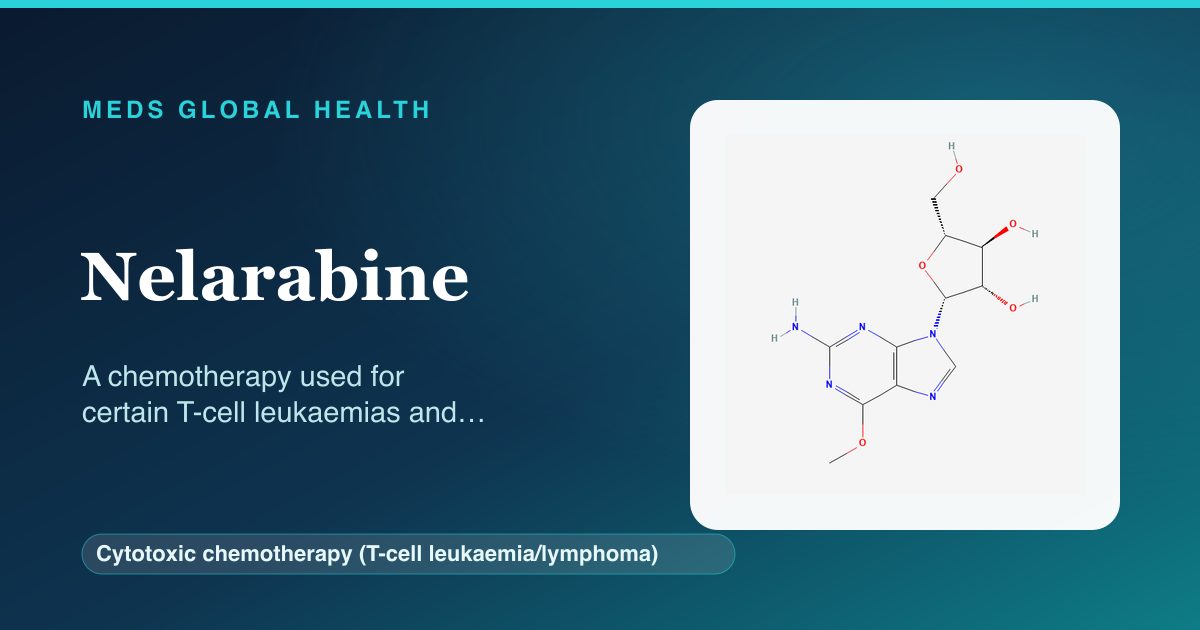
What it is
Nelarabine is a chemotherapy medicine used to treat T-cell acute lymphoblastic leukaemia and T-cell lymphoblastic lymphoma, which are cancers of a type of white blood cell. It is usually used when these cancers have come back or have not responded to earlier treatment. It is given as a drip (infusion) into a vein over a course of days, repeated in cycles, by a specialist cancer team in hospital. It is a powerful treatment that needs close monitoring, particularly of the nervous system and blood counts.
How it works
Nelarabine is taken up by cancer cells and turned into an active form that damages their DNA, the genetic material the cells need to grow and divide. T-cells, the type of cell these cancers come from, take it up and convert it especially well, which is why it works against T-cell leukaemia and lymphoma. By damaging the DNA, it stops the cancer cells multiplying and causes them to die. Because healthy nerve cells and bone-marrow cells can also be affected, the main side effects are on the nervous system and on blood counts.
Company & origin
A specialist chemotherapy used in the UK for certain T-cell leukaemias and lymphomas, given into a vein.
Practical use
How to take Nelarabine
General, dose-free guidance — always follow your prescriber's and the leaflet's specific instructions.
- It is given as a drip into a vein by a specialist cancer team, in cycles, in hospital.
- Report any new drowsiness, confusion, weakness, numbness, unsteadiness or fits straight away, as these can be serious.
- Report a fever, sore throat, or unusual bruising or bleeding urgently, as your blood counts will be low.
- Drink plenty of fluids as advised by your team during treatment.
- Keep all appointments for blood tests and nervous-system checks so problems are caught early.
Weighing it up
Advantages & disadvantages of Nelarabine
Advantages
- Can treat T-cell leukaemias and lymphomas, including when other treatments have not worked.
- Works in a way that targets the type of cell these cancers come from.
- Given as part of specialist care with close monitoring.
Disadvantages
- Can cause serious nervous-system problems, which may be severe or lasting.
- Lowers blood counts, raising the risk of infection, bleeding and anaemia.
- Must be given in hospital by a specialist team with careful monitoring.
Practical use
Good to know
The single most important thing to understand about nelarabine is its effect on the nervous system. It can cause serious problems such as severe drowsiness, confusion, muscle weakness, numbness or tingling, unsteadiness, and rarely seizures or even paralysis, and these effects can sometimes be severe or long-lasting, so the team watches very carefully and may stop treatment if they appear. Any new weakness, numbness, severe sleepiness, confusion or fits must be reported straight away. It also lowers the blood counts, increasing the risk of infections, bleeding and tiredness from anaemia, so blood tests are done regularly and a fever or unusual bleeding should be reported urgently. Drinking plenty of fluids is usually advised. It is given only by a specialist cancer team experienced in its use.
Who should not take it / use with caution
- People who have had a serious allergic reaction to nelarabine should not be given it.
- It is generally avoided in pregnancy and while breastfeeding because of the risk of harm.
- It is used with great caution, or avoided, where nervous-system toxicity would be especially dangerous.
- It should only be used under a specialist cancer team experienced in its use.
Monitoring
- Regular checks of the nervous system for weakness, numbness, drowsiness or other changes.
- Regular blood tests to watch blood counts.
- Checking kidney and liver function and overall response to treatment.
Side effects
- Drowsiness, dizziness, confusion or tiredness.
- Numbness, tingling, weakness or unsteadiness, and rarely seizures or severe nerve damage.
- Low blood counts, leading to infections, bleeding or anaemia.
- Nausea, vomiting, diarrhoea or muscle aches.
Key interactions
- Other medicines that affect the nervous system may add to its effects, so tell your team about everything you take.
- Live vaccines are generally avoided during treatment because the immune system is weakened.
- Other treatments that lower blood counts can add to the effect on the bone marrow.
Available as: A solution given as a drip (infusion) into a vein.
Answers
Nelarabine: frequently asked questions
What is nelarabine used for?
It is a chemotherapy used to treat certain T-cell leukaemias and lymphomas, usually when other treatments have not worked.
What is the main safety concern?
Its main danger is serious nervous-system toxicity, such as drowsiness, weakness, numbness or seizures, which can be severe or lasting, so you are watched closely.
What symptoms should I report straight away?
Report any new drowsiness, confusion, weakness, numbness, unsteadiness or fits at once, as well as any fever or unusual bleeding.
Why are my blood tests done so often?
Nelarabine lowers your blood counts, raising the risk of infection, bleeding and anaemia, so regular blood tests help keep you safe.
How is it given?
It is given as a drip into a vein, in cycles, in hospital by a specialist cancer team experienced in its use.
The wider class
About Cytotoxic chemotherapy (T-cell leukaemia/lymphoma)
Nelarabine belongs to the cytotoxic chemotherapy (t-cell leukaemia/lymphoma) class. For how the class as a whole works, its shared safety principles and monitoring, see the full guide.
Browse by body system
Authoritative sources
- BNF
- NICE CKS
Building a medicines information resource?
We create evidence-led, dose-free drug and formulary references for teams.