A proteasome-inhibitor chemotherapy for myeloma
Bortezomib
A specialist chemotherapy medicine used to treat multiple myeloma, a cancer of the bone marrow.
What is Bortezomib?
Bortezomib is a specialist chemotherapy medicine, a proteasome inhibitor, used to treat multiple myeloma (a cancer of plasma cells in the bone marrow) and some related blood cancers. It works by blocking a cell's protein-recycling system, which builds up waste inside cancer cells and makes them die. Its most important side effects are nerve damage causing numbness, tingling or pain in the hands and feet (peripheral neuropathy), low blood counts, and a risk of shingles, so antiviral protection is usually given. It is given by injection in a cancer centre under close monitoring.
Education and reference only. This is a plain-language guide to Bortezomib — it deliberately contains no doses. Doses depend on the person, the brand and the reason for treatment, and belong with your prescriber. Always check the BNF, the product labelling (SmPC) and follow medical advice.
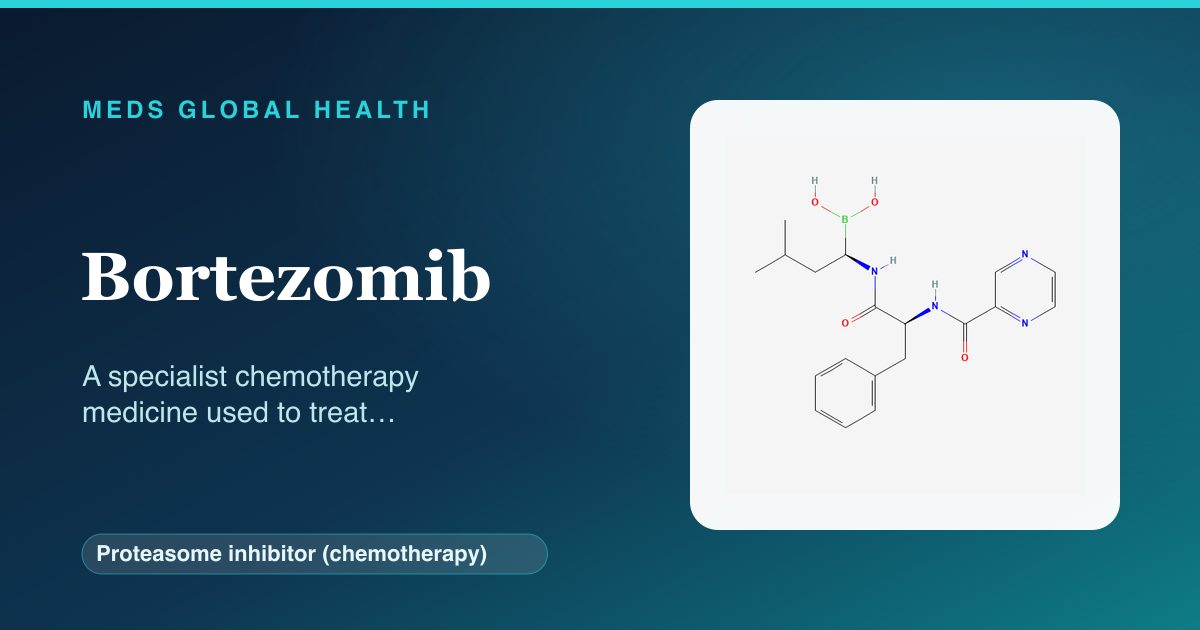
What it is
Bortezomib is a chemotherapy medicine of a type called a proteasome inhibitor. It is used mainly to treat multiple myeloma, a cancer of plasma cells in the bone marrow, and is also used in some related blood cancers. It is given by injection — under the skin or into a vein — in cycles, usually alongside other anti-myeloma medicines, in a hospital cancer centre. Because it is a powerful treatment with significant side effects, it is always prescribed and supervised by a specialist cancer team who plan the treatment and monitor closely.
How it works
Cells have a recycling system called the proteasome that breaks down and clears away unwanted proteins. Bortezomib blocks this system. Cancer cells such as myeloma cells make a lot of protein and rely heavily on this recycling, so when it is blocked, damaged and unwanted proteins build up inside them until the cells can no longer survive and die off. Healthy cells are affected too, which is why the treatment causes side effects, but cancer cells are particularly vulnerable to losing this clean-up system, which is what makes the medicine work against the disease.
Company & origin
A specialist chemotherapy medicine used in UK cancer centres to treat multiple myeloma and some related blood cancers, given by injection.
Practical use
How to take Bortezomib
General, dose-free guidance — always follow your prescriber's and the leaflet's specific instructions.
- It is given by injection (under the skin or into a vein) by a specialist cancer team, in treatment cycles.
- Report numbness, tingling, burning or pain in the hands or feet early, as the dose may be adjusted.
- Take the antiviral medicine you are given to protect against shingles for as long as advised.
- Attend all blood tests and appointments so your blood counts and side effects can be monitored.
- Tell the team straight away about fever, unusual bruising or bleeding, or a painful blistering rash.
Weighing it up
Advantages & disadvantages of Bortezomib
Advantages
- An effective treatment for multiple myeloma, often used with other anti-myeloma medicines.
- Can be given under the skin, which lowers the risk of nerve problems for many people.
- Works in a targeted way by blocking the cell's protein-recycling system.
Disadvantages
- Commonly causes nerve damage with numbness, tingling or pain in the hands and feet.
- Lowers blood counts, increasing the risk of infection, bruising and bleeding.
- Can reactivate the shingles virus, so antiviral protection is needed; it requires specialist supervision.
Practical use
Good to know
The most important things to know about bortezomib are its main side effects, which the team watches for closely. The first is nerve damage — peripheral neuropathy — causing numbness, tingling, burning or pain in the hands and feet; it is important to report this early, as the dose can be adjusted to prevent it getting worse. The second is a drop in blood counts, particularly platelets, which can cause bruising and bleeding, and white cells, which raises infection risk. The third is reactivation of the shingles virus, which is why an antiviral medicine is usually given alongside as protection. Giving the injection under the skin rather than into a vein reduces nerve problems for many people. Tiredness, stomach upset and dizziness on standing are also common. Tell the team promptly about new numbness, fever, unusual bruising or a painful blistering rash.
Who should not take it / use with caution
- People who have had a serious allergic reaction to bortezomib should not be given it.
- It is used with great care, or avoided, in people who already have significant nerve damage.
- It is used with caution in people with liver problems or certain heart or lung conditions, under specialist guidance.
Monitoring
- Regular blood tests to check blood counts before each treatment.
- Checking for signs of nerve damage at each visit so the dose can be adjusted early.
- Watching for infection, shingles and other side effects throughout treatment.
Side effects
- Numbness, tingling, burning or pain in the hands and feet (peripheral neuropathy).
- Low blood counts causing tiredness, bruising, bleeding or increased risk of infection.
- Reactivation of the shingles virus, which antiviral medicine helps prevent.
- Tiredness, nausea, diarrhoea or constipation, and dizziness on standing.
Key interactions
- Other medicines that can damage nerves may add to the risk of neuropathy.
- Some medicines affect how bortezomib is broken down, so the team checks your full medicines list.
- Medicines that lower blood pressure may add to dizziness on standing.
Available as: A powder made up into a solution for injection under the skin or into a vein.
Answers
Bortezomib: frequently asked questions
What is bortezomib used for?
It is a chemotherapy medicine used to treat multiple myeloma, a cancer of plasma cells in the bone marrow, and some related blood cancers, usually with other medicines.
Why does it cause numbness in my hands and feet?
Bortezomib can damage the nerves, causing peripheral neuropathy with numbness, tingling or pain in the hands and feet; report it early, as the dose can be adjusted.
Why am I given an antiviral medicine with it?
Bortezomib can reactivate the shingles virus, so an antiviral medicine is usually given alongside it to help protect you from getting shingles.
How is it given?
It is given by injection, either under the skin or into a vein, in treatment cycles at a hospital cancer centre under close monitoring.
What should I report urgently?
Tell your team straight away about new numbness, fever or signs of infection, unusual bruising or bleeding, or a painful blistering rash that could be shingles.
The wider class
About Proteasome inhibitor (chemotherapy)
Bortezomib belongs to the proteasome inhibitor (chemotherapy) class. For how the class as a whole works, its shared safety principles and monitoring, see the full guide.
Browse by body system
Authoritative sources
- BNF
- NICE CKS
Building a medicines information resource?
We create evidence-led, dose-free drug and formulary references for teams.