A vinca-alkaloid chemotherapy for lung and breast cancer
Vinorelbine
A chemotherapy medicine from the vinca-alkaloid group, used to treat lung and breast cancer.
What is Vinorelbine?
Vinorelbine is a specialist chemotherapy from the vinca-alkaloid group, used to treat lung cancer and breast cancer. It works by stopping cancer cells from dividing. It is available both as an injection into a vein and as capsules by mouth. Its main side effects are a fall in blood cells (raising infection risk), vein irritation, nerve damage in the hands and feet, and constipation. As a vinca alkaloid it is a vesicant and the vein form must ONLY ever be given into a vein: giving it into the spine is fatal. It is given by a cancer team.
Education and reference only. This is a plain-language guide to Vinorelbine — it deliberately contains no doses. Doses depend on the person, the brand and the reason for treatment, and belong with your prescriber. Always check the BNF, the product labelling (SmPC) and follow medical advice.
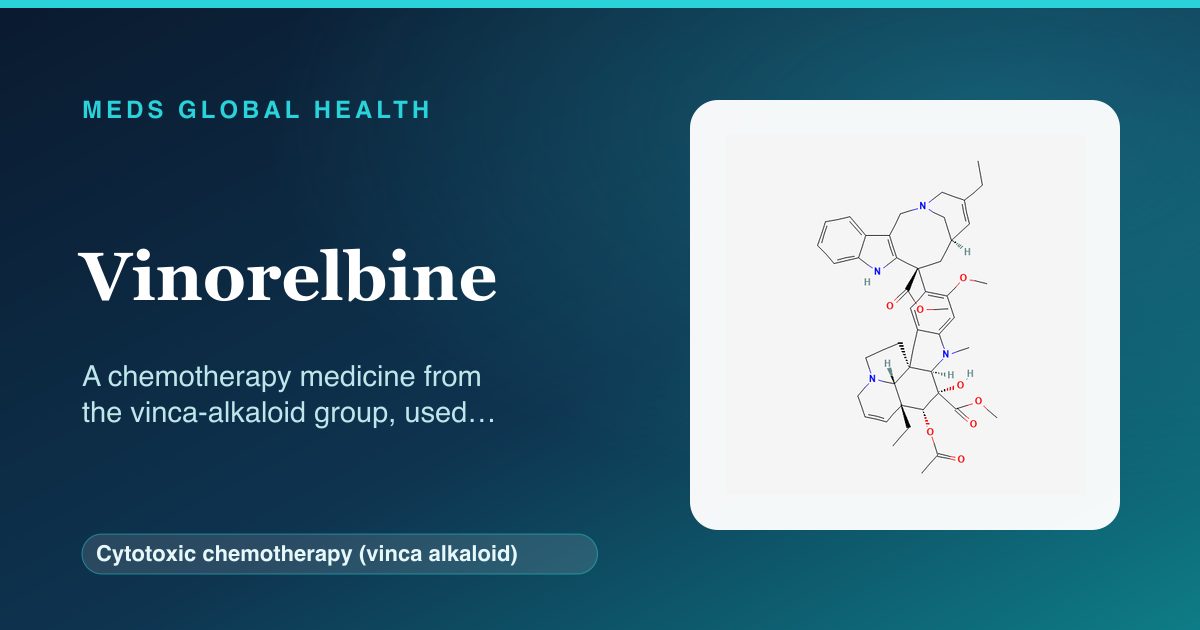
What it is
Vinorelbine is a chemotherapy medicine belonging to the vinca-alkaloid group. It is used to treat some lung cancers and some breast cancers under the close care of a cancer (oncology) team. It is available as an injection into a vein and also as capsules taken by mouth, which means some people can take part of their treatment at home. As with all vinca alkaloids, it has important safety rules: the injectable form must never be given into the spine, and it can irritate or damage tissue if it leaks out of the vein. Because of these risks it is prescribed and supervised by specialist teams.
How it works
Cancer cells divide by pulling their copied chromosomes apart using internal scaffolding fibres called microtubules. Vinorelbine stops these microtubules from working, so the cancer cell cannot finish dividing and dies. Because it acts on dividing cells, it also affects healthy fast-growing cells, especially in the bone marrow, lowering blood counts. It can irritate the vein it is given into, and, like other vinca alkaloids, it can affect the nerves and slow the bowel, causing tingling and weakness in the hands and feet and constipation.
Company & origin
A specialist vinca-alkaloid chemotherapy used in the UK for lung and breast cancer, available as a vein injection and as capsules.
Practical use
How to take Vinorelbine
General, dose-free guidance — always follow your prescriber's and the leaflet's specific instructions.
- The injection is given only by your cancer team, into a vein; it must never be given into the spine.
- If you take the capsules, swallow them whole with water and follow your team's instructions and anti-sickness advice exactly; do not open or crush them.
- Contact your cancer team urgently if you develop a high temperature or feel unwell, as this may be a serious infection.
- Tell the team straight away about pain, burning, redness or swelling at the injection site, as the medicine can damage tissue if it leaks.
- Report numbness, tingling or weakness in your hands or feet, and any constipation, so these can be managed.
Weighing it up
Advantages & disadvantages of Vinorelbine
Advantages
- An established treatment option for some lung and breast cancers.
- Available both as a vein injection and as capsules, allowing some treatment at home.
- Given by an experienced cancer team with careful monitoring.
Disadvantages
- The injectable form is fatal if given into the spine, so strict safety checks are essential.
- A vesicant that irritates the vein and can damage tissue if it leaks out.
- Commonly causes a fall in blood cells, nerve damage and constipation.
Practical use
Good to know
As with all vinca alkaloids, the most important safety fact is that the injectable form must ONLY be given into a vein and NEVER into the spine, where it is fatal; specialist teams use strict checks to prevent this. It is a vesicant, so it can irritate the vein and cause tissue damage if it leaks out, and any pain, burning, redness or swelling at the injection site should be reported immediately. The main effects to expect are a fall in white blood cells, which raises the risk of infection, so a high temperature or feeling unwell is an emergency; nerve symptoms such as tingling and weakness in the hands and feet; and constipation. If you take the capsules, swallow them whole and follow the timing and anti-sickness advice carefully. Your cancer team monitors your blood, nerves and bowel throughout.
Who should not take it / use with caution
- The injectable form must never be given to anyone into the spine, as this is fatal.
- People who have had a serious allergic reaction to vinorelbine should not receive it.
- It is not used in pregnancy or breastfeeding, as it can harm a developing baby.
- It is used with great care in people whose bone marrow is already very suppressed, who have liver problems, or who have significant nerve problems.
Monitoring
- Regular full blood counts before and during treatment.
- Checking liver function, nerve symptoms and bowel habit.
- Watching the injection site during infusion for any sign of leakage or irritation.
Side effects
- A fall in white blood cells, red cells and platelets, raising the risk of infection, tiredness and bleeding.
- Vein irritation at the injection site, and tissue damage if the injection leaks out.
- Nerve damage (peripheral neuropathy), constipation, nausea, mouth soreness and hair loss.
- Rarely but seriously, severe infection or breathing problems, which need urgent care.
Key interactions
- Other medicines that cause constipation, such as some painkillers, add to the risk of bowel problems.
- Other treatments that lower blood counts, such as other chemotherapy or radiotherapy, add to its effects.
- Some medicines can affect vinorelbine levels, so your team will review everything you take.
Available as: A solution given as an injection into a vein, and capsules taken by mouth.
Answers
Vinorelbine: frequently asked questions
What is vinorelbine used for?
It is a vinca-alkaloid chemotherapy used to treat some lung and breast cancers, working by stopping cancer cells from dividing.
Can I take it at home?
Vinorelbine is available as capsules taken by mouth as well as a vein injection, so some people take part of their treatment at home under specialist guidance.
Why must the injection only go into a vein?
Vinca alkaloids like vinorelbine are fatal if given into the spine, so the injectable form must only ever go into a vein, with strict safety checks.
Why does the vein hurt or go red?
Vinorelbine can irritate the vein and is a vesicant, so it can damage tissue if it leaks; report any pain, burning, redness or swelling at the site immediately.
What should I do if I feel unwell?
A high temperature or feeling unwell can be a sign of serious infection while your blood counts are low; contact your cancer team urgently.
The wider class
About Cytotoxic chemotherapy (vinca alkaloid)
Vinorelbine belongs to the cytotoxic chemotherapy (vinca alkaloid) class. For how the class as a whole works, its shared safety principles and monitoring, see the full guide.
Browse by body system
Authoritative sources
- BNF
- NICE CKS
Building a medicines information resource?
We create evidence-led, dose-free drug and formulary references for teams.