An anthracycline chemotherapy for leukaemia
Idarubicin
An anthracycline chemotherapy medicine used mainly for leukaemia, with heart muscle damage as its key cumulative risk.
What is Idarubicin?
Idarubicin is an anthracycline chemotherapy (cytotoxic) medicine used under specialist cancer care, mainly to treat leukaemia. It works by damaging the DNA of cancer cells so they cannot keep dividing. Its most important and distinctive risk is damage to the heart muscle (cardiotoxicity), which can build up with the total amount given, so heart function is checked. It strongly lowers the blood counts (bone-marrow suppression), raising the risk of infection, bleeding and anaemia. If it leaks out of the vein it can cause severe tissue damage, and it commonly turns the urine red for a day or two, which is harmless.
Education and reference only. This is a plain-language guide to Idarubicin — it deliberately contains no doses. Doses depend on the person, the brand and the reason for treatment, and belong with your prescriber. Always check the BNF, the product labelling (SmPC) and follow medical advice.
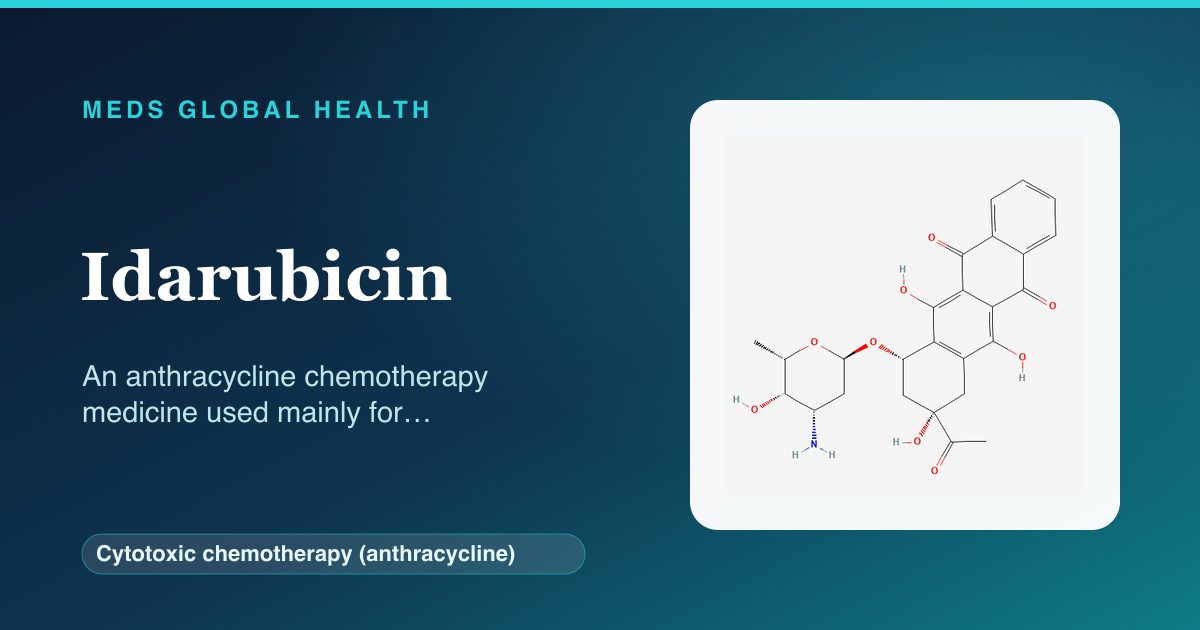
What it is
Idarubicin is a cytotoxic chemotherapy medicine in the anthracycline group. It kills or stops the growth of cancer cells and is used mainly as part of treatment for leukaemia, often in combination with other chemotherapy. It is given by injection into a vein by a specialist cancer team, usually in hospital. Like other anthracyclines, its defining feature is that it can affect the heart muscle, with the risk building up the more a person receives in total, so the team keeps track of the total dose and checks heart function.
How it works
Idarubicin enters cancer cells and damages their DNA, blocking the machinery the cells need to copy themselves and divide. This is most effective against the fast-dividing cells seen in leukaemia, slowing or stopping the cancer. The same action also affects healthy fast-dividing cells, such as those in the bone marrow that make blood, which is why it lowers the blood counts. Anthracyclines can also harm heart-muscle cells, and because this effect adds up with the total amount given, the team limits and records the overall dose.
Company & origin
An anthracycline chemotherapy medicine used in the UK under specialist care, mainly to treat leukaemia.
Practical use
How to take Idarubicin
General, dose-free guidance — always follow your prescriber's and the leaflet's specific instructions.
- It is given by injection into a vein by your specialist cancer team, usually in hospital on a planned schedule.
- Report any fever, sore throat, mouth ulcers, bruising or bleeding straight away, as your blood counts may be low.
- Tell staff at once if you feel pain, burning or swelling at the drip site, as a leak can damage tissue.
- Do not be alarmed if your urine turns red or pink for a day or two; this is harmless and not blood.
- Keep all monitoring appointments, including heart checks and blood tests.
Weighing it up
Advantages & disadvantages of Idarubicin
Advantages
- An effective and important part of chemotherapy for leukaemia.
- Works against the fast-dividing cells that drive leukaemia.
- Well-established within specialist cancer treatment regimens.
Disadvantages
- Can damage the heart muscle, with the risk building up with the total dose.
- Strongly lowers blood counts, raising the risk of infection, bleeding and anaemia.
- Can cause severe tissue damage if it leaks out of the vein, and commonly causes nausea, hair loss and mouth soreness.
Practical use
Good to know
The most important risk to understand with idarubicin is its effect on the heart muscle: this cardiotoxicity can build up with the total dose received and can affect how well the heart pumps, so heart function is checked before and during treatment and the total dose is carefully tracked. It also strongly suppresses the bone marrow, so blood counts fall, increasing the risk of infection, bleeding and tiredness from anaemia; any fever or signs of infection need urgent attention. A practical safety point is that, if it leaks out of the vein during the injection, it can cause severe damage to the surrounding tissue, so it is given carefully by trained staff who watch the drip site. It commonly turns the urine red or pink for a day or two after a dose, which is harmless and not blood. It is always given and monitored by a specialist cancer team.
Who should not take it / use with caution
- People who have had a serious allergic reaction to idarubicin or similar anthracyclines should not receive it.
- It is used with great caution, or avoided, in people with significant existing heart problems.
- It is not suitable in pregnancy and is given only under specialist cancer care, with careful dose tracking.
Monitoring
- Checks of heart function before and during treatment, and keeping track of the total dose.
- Regular blood tests to watch the blood counts and guide timing of treatment.
- Reviewing the mouth, general wellbeing and response to treatment at each cycle.
Side effects
- A fall in blood counts, leading to infections, bruising, bleeding and tiredness from anaemia.
- Effects on the heart muscle that can build up with the total dose.
- Nausea and vomiting, hair loss and a sore mouth.
- A harmless red or pink colour to the urine for a day or two, and severe tissue damage if it leaks from the vein.
Key interactions
- Other medicines that can affect the heart add to the risk of heart muscle damage, so the team reviews them.
- It is given alongside other chemotherapy medicines, whose combined effects on the blood counts the team manages.
- Tell your team about all your medicines, including any that affect the liver, which influences how it is handled.
Available as: A solution or powder for injection into a vein, given by a specialist team.
Answers
Idarubicin: frequently asked questions
What is idarubicin used for?
It is an anthracycline chemotherapy medicine used mainly to treat leukaemia, usually in combination with other chemotherapy, under specialist cancer care.
Why does it affect the heart?
Anthracyclines such as idarubicin can harm heart-muscle cells, and because this risk builds up with the total dose, your team checks your heart function and limits the overall amount given.
Why has my urine turned red?
Idarubicin commonly turns the urine red or pink for a day or two after a dose; this is a harmless colour from the medicine and is not blood.
Why do I keep getting infections?
It lowers your blood counts by affecting the bone marrow, which raises the risk of infection and bleeding, so report any fever or signs of infection urgently.
What happens if it leaks from the vein?
If it leaks out of the vein it can cause severe tissue damage, so it is given carefully by trained staff; tell them at once if you feel pain or swelling at the drip site.
The wider class
About Cytotoxic chemotherapy (anthracycline)
Idarubicin belongs to the cytotoxic chemotherapy (anthracycline) class. For how the class as a whole works, its shared safety principles and monitoring, see the full guide.
Browse by body system
Authoritative sources
- BNF
- NICE CKS
Building a medicines information resource?
We create evidence-led, dose-free drug and formulary references for teams.