An alkylating chemotherapy medicine
Cyclophosphamide
A widely used chemotherapy medicine, given under specialist care, for many cancers and some severe immune conditions.
What is Cyclophosphamide?
Cyclophosphamide is a chemotherapy medicine, given either by drip or as tablets under hospital specialist care, used for many cancers and also for some severe autoimmune diseases such as certain forms of vasculitis or lupus. A particular point to know is that it can irritate the bladder and cause blood in the urine, so plenty of fluids are encouraged and sometimes a protective medicine called mesna is given alongside it. Like all chemotherapy it can lower your blood counts and raise the risk of infection, so a fever or feeling suddenly unwell is an emergency. It can also affect fertility, which is worth discussing before you start.
Education and reference only. This is a plain-language guide to Cyclophosphamide — it deliberately contains no doses. Doses depend on the person, the brand and the reason for treatment, and belong with your prescriber. Always check the BNF, the product labelling (SmPC) and follow medical advice.
What it is
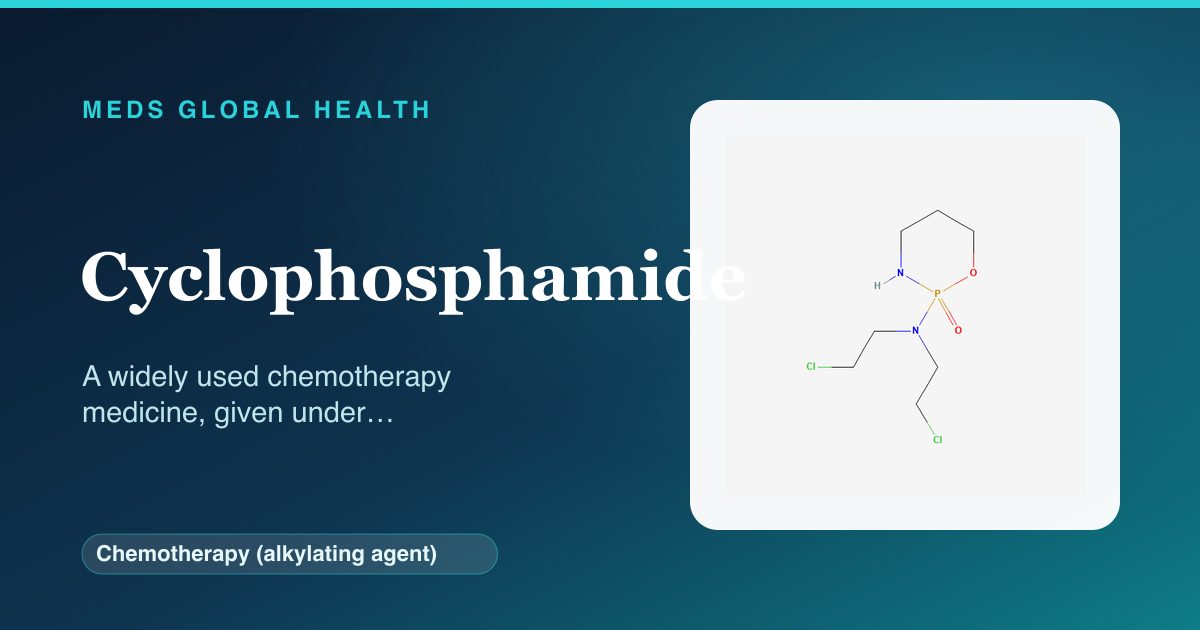
Cyclophosphamide is a cytotoxic chemotherapy medicine from the 'alkylating agent' family, used for a wide range of cancers including lymphomas, leukaemias, breast and ovarian cancers, and also, at lower intensity, for some serious autoimmune conditions where the immune system is overactive. It can be given as an injection or drip in hospital, or as tablets, and is always prescribed and supervised by a specialist team. Treatment is given in cycles, with rest periods to allow recovery. Its use in autoimmune disease reflects its ability to calm an over-active immune system.
How it works
Cyclophosphamide damages the DNA inside dividing cells so they can no longer multiply, which kills cancer cells; in autoimmune disease the same action dampens the over-active immune cells that are attacking the body. Because it affects fast-dividing healthy cells too, it lowers blood counts and can cause other side effects. As the body breaks it down, it produces a substance that can irritate the lining of the bladder, which is why blood in the urine can occur and why good hydration — and sometimes the protective medicine mesna — is used to flush and protect the bladder.
Company & origin
A long-established chemotherapy medicine used in the UK, under specialist care, for many cancers and some severe autoimmune diseases.
Practical use
How to take Cyclophosphamide
General, dose-free guidance — always follow your prescriber's and the leaflet's specific instructions.
- It is given by drip in hospital or as tablets, on a schedule planned and supervised by your specialist team.
- Drink plenty of fluids and pass urine regularly to help protect your bladder, as advised by your team.
- If you are given mesna alongside it, take or receive it exactly as directed, as it protects the bladder.
- Report blood in your urine, burning, or difficulty passing water to your team promptly.
- Contact your team's emergency line straight away if you develop a fever, shivering or feel suddenly unwell.
Weighing it up
Advantages & disadvantages of Cyclophosphamide
Advantages
- An effective, versatile treatment used across many cancers and for some severe autoimmune diseases.
- Can be given as a drip or as tablets, allowing flexible treatment plans.
- Long experience means its effects, and how to protect against them, are well understood.
Disadvantages
- Can irritate the bladder and cause blood in the urine, needing good hydration and sometimes a protective medicine.
- Like all chemotherapy, it lowers blood counts and raises the risk of serious infection.
- Can affect fertility, sometimes permanently, and carries a small long-term risk of certain other cancers.
Practical use
Good to know
A key practical point is bladder protection: the medicine can irritate the bladder lining and cause blood in the urine, so you will be encouraged to drink plenty of fluids and pass urine regularly, and for higher doses a protective medicine called mesna is often given; report any blood in your urine, burning or difficulty passing water. As with all chemotherapy, it lowers your white cells, red cells and platelets, so a temperature, shivering or feeling suddenly very unwell is a medical emergency (possible neutropenic sepsis) — ring your team's emergency line straight away. Nausea and hair thinning or loss can occur, and anti-sickness medicines are given. Fertility can be affected in both men and women, sometimes permanently, so it is important to discuss family plans and options such as sperm or egg storage before starting. Pregnancy must be avoided and contraception used, and live vaccines avoided. Long-term, there is a small increased risk of certain other cancers, which your team weighs against the benefits. It is natural to feel apprehensive — please do reach out to your team with any concerns.
Who should not take it / use with caution
- It is avoided in pregnancy and breastfeeding because it can harm a developing baby.
- It is used with great caution, or avoided, in people with active urinary infections or significant bladder problems.
- People with very low blood counts or severe organ problems are assessed carefully by the specialist team before use.
Monitoring
- Regular blood tests to check blood counts and kidney and liver function during treatment.
- Checking the urine for blood and watching for bladder symptoms, especially at higher doses.
- Reviewing side effects and discussing fertility and long-term risks as part of ongoing care.
Side effects
- Nausea, hair thinning or loss, tiredness and bladder irritation (sometimes blood in the urine) are common.
- Low blood counts can cause infections, bruising, bleeding and anaemia — a fever or feeling very unwell needs urgent care.
- Less commonly, effects on fertility, and rarely a long-term increased risk of certain other cancers.
Key interactions
- Live vaccines are avoided during treatment, as the weakened immune system cannot handle them safely.
- It can interact with other medicines that affect the immune system or blood counts, increasing risks.
- Your team will review all your medicines, as some can change how cyclophosphamide is processed or add to side effects.
Available as: Injection or infusion given in hospital, and tablets; all prescribed and supervised by a specialist.
Answers
Cyclophosphamide: frequently asked questions
Why do I need to drink so much water with this medicine?
Cyclophosphamide can irritate the bladder and cause blood in the urine, so drinking plenty of fluids and passing urine regularly helps flush and protect the bladder; sometimes a protective medicine called mesna is also given.
What is mesna for?
Mesna is a protective medicine given alongside higher doses of cyclophosphamide to help protect the bladder lining from irritation.
Will it affect my ability to have children?
It can affect fertility in both men and women, sometimes permanently, so it is important to discuss family plans and options such as sperm or egg storage with your team before starting.
What should I do if I get a fever?
Treat it as an emergency. A fever or feeling suddenly unwell can mean a serious infection (neutropenic sepsis), so ring your team's emergency line straight away rather than waiting.
Why is it used for autoimmune disease as well as cancer?
It calms an over-active immune system, so at lower intensity it is used for some severe autoimmune conditions as well as for cancers.
The wider class
About Chemotherapy (alkylating agent)
Cyclophosphamide belongs to the chemotherapy (alkylating agent) class. For how the class as a whole works, its shared safety principles and monitoring, see the full guide.
Browse by body system
Authoritative sources
- BNF
- NICE CKS
Building a medicines information resource?
We create evidence-led, dose-free drug and formulary references for teams.