A chemotherapy medicine for leukaemia and lymphoma
Cytarabine
A chemotherapy medicine used mainly to treat leukaemia and some lymphomas.
What is Cytarabine?
Cytarabine is a chemotherapy medicine used mainly to treat leukaemia and some lymphomas. It is given by injection in specialist cancer centres, sometimes in high doses or directly into the fluid around the spine. Its biggest effect is on the bone marrow, lowering blood cells and raising the risk of infection, bleeding and anaemia. It can cause a flu-like reaction known as 'cytarabine syndrome' with fever and aching, and high doses can affect the nervous system and eyes. It is always used under close specialist supervision.
Education and reference only. This is a plain-language guide to Cytarabine — it deliberately contains no doses. Doses depend on the person, the brand and the reason for treatment, and belong with your prescriber. Always check the BNF, the product labelling (SmPC) and follow medical advice.
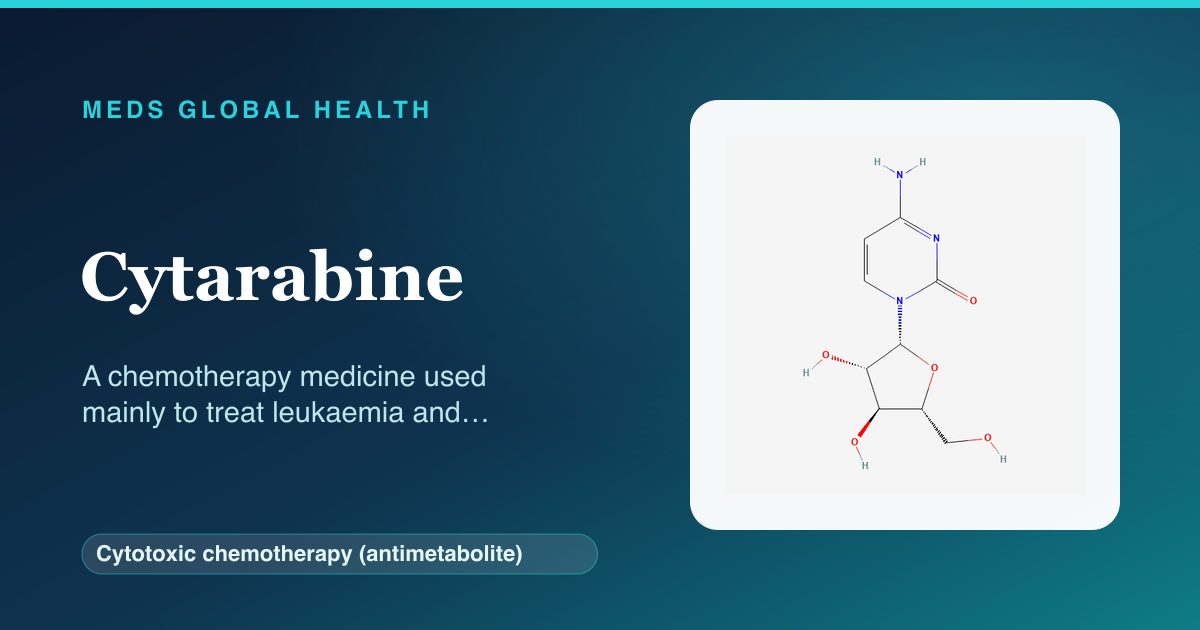
What it is
Cytarabine is a chemotherapy medicine, a type of cancer treatment that interferes with how cancer cells copy themselves. It is used mainly for leukaemia and some lymphomas, often as part of an intensive treatment plan. It is given by injection, into a vein or under the skin, and sometimes directly into the fluid that surrounds the brain and spinal cord to treat or prevent cancer there. It is a powerful medicine given only in specialist cancer centres, where the team manages its strong effects and supports the patient through treatment.
How it works
Cytarabine works by getting into rapidly dividing cells and blocking the machinery they use to copy their genetic material, so the cells cannot multiply and are destroyed. Cancer cells divide quickly, which is why they are particularly affected, but some healthy cells that also divide fast, such as those in the bone marrow that make blood cells and those lining the gut, are affected too, which explains many of its side effects. The way it is given, and the dose, is carefully chosen by the specialist team depending on the type and stage of the cancer.
Company & origin
A chemotherapy medicine used in UK cancer centres, mainly to treat leukaemia and some lymphomas.
Practical use
How to take Cytarabine
General, dose-free guidance — always follow your prescriber's and the leaflet's specific instructions.
- It is given by injection in a specialist cancer centre, so there is nothing to take at home.
- Report any fever, sore throat, or sign of infection straight away, as your defences are lowered.
- Tell the team about unusual bruising or bleeding, which can mean low platelets.
- Use any eye drops or other supportive medicines exactly as directed, especially with higher doses.
- Attend all your blood tests and appointments so the team can manage the effects safely.
Weighing it up
Advantages & disadvantages of Cytarabine
Advantages
- An effective and important treatment for leukaemia and some lymphomas.
- Can be given in different ways, including directly into the fluid around the spine when needed.
- Given as part of carefully designed specialist treatment plans.
Disadvantages
- Strongly suppresses the bone marrow, raising the risk of infection, bleeding and anaemia.
- Can cause 'cytarabine syndrome' with fever and aching, and at high doses, nervous-system and eye problems.
- Must be given in specialist centres with close monitoring.
Practical use
Good to know
The dominant concern with cytarabine is its effect on the bone marrow: it lowers the numbers of white cells, red cells and platelets, which raises the risk of serious infection, bleeding and anaemia, so blood counts are watched closely and any fever or sign of infection must be treated as an emergency. A characteristic side effect is 'cytarabine syndrome', a flu-like reaction with fever, aching, tiredness and sometimes a rash, which the team can manage. At higher doses it can affect the nervous system, causing problems with balance, speech or thinking, and can irritate the eyes, so eye drops are often given to protect them. It can also cause nausea, mouth soreness and hair loss. Because it is so powerful, it is always given under close specialist supervision.
Who should not take it / use with caution
- People who have had a serious allergic reaction to cytarabine should not be given it.
- It is used with great caution, and the dose adjusted, in people with existing low blood counts, liver or kidney problems.
- It is avoided or used with extreme caution in pregnancy because it can harm a developing baby.
Monitoring
- Regular blood counts to track the effect on the bone marrow.
- Watching for fever, infection, bleeding and signs of 'cytarabine syndrome'.
- Checking the nervous system and eyes, especially with higher doses.
Side effects
- A fall in blood cells, raising the risk of infection, bleeding and anaemia.
- 'Cytarabine syndrome' - fever, aching, tiredness and sometimes a rash.
- Nausea, vomiting, mouth soreness and hair loss.
- At high doses, effects on balance, speech or thinking, and eye irritation.
Key interactions
- It adds to the effects of other treatments that lower blood counts, so the team plans carefully.
- Live vaccines are generally avoided during treatment because the immune system is weakened.
- Tell the team about all your medicines, including anything bought without a prescription.
Available as: A solution for injection into a vein, under the skin, or into the fluid around the spine.
Answers
Cytarabine: frequently asked questions
What is cytarabine used for?
It is a chemotherapy medicine used mainly to treat leukaemia and some lymphomas, given by injection in specialist cancer centres.
Why are my blood counts checked so often?
Cytarabine strongly suppresses the bone marrow, lowering blood cells, so regular counts help the team manage the risk of infection, bleeding and anaemia.
What is 'cytarabine syndrome'?
It is a flu-like reaction with fever, aching, tiredness and sometimes a rash that can happen after a dose; your team can treat and manage it.
Why have I been given eye drops?
Higher doses of cytarabine can irritate the eyes, so eye drops are often used to protect them during treatment.
Why must it be given in a specialist centre?
It is a powerful medicine with strong effects on the blood and nervous system, so it needs close specialist monitoring and support.
The wider class
About Cytotoxic chemotherapy (antimetabolite)
Cytarabine belongs to the cytotoxic chemotherapy (antimetabolite) class. For how the class as a whole works, its shared safety principles and monitoring, see the full guide.
Browse by body system
Authoritative sources
- BNF
- NICE CKS
Building a medicines information resource?
We create evidence-led, dose-free drug and formulary references for teams.