An anthracycline-like chemotherapy for lymphoma
Pixantrone
A chemotherapy given into a vein for certain lymphomas, designed to be gentler on the heart than older similar drugs.
What is Pixantrone?
Pixantrone is a specialist chemotherapy used to treat some types of non-Hodgkin lymphoma, a cancer of certain white blood cells, usually after other treatments have stopped working. It is similar to a group of chemotherapy drugs called anthracyclines but was designed to be gentler on the heart, though heart problems and heart failure can still occur. It is given as a drip into a vein in cycles. The main risks are heart effects, a drop in blood counts that raises the chance of infection, and a harmless blue discolouration of the skin and urine. It is used under specialist cancer supervision.
Education and reference only. This is a plain-language guide to Pixantrone — it deliberately contains no doses. Doses depend on the person, the brand and the reason for treatment, and belong with your prescriber. Always check the BNF, the product labelling (SmPC) and follow medical advice.
What it is
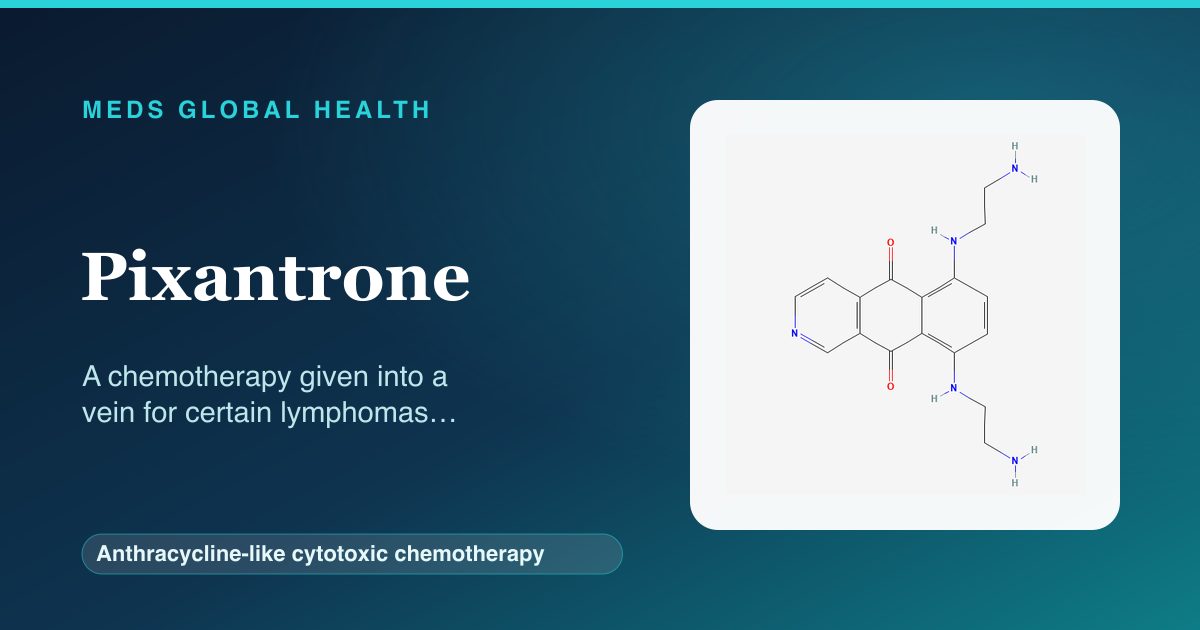
Pixantrone is a chemotherapy medicine used to treat certain types of non-Hodgkin lymphoma, a cancer of particular white blood cells, generally when the lymphoma has come back or not responded to earlier treatment. It is related to a family of chemotherapy drugs called anthracyclines, which are effective but can damage the heart; pixantrone was developed to be less harmful to the heart while still treating the cancer. It is given as an infusion into a vein in repeated cycles, under the care of a specialist cancer team.
How it works
Pixantrone works by interfering with the DNA inside cancer cells, damaging it and blocking the machinery the cells need to copy themselves. This stops the lymphoma cells dividing and causes many of them to die. Like other anthracycline-type drugs it acts on rapidly dividing cells, which is why it also affects healthy fast-growing cells such as those in the bone marrow, leading to lower blood counts. It is given in cycles, with breaks in between, to let the body recover before the next dose.
Company & origin
A specialist chemotherapy used in the UK to treat certain lymphomas that have come back or not responded to earlier treatment.
Practical use
How to take Pixantrone
General, dose-free guidance — always follow your prescriber's and the leaflet's specific instructions.
- It is given as a drip into a vein by your cancer team, in cycles with rest periods in between.
- Attend all your appointments for treatment and blood tests, as doses depend on your blood counts.
- Report breathlessness, ankle swelling or a racing or irregular heartbeat straight away, as these can signal heart problems.
- Treat any fever or sign of infection as an emergency and contact your team without delay.
- Use effective contraception as advised, because this medicine can harm a developing baby.
Weighing it up
Advantages & disadvantages of Pixantrone
Advantages
- An effective chemotherapy option for certain lymphomas that have come back or not responded to earlier treatment.
- Designed to be gentler on the heart than older anthracycline drugs.
- Given in cycles with rest periods to let the body recover.
Disadvantages
- Can still affect the heart and lead to heart failure, so the heart must be monitored.
- Lowers blood counts, raising the chance of serious infections, bruising and bleeding.
- Given as an infusion into a vein, and can cause a temporary blue discolouration of the skin and urine.
Practical use
Good to know
The most important safety points relate to the heart and the blood. Even though pixantrone was designed to be kinder to the heart than older anthracyclines, it can still affect heart function and lead to heart failure, so the heart is checked before and during treatment and you should report breathlessness, ankle swelling or a racing heartbeat. It lowers blood counts, especially the white cells that fight infection, so a fever or any sign of infection should be treated as an emergency, and tiredness, bruising or bleeding from low platelets can also occur. A harmless but striking effect is that it can turn the skin and urine a bluish colour for a while, which is not a cause for concern. As with chemotherapy of this kind, it can harm a developing baby, so effective contraception is important.
Who should not take it / use with caution
- People who have had a serious allergic reaction to pixantrone should not receive it.
- It is avoided or used with great caution in people with significant heart problems or very low blood counts.
- It can harm a developing baby, so it is avoided in pregnancy and effective contraception is needed.
Monitoring
- Checks of heart function before and during treatment.
- Regular blood tests to check blood counts before each cycle.
- Watching for signs of infection, bleeding and heart problems throughout treatment.
Side effects
- A drop in blood counts, raising the chance of infection, tiredness, bruising and bleeding.
- Heart effects, including a weakening of the heart that can lead to heart failure.
- Nausea, hair thinning and a harmless bluish colouring of the skin and urine.
- Rarely but seriously, severe infections or significant heart problems needing urgent care.
Key interactions
- Other medicines that can affect the heart may add to the risk, so tell your team about them.
- Other treatments that lower blood counts can deepen the drop, so they are combined with care.
- Live vaccines are generally avoided during treatment because the immune system is weakened.
Available as: A powder made up into a solution and given as a drip into a vein.
Answers
Pixantrone: frequently asked questions
What is pixantrone used for?
It is a chemotherapy used to treat certain types of non-Hodgkin lymphoma, usually when the cancer has come back or not responded to earlier treatment.
Is it easier on the heart than other chemotherapy?
It was designed to be gentler on the heart than older anthracycline drugs, but it can still affect the heart, so heart function is checked before and during treatment.
Why have my skin and urine turned blue?
A temporary bluish colouring of the skin and urine is a known, harmless effect of pixantrone that fades after treatment.
Why are infections a worry?
It lowers the white blood cells that fight infection, so a fever or any sign of infection should be treated as an emergency.
How is it given?
It is given as a drip into a vein by your cancer team, in repeated cycles with rest periods in between to let the body recover.
The wider class
About Anthracycline-like cytotoxic chemotherapy
Pixantrone belongs to the anthracycline-like cytotoxic chemotherapy class. For how the class as a whole works, its shared safety principles and monitoring, see the full guide.
Browse by body system
Authoritative sources
- BNF
- NICE CKS
Building a medicines information resource?
We create evidence-led, dose-free drug and formulary references for teams.